OUR PEOPLE
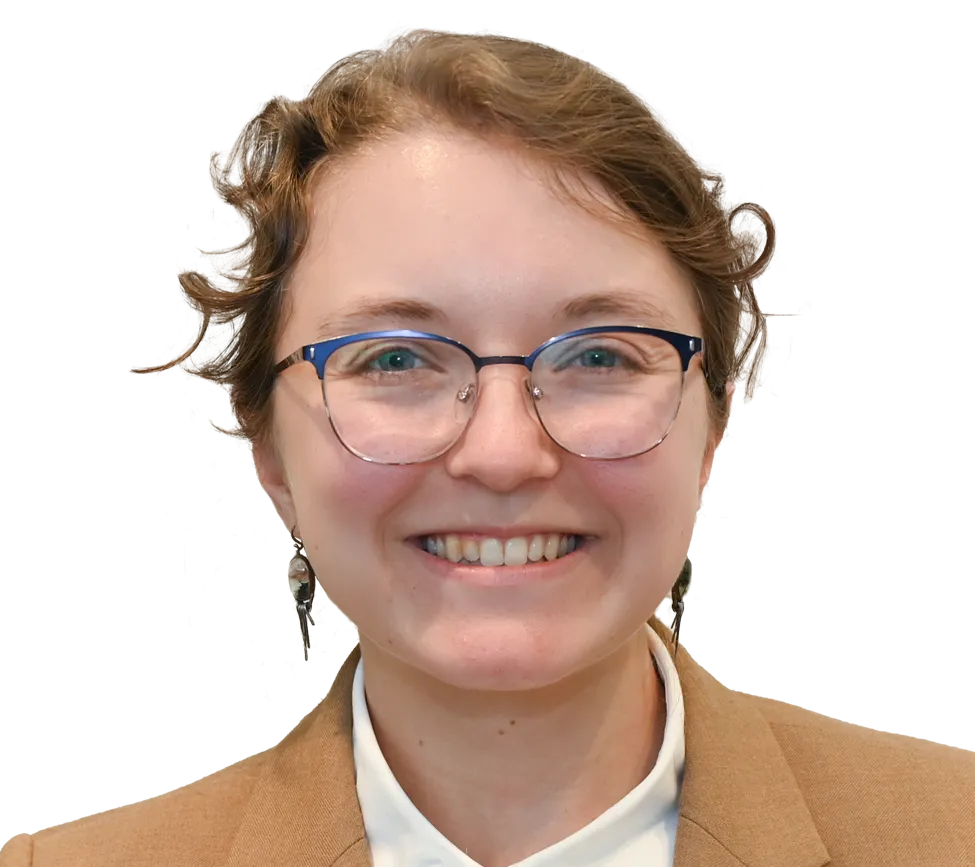
Emma Batson
Ph.D.
She/Her
Associate
Emma Batson, Ph.D. is a consultant in the Electrical Engineering practice at Exponent with expertise in the design, modeling, fabrication, testing, and characterization of sensors and microelectronics. In particular, she has deep expertise in the cleanroom fabrication of superconducting single-photon detectors and readout circuits for the quantum computing industry. She has 8 years of experience designing and testing nanoscale superconducting microwave circuits and 6 years of cleanroom and microscopy experience.
Prior to joining Exponent, Dr. Batson received her Ph.D. in electrical engineering at the Massachusetts Institute of Technology. As a doctoral student, she developed fabrication methods and characterization protocols to create superconducting single-photon detectors in novel materials with desirable properties for integration into quantum systems, including electrochemically doped indium tin oxide for transparency at telecommunications wavelengths and magnesium diboride for higher operating temperatures. She developed and tested models for the origins of intrinsic device noise to support these efforts. She also managed and maintained high-vacuum and cryogenic laboratory systems.
Dr. Batson has also built automated control systems for quantum-enhanced measurements and qubits, developing instrument drivers, custom software-based measurement applications and control scripts, and suitable PID control signals. She has worked for the Electric Power Research Institute (EPRI), with projects including simulating smart inverters implementing the DNP3 SCADA communication standard and performing cyber-security risk modeling with based on the NIST 800-53 control standard.
Dr. Batson has extensively operated typical semiconductor cleanroom tools used for device fabrication and characterization and developed processes which use vacuum deposition (magnetron sputtering, ALD, PECVD, thermal and electron-beam evaporation), spin coating, photo- and electron-beam-lithography, ion etching (RIE, IBE), electron microscopy (SEM, STEM with EDS and EELS), and other assorted analytical methods (XRD, XPS, FT-IR, AFM, ellipsometry, profilometry). She is familiar with electrical and multiphysics modeling languages and tools including Python, MATLAB, COMSOL, Sonnet, and LTSpice.