
September 30, 2026
Authors




Stakeholders must actively evaluate product portfolios and internal compliance processes to manage the extensive data and reporting requirements introduced by Regulation (EU) 2026/405
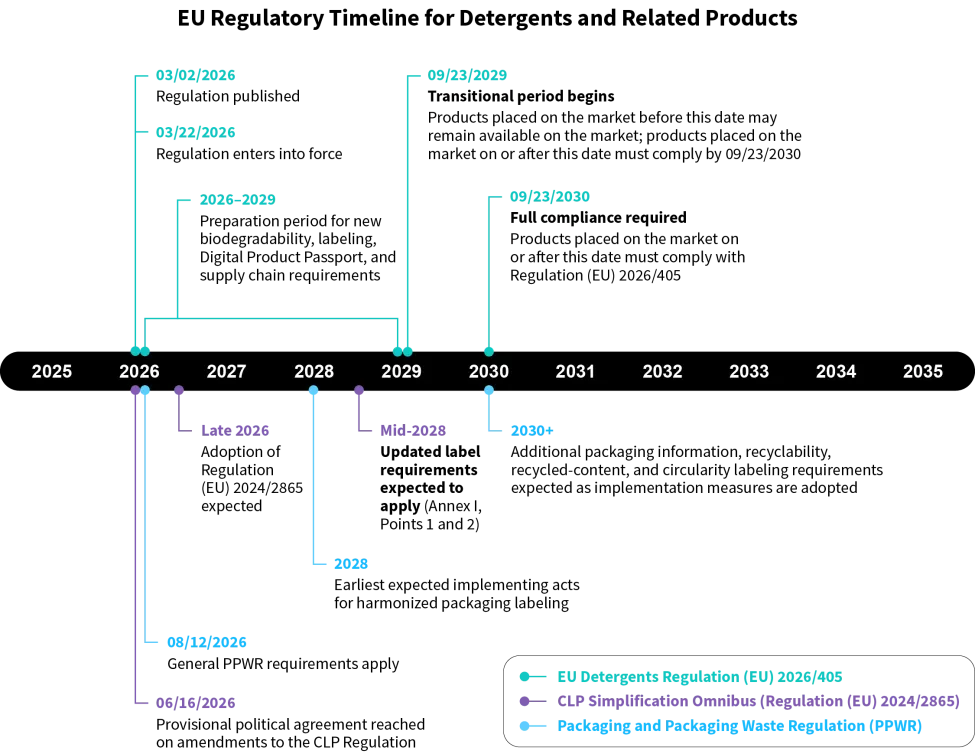
Following the European Union's adoption of Regulation (EU) 2026/405 — the most substantial update to EU detergents legislation in more than two decades — the compliance countdown has officially begun. The modernized framework addresses technological innovation, digitalization, refill systems, and emerging product categories, while expanding several compliance requirements beyond those established under the prior Detergents Regulation (EC No 648/2004).
Because of the broad scope of these changes, manufacturers, importers, and distributors should proactively prepare well before the regulation takes full effect in September 2029. Activities such as generating biodegradability data, implementing Digital Product Passport (DPP) infrastructure, updating labels, and evaluating supply chain responsibilities will require significant lead time.
The regulation affects a broad range of products marketed across the EU, including laundry detergents, dishwashing products, hard-surface cleaners, fabric care products, and emerging refill-based cleaning systems, meaning a wide range of manufacturers and distributors will be impacted by the new requirements.
Expanded scope and biodegradability requirements
As a reminder, one of the most significant changes is the inclusion of additional product categories and sales models within the regulation. In addition to traditional detergent products, the regulation introduces requirements relating to microbial cleaning products, refill systems, and products sold through online channels.
The new framework also extends biodegradability requirements beyond surfactants to cover additional substance groups, including polymers and other formulation components. As a result, manufacturers may need to generate new data and reassess existing formulations to demonstrate compliance with future requirements.
Digital Product Passports and new labelling requirements
The regulation introduces a mandatory Digital Product Passport (DPP) for detergents, requiring product information to be submitted to a centralized EU system. The DPP is intended to improve product transparency and provide authorities and downstream users with easier access to regulatory information.
In parallel, manufacturers will need to transition to a dual-layer labelling approach that combines a physical label containing core safety and product information with a digital layer accessible through a QR code or similar technology. This change is expected to affect labelling strategies across large product portfolios and may require substantial updates to product documentation and supporting systems.
New responsibilities across the supply chain
The regulation establishes clearer responsibilities for economic operators throughout the supply chain, including manufacturers, importers, distributors, and other responsible parties. In some circumstances, companies placing products on the EU market may also need to appoint an authorized representative within the EU.
These changes mean that manufacturers and other stakeholders will need to look beyond product formulation and labelling when evaluating compliance obligations. Companies will need to evaluate product data, supply chain arrangements, internal compliance processes, and regulatory responsibilities to identify potential gaps and prepare for implementation.
What companies should consider now
Implementing these requirements requires significant planning, testing, and system development across multiple business functions. With the September 23, 2029 application date approaching, manufacturers, importers, and distributers should already be evaluating the impact of the regulation across product portfolios, supply chains, and internal compliance processes.
Key questions to consider include:
- Which products are most likely to be affected by the new requirements?
- Do you already have the data needed to support the new requirements?
- Could current claims, labels, or product documentation create future compliance challenges?
- Will additional testing, regulatory assessments, or internal resources be required?
- Which activities should be prioritized now to reduce future costs, delays, and compliance risks?
To prepare for implementation of the regulation, companies can consider the following proactive steps:
Looking ahead
Regulation (EU) 2026/405 fundamentally transforms the EU detergents framework. Organizations that engage scientific and regulatory subject-matter experts now to prioritize the evaluation of product portfolios, data requirements, labelling strategies, and compliance processes will be best positioned to identify gaps, allocate resources effectively, and support a smooth transition ahead of the 2029 deadline.
What Can We Help You Solve?
Exponent's multidisciplinary teams help you address the regulatory, technical, and operational challenges associated with Regulation (EU) 2026/405, supporting every stage of the compliance journey from data gap analysis and regulatory strategy development to biodegradability assessments, Digital Product Passport implementation, labelling reviews, and dossier preparation.
Industrial Chemicals
Regulatory support for chemicals, solvents, polymers, antimicrobials, biocides, and more.

Biocides & Antimicrobials
Expertise in multifaceted regulatory requirements in biocide and antimicrobial product approval processes.

Biocides in Europe
Full product lifecycle strategy support, specializing in active substances.

Consumer Products: Cosmetics & Personal Care
Personal care products consulting for registration, notification targets, and product development.

EU REACH Support
Extensive consulting services to help you meet the EU's REACH compliance requirements.
