OUR NATICK FACILITIES
Interested in a tour of our Natick Lab?
Natick Laboratories
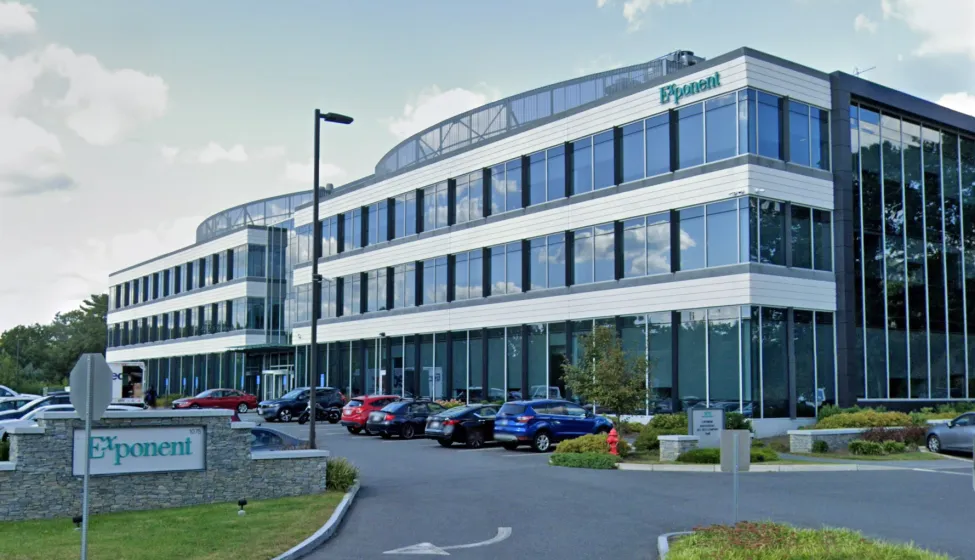
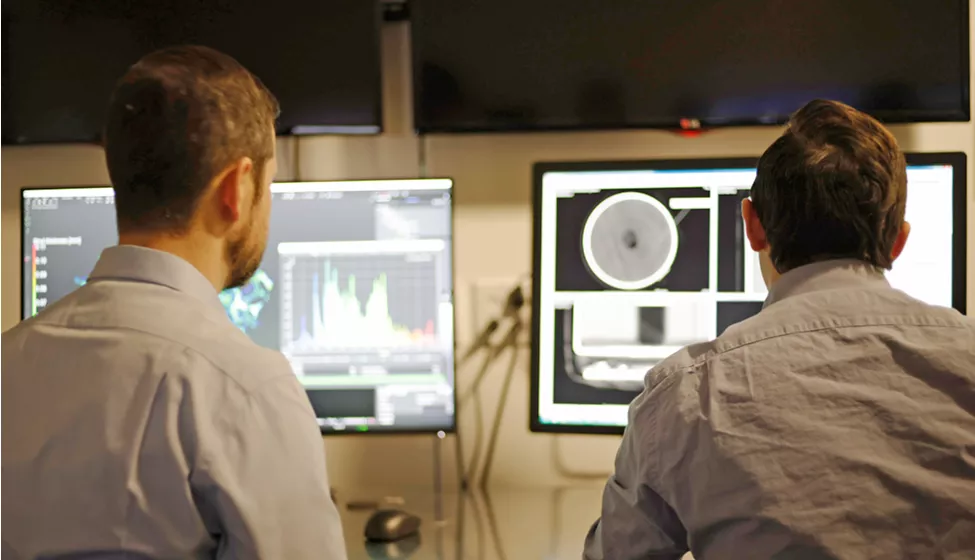
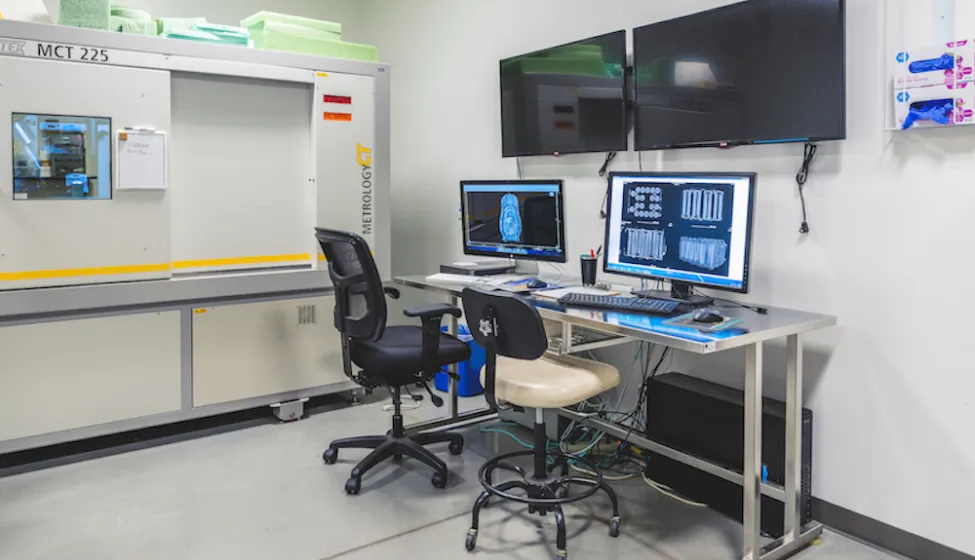
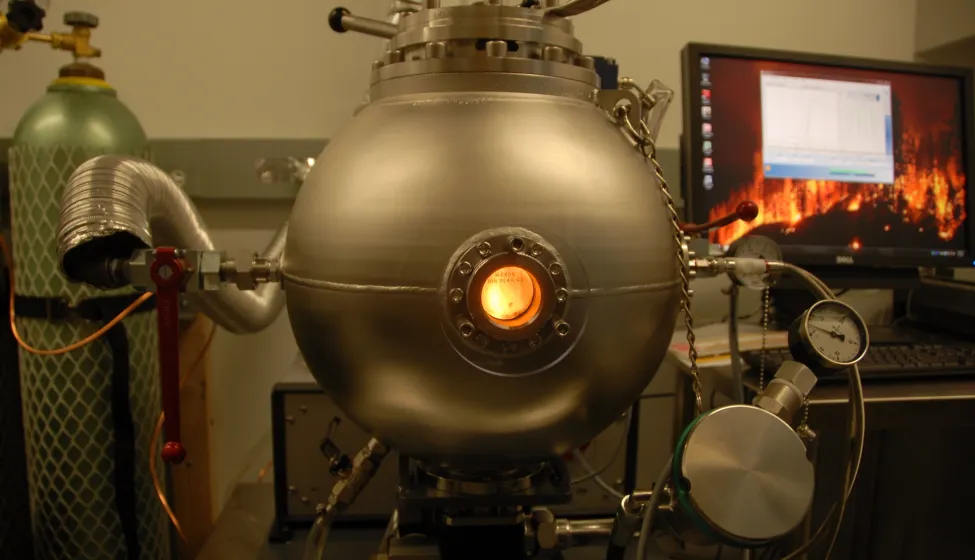
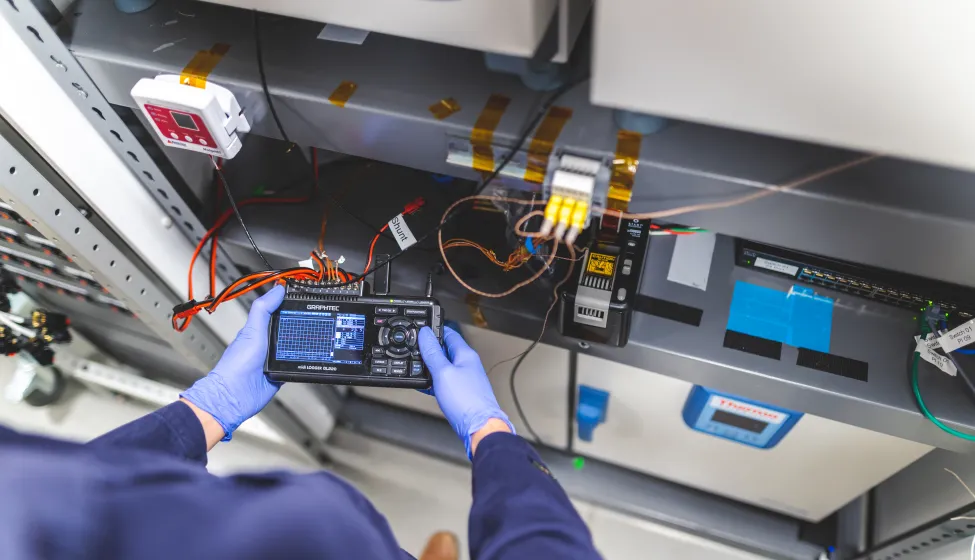
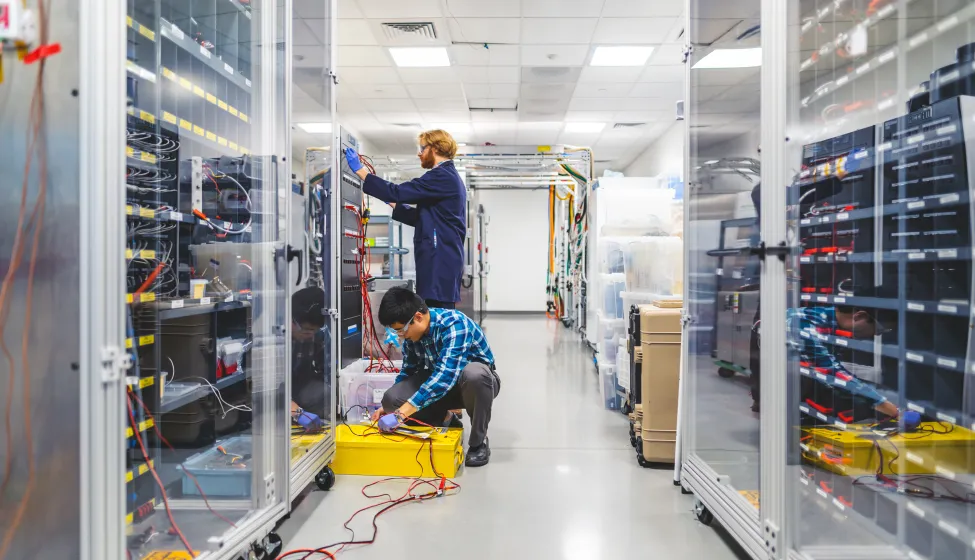
Clients rely on our mechanical testing laboratory to address complex challenges across a wide range of commercial and industrial mechanical systems, from biomedical and electronics to consumer products, transportation, utilities, energy industries, and beyond. Our cutting-edge facilities enable our teams to create custom structural and material test methods and perform advanced mechanical modeling and simulations, no matter the size of the assembly or the complexity of the materials involved.
- Structural and material analysis
- In silico analyses, including finite element analysis (FEA)
- Fracture, fatigue, and durability analysis
- Impact, vibration, and rotating equipment evaluation
- Material constitutive modeling, testing, and evaluation
- Coupled structural, thermal, and fluid dynamics analysis
- Electro-mechanical testing and analysis
- Failure analysis
- Root cause analysis
Our combustible dust testing laboratory helps clients develop effective mitigation strategies by analyzing potential combustible dust hazards and providing onsite consulting to identify potential problems. We help you select the right testing by offering a variety of standard ASTM International tests, such as combustibility and explosibility screening tests and customized test methods for accident recreation, hazard demonstrations, and hazard assessments.
- Thermal stability testing
- Combustibility screening testing (NFPA 660, UN/DOT/GHS 4.1, EPA 1030)
- Explosibility (go/no-go) screening testing (ASTM E1226)
- Explosion severity (Pmax/KSt) testing (ASTM E1226)
- Minimum explosible concentration (MEC) testing (ASTM E1515)
- Limiting oxygen concentration (LOC) testing (ASTM 2931)
- Flash fire screening testing
- Minimum ignition energy testing (ASTM E2019)
- Hot-surface ignition temperature of dust layers (ASTM E2021)
- Dust cloud minimum autoignition temperature (MAIT) testing (ASTM E1491)
- Accelerating rate calorimetry (ARC) testing
- Oven testing
- Sieve particle size distribution analysis
- Particle size reduction
- Scanning electron microscopy and energy dispersive spectroscopy (SEM/EDS)
Exponent's microbiology and molecular biology laboratory teams specialize in quickly developing customized testing while adhering to industry quality standards. We have the in-house expertise to perform protocol development, quality control checks, risk assessments, and comprehensive microbiological testing, including antimicrobial testing, disinfection and cleaning assessments, and contamination sampling and analysis.
- Quantitative polymerase chain reaction (qPCR)
- Reverse transcription, polymerase chain reaction (RT-PCR)
- Nucleic acid extraction
- Enzyme assays
- Protein assays
- Enzyme-linked immunosorbent assays (ELISAs)
- Lateral flow immunoassays
- Microbiological testing and enumeration
- Antibiotic susceptibility assays
- Pathogen testing
- Antimicrobial efficacy testing
- Disinfection protocol development and validation
- Microbiological contamination (viral, bacterial, fungal) testing
- In vitro diagnostics testing
- Biological contamination testing
- Allergen testing
- Cleaning validation and residuals analysis
- Microbial identification
Our scientists and engineers leverage our electrical testing laboratory to evaluate power and power electronic systems and components, electrical machinery (e.g. motors and generators), vehicle electronics and electric drive systems, consumer electronics, medical devices, communication and network systems, optics, software, controls, instrumentation, and sensors. We provide critical insights into design and manufacturing processes, helping you resolve your most formidable performance, safety, security, and compliance challenges.
- Electrical reliability testing
- Electrical safety testing
- Optics and photonics assessments
- Risk analysis for electrical system designs and associated hazards
- Testing to failure based on statistical sampling
- Failure analyses for devices, systems, components, subsystems, and integrated systems
- Root cause analysis and reverse engineering
- Modeling, measuring, and analyzing electric and magnetic fields (radiation) at varying frequency ranges for comparison to guidelines for exposure or interference and for analysis of device emission and susceptibility
- Developing technical prototype systems that enable our investigative techniques
- Electric shock, electrocution, and arc fault investigations
- Intellectual property analyses of hardware design, software design, and source code
- Computer forensics
Our corrosion experts provide advanced testing and analysis to help clients accurately evaluate susceptibility, understand corrosion mechanisms, and develop mitigation strategies.
We provide breakthrough insights for all types of corrosion and environment-related degradation challenges, including atmospheric corrosion, storage tank and pipeline corrosion, underground corrosion, aqueous corrosion, electrochemical migration, stray current corrosion, fretting and erosion corrosion, galvanic corrosion, microbiologically influenced corrosion, and high-temperature oxidation, carburization, and sulfidation.
- Corrosion failure and root cause analysis
- Customized corrosion and electrochemical testing
- Simulated physiological conditions for accelerated in vitro corrosion evaluation of medical devices
- Corrosion potential measurement and long-term monitoring (ISO 16429)
- Metal ion release testing (ASTM F3306)
- Cyclic potentiodynamic polarization (ASTM F2129 and ASTM G61)
- Anodic polarization (ASTM G5)
- Galvanic corrosion testing (ASTM F3044 and ASTM G71)
- Passivation evaluation
- Electrochemical impedance spectroscopy (EIS)
- Linear polarization resistance (LPR) and corrosion rate measurement
- Linear sweep voltammetry and cyclic voltammetry
- Optical and scanning electron microscopy with energy dispersive spectroscopy for material characterization and surface analysis
- Material selection and compatibility assessments
- Material evaluation for data center cooling systems
- Corrosion monitoring and remaining life estimation
- Accelerated life testing
- Corrosion susceptibility assessments
- Performance evaluation of paints and coatings
Clients come to Exponent to address materials engineering and electrochemistry challenges across every stage of the product lifecycle, including prototyping, product development, manufacturing, market release or installation, in-service use, recalls, and end-of-life concerns.
Our expert teams assist stakeholders across industries and applications — including construction, industrial systems, electronics, medical devices, energy storage systems, consumer goods, and appliances — with all forms of analysis on all classes of materials including metals, polymers, ceramics, glass, composites, electronic materials, thin films, and nanomaterials. We conduct a wide range of property and structure characterization, including mechanical properties, reliability behavior, compositional analysis, microstructural characterization, corrosion behavior, and fracture characteristics.
- Failure analysis and recreation testing
- Reliability and material aging evaluations
- Corrosion and electrochemical testing
- Fractography
- Materials characterization and analysis
- Contaminant identification and characterization
- Cross-section preparation and examination
- Optical microscopy
- Scanning electron microscopy with energy dispersive X-ray spectroscopy
- Fourier transform infrared spectroscopy
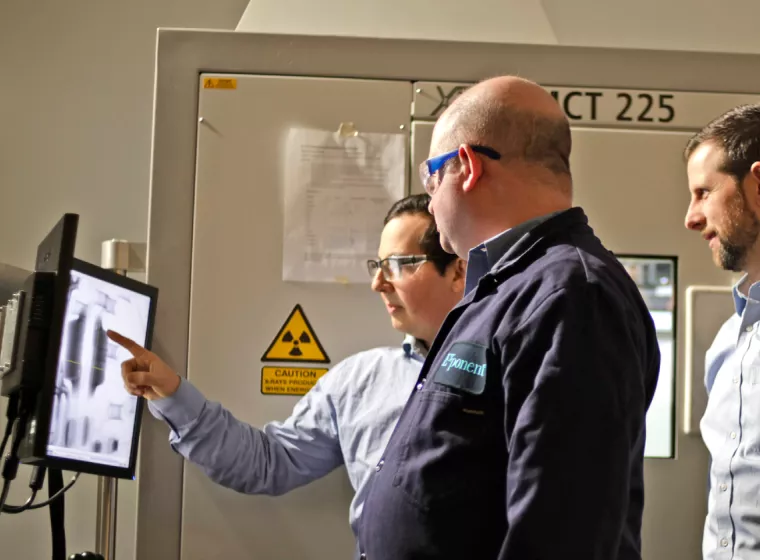
- X-ray radiography and computed tomography scanning
- Profilometry and roughness measurements
- Dimensional analysis
- Mechanical testing and indentation hardness
- Wear testing
- Photoelastic stress analysis
- Confocal Raman microscopy
- Fluorescence microscopy
- Confocal reflectance microscopy
- Glass stress microscopy
- Integrated optical transmission
Our on-site rapid prototyping capabilities are designed to accelerate innovation and support agile development for clients across industries. The facility supports short turnaround and small lot production as needed. Our team excels at optimizing and creating 3D models from scratch, leveraging large-bed resin printers, filament (PLA) printers, and hand scanners for sub-millimeter accuracy. This enables iterative testing and bespoke scenarios, ensuring technically sound prototypes that are practical for real-world application. By combining technical agility with multidisciplinary systems thinking, we deliver holistic solutions that go beyond traditional constraints and meet client needs.
- Data acquisition, including 3D scanning
- 3D graphic and CAD modeling
- 3D printing
- Agile part and product development to support rapid innovation cycles
- Bespoke testing scenarios for novel products
- Iterative testing support
- Performance assessments
- Risk assessment and failure mechanism identification
- Component and subsystem assessments
Exponent's battery testing laboratory goes beyond basic pass/fail testing, prioritizing broad quality metrics in parallel with industry certification standards to help our clients create robust, high-performing products, from battery cell- to pack- to system-level evaluations.
Whether working with consumer electronics, medical devices, EVs, or grid-scale batteries, our scientists and engineers leverage Natick's deep capabilities — including calorimetry, thermal abuse, battery cycling, and battery disassembly — to assess product performance and durability, verify battery chemistry and composition, identify potential failure modes, determine causes of failure, assist in intellectual property disputes, and more.
- Custom charge and discharge cycling performed at ambient and non-ambient temperatures, utilizing currents ranging from 5 µA to 1200 A
- Thermally accelerated battery aging and modeling
- Electrochemical impedance spectroscopy (EIS)
- Cell entropy determination
- In-device measurement of battery characteristics
- Cell disassembly
- Battery-cell mechanical cross-section analysis
- Computed tomography (CT) imaging
- Accelerating rate calorimetry (ARC), fractional thermal runaway calorimetry (FTRC), and purpose-built calorimeters
- Sealed vessel testing and gas hazard analysis
- Crush and nail penetration testing
- External short circuit testing
- Induced internal short circuit testing
- Performance and lifespan evaluations
- IP assessment and technical due diligence
- Safety and regulatory compliance testing, including customized abuse testing
- Quality assessment and design evaluations
- Risk assessments
- Failure analysis
- Root cause and corrective action assessment (RCCA)
- Materials characterization
- Metrology analysis
Our thermal teams collaborate on questions related to fires and explosions across a range of industries, from manufacturing to petrochemicals to consumer products to batteries. Whether it's determining the root cause of a fire or preventing one, our multidisciplinary engineers uncover the insights clients need to move forward. Our lab services include customized and standardized testing in areas such as:
- Product failure and recall
- Full-scale mock-up testing and recreations
- Appliance testing and risk review
- Fluid mechanics and flow loop characterizations
- Water loss/leak investigations
- Elevated pressure gas release
- Thermal hazard evaluation
- Heat release rate characterization
- Calorimetry at multiple scales
- Cone calorimeter (ASTM E1354, ISO 5660-1)
- Spontaneous combustion/self-heating testing
- Hot surface ignition testing
- Refrigerants ignition/flammability testing
- Determination of flammability limits of gas mixtures (ASTM E918)
- Plastic flammability testing (UL 94)
- Cigarette ignition testing (NFPA 260, NFPA 261, CA TB106, CA TB116, CA TB133)
- Fabric/textile/garment flammability testing (16CFR 1610, 16CFR 1615, and 1616)
- Combustible/flammable liquid flash point testing (ASTM D92)
- Upholstered furniture and mattress component and mock-up testing
- Hot wire testing (CEI-IEC 60695-2)
- Fire sprinkler testing
- Smoke and heat detector testing
Through our wet chemistry laboratory, our experts observe and analyze materials, helping clients address a wide range of challenges — ranging from selecting product materials, evaluating consumer health implications, or assessing environmental impacts.
- Customized sampling technique development and execution for products and materials
- Specialized analytical chemistry testing sample preparation technique development and execution
- Biomaterial toxicity and biocompatibility testing, including for metals, polymers, ceramics, composites, nanomaterials, and particulates
- Matrix protein accumulation assays
- Corrosion and toxicity assessments
- Quantifying blood damage, such as blood flow through cardiovascular devices or cardiovascular flow dynamics in prosthetic devices
- Cleaning validation and residuals analysis
- Fourier transform infrared (FTIR) spectroscopy
- UV/Vis spectrophotometry
- Colorimetry
On-Site Technologies
Fourier transform infrared (FTIR) spectrometer
Computed tomography X-ray (CT) scanner
UV/Vis spectrophotometer
Colorimeters
Scanning electron microscope-energy dispersive X-ray spectroscopy (SEM-EDS)
Vickers, Knoop, and Rockwell hardness testers
Spiral plater
Electrochemical potentiostats (AC/DC techniques)
Mechanical testing systems
Environmental test chamber
Accelerating rate calorimeter (ARC)
Microplate reader
Optical microscope
Fluorescence microscope
Confocal microscope
Drop tester
Large-format resin 3D printer
Battery cycling systems
Battery thermal runaway test chamber
Fractional thermal runaway calorimeter (FTRC)
Autoclave
Real-time PCR (qPCR) system
Western blot transfer system
Biosafety cabinet, class II type B2
Related Evaluations
![Battery Supply Chain Services [EECS]](/sites/default/files/styles/cards_home_card/public/media/images/GettyImages-1411358298.jpg.webp?itok=Yd7-744o)
Battery Evaluations
Gain confidence with our cutting-edge evaluations and consulting.
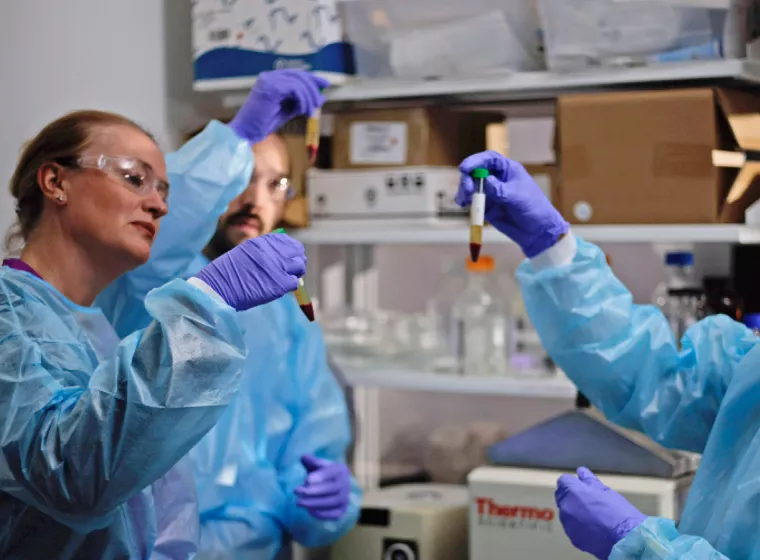
Biomedical Evaluations
Create advanced medical devices and solutions by working with pioneers in the field.
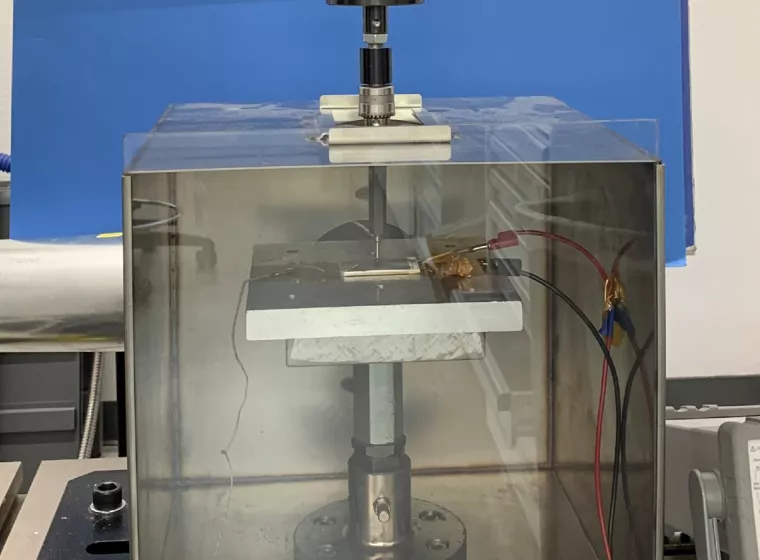
Mechanical Evaluations
Understand your product's strengths and limitations with customized mechanical testing.

Fire & Flammability Evaluations
Assess fire and flammability risks with custom testing that goes above and beyond the standards.
Materials Evaluations
Build a strong foundation for your products with specialized materials evaluations.
Scope of Accreditation to ISO/IEC 17025:2017
Our Natick Laboratory is accredited to ISO 17025 by A2LA (Certificate 2561.04) for a range of corrosion, electrical engineering, and microbiological tests, and our quality management system (QMS) successfully complies with the most current ISO 9001 standard, ISO 9001:2015. Our lab is accredited to perform the following tests:
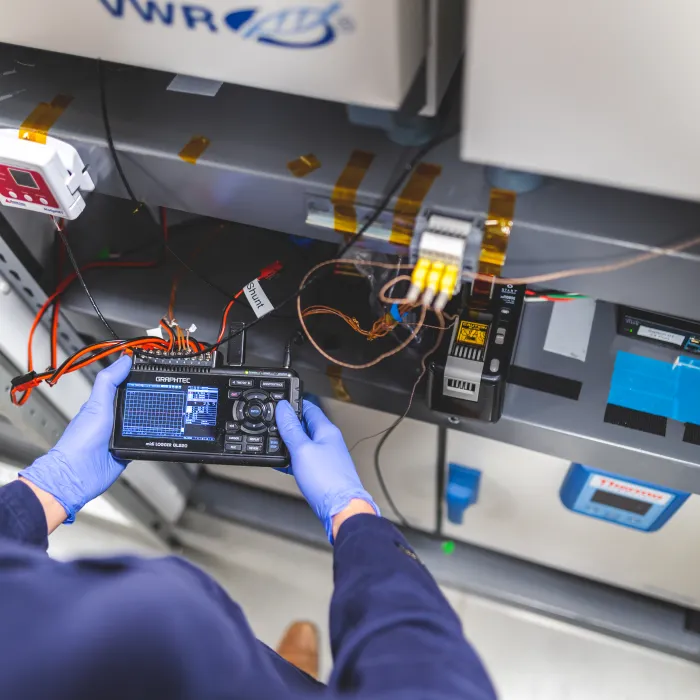
Cyclic Polarization (ASTM F2129; ASTM G61); Galvanic Corrosion (ASTM G71; ASTM F3044); Cyclic Polarization Measurements for Localized Corrosion, Susceptibility of Iron, Nickel, and Cobalt Alloys (ASTM G61)
Determination of Alpha and Accessible Exposure for Sources with a Single Centroid Wavelength Between 400 nm and 1100 nm and Continuous Wave Operation (IEC 60825-1 section 5.4.3 for Condition 3); Photobiological Safety of Lamps and Lamp Systems (IEC 62471-1)
Microbial Enumeration Methods (USP <61>)

Best-in-Class Facilities Meet World-Class Experts
Our multidisciplinary teams of scientists and engineers at Exponent facilities in the U.S., Europe, and Asia are uniquely positioned to provide rapid response, onsite inspections, bespoke testing, and unparalleled scientific analysis, data, and research.