OUR PEOPLE
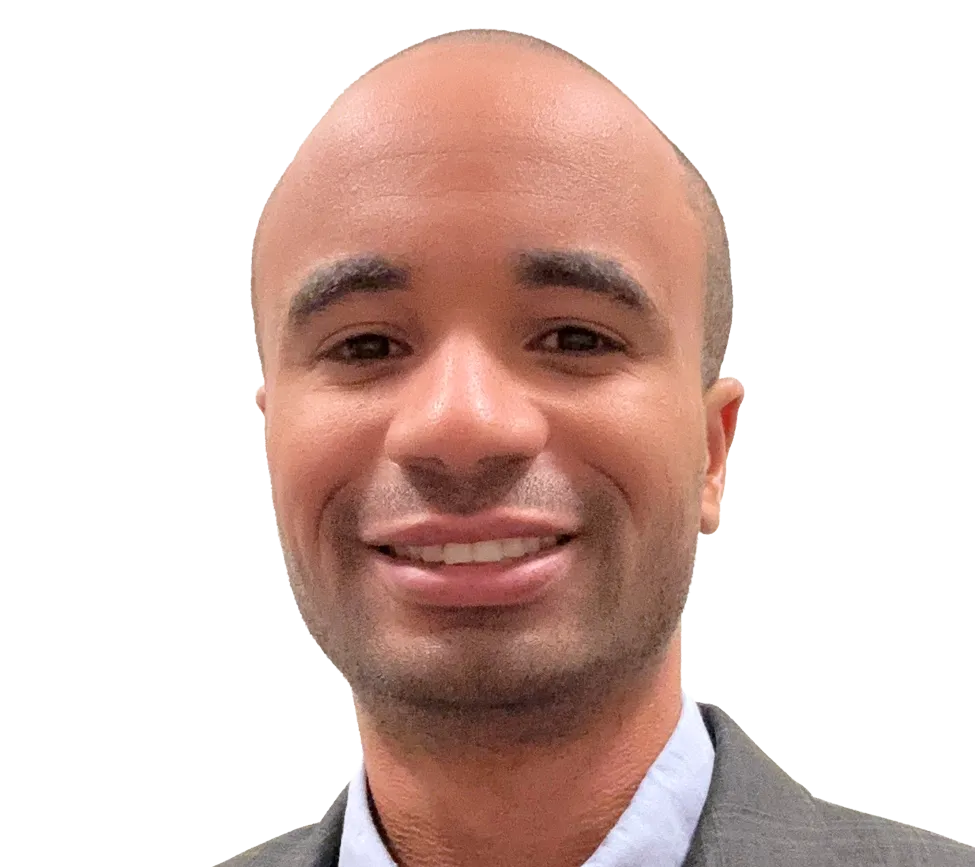
Caleb Jeanniton
Ph.D.
He/Him
Scientist
Dr. Jeanniton specializes in human factors investigations of how individual, environmental, and technological factors influence decision making, attention, and mobility in traffic contexts.
He has utilized his background in human factors to investigate emergent mobility technologies such as highly automated vehicles and wearable robotics, specifically characterizing their interactions with users' perception, mental workload and situation awareness.
Dr. Jeanniton earned his Ph.D. in Industrial and Operations Engineering from the University of Michigan, Ann Arbor where he conducted research and authored papers on pedestrian and driver decision making in traffic environments, the interactions between road users and highly automated vehicles, and human performance using wearable robotic technologies. Dr. Jeanniton has also performed simulated and physical assessments of roadway environments that include lighting, glare and sightline evaluations as they may relate to vehicle accidents. His expertise also involves examining the role of attention and biomechanics in slip/trip-and-fall scenarios and other premises liability claims.
Dr. Jeanniton's analytical approach combines behavioral experimentation with state-of-the-art technologies, including virtual reality and computational simulations, to determine how individuals perceive, process, and respond in dynamic traffic environments. He leverages these methodologies to analyze how cognitive load, attention, demographics, and physical location contribute to street crossing decisions, collision risk, and informing prevention measures across a range of transportation and mobility scenarios.
Dr. Jeanniton has published peer-reviewed papers and delivered presentations on driver and pedestrian decision making, the effects of wearable robotics on cognition and task performance, and pedestrian interactions with autonomous vehicles. He has regularly contributed to the Human Factors and Ergonomics Society (HFES) and his work has been recognized with the PACE Fellowship, Rackham Merit Fellowship, and the De Florez Prize in Human Engineering, reflecting his sustained contributions to advancing human factors science in transportation and mobility.