June 29, 2026
Authors


State law establishes standardized labeling requirements and prohibits "sell by" dates for packaged food products
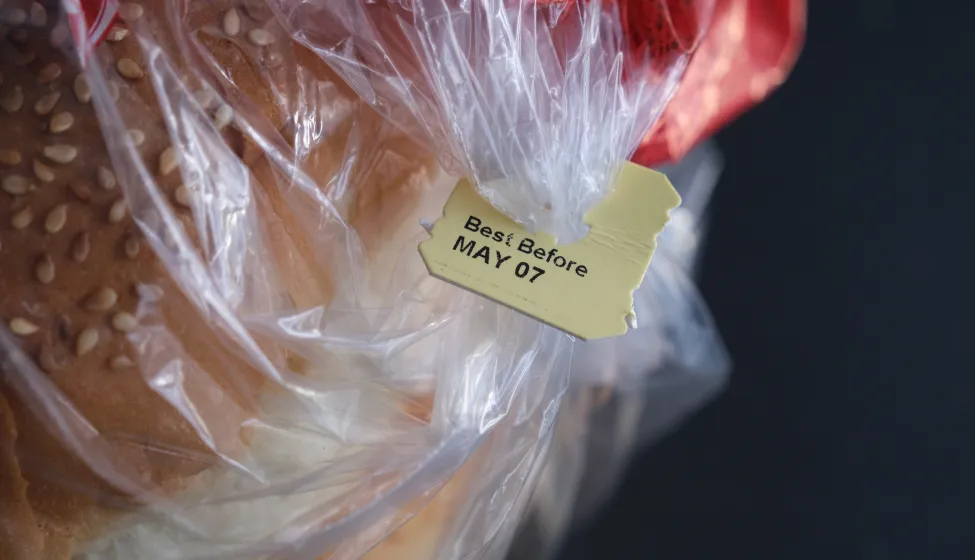
California Assembly Bill 660 (AB 660) introduces new requirements for food date labeling that take effect July 1, creating standardized expectations for how manufacturers communicate product quality and safety. The law applies to packaged food products sold in California and reflects a broader effort to reduce consumer confusion, food waste, and associated environmental impacts.
The regulation establishes uniform terminology for "quality" and "safety" dates and prohibits the use of consumer-facing "sell by" dates, addressing a landscape in which more than 50 different date label formats have been used across the U.S. For companies that manufacture, distribute, or sell packaged food, these changes introduce new compliance obligations that may require updates to labeling, product classification, and coordination across supply chains.
Standardizing quality and safety date labels
AB 660 requires all covered packaged food products to display either a quality date or a safety date using specific, prescribed language.
Quality dates must use the terms:
- "BEST if Used by"
- "BEST if Used or Frozen by"
Safety dates must use the terms:
- "USE by"
- "USE by or Freeze by"
The distinction between these two categories is central to compliance. Quality dates indicate when a product's freshness or quality may begin to decline, while safety dates indicate when a product may no longer be safe to consume.
The law also allows abbreviated labels ("BB" for quality and "UB" for safety) for products with limited packaging space.
Eliminating consumer-facing "sell by" dates
In addition to standardizing labeling terminology, AB 660 prohibits the use of "sell by" dates on consumer-facing packaging.
The law provides a narrow exception for coded date markings that are not easily readable by consumers and are used solely for inventory management purposes. This approach allows manufacturers and retailers to retain stock rotation practices while removing labeling that has historically contributed to consumer confusion and premature disposal of food.
Implications for manufacturers and supply chains
Manufacturers and retailers must now comply with the standardized labeling requirements for all packaged food products manufactured on or after July 1. This includes determining whether each product requires a quality or safety date and applying the correct terminology consistently across packaging.
Even for companies that do not sell directly into California, retailer and distributor requirements may extend these labeling expectations across broader supply chains, effectively expanding the law's impact beyond the state's formal jurisdiction.
To address compliance requirements and reduce exposure to penalties or downstream disruption, companies may need to evaluate current labeling practices, identify nonconforming date formats, and update packaging accordingly. Because the law applies to all parties that sell or offer products for sale, coordination with retail partners is critical to avoid compliance gaps across distribution channels.
Violations are classified as misdemeanors and may result in fines, licensing actions, and potential litigation exposure under California consumer protection statutes.
What Can We Help You Solve?
Exponent supports manufacturers, distributors, and retailers in navigating evolving food labeling regulations, including risk assessments, labeling evaluations, and compliance strategies. Our consultants help identify gaps, assess regulatory exposure, and develop practical approaches to align product labeling with new requirements across complex supply chains.

Food Safety & Nutrition Regulatory Support
From risk assessment to product recall, Exponent scientists provide support on critical safety and regulatory challenges.
![Consumer Products [PSMC]](/sites/default/files/styles/cards_home_card/public/media/images/GettyImages-171366863.jpg.webp?itok=0YQ9vN1U)
Food
Food safety, nutrition, and dietary exposure assessments, and technical and regulatory support.

Claims on Foods and Dietary Supplements
Regulatory strategy development, evidence review, documentation and petition preparation, and regulatory submission monitoring.

Food and Nutrition Science Support
Food science and nutrition consulting support for food, ingredient, and beverage manufacturing companies, trade associations, and government agencies.

Regulatory & Compliance
Get the technical guidance you need to improve product safety and meet regulatory compliance across all industries.

Product Safety & Recall
Exponent scientists, engineers, and regulatory experts mobilize to help inform your toughest decisions.
