October 28, 2026
Author



Executive Summary
aI is transforming fire protection by accelerating code research, sprinkler layout design, evacuation planning, and firefighter support. Specialized tools trained on domain-specific data show strong potential to improve efficiency and decision-making. However, fire protection system design and performance are context-dependent, and decisions vary with occupancy, fuel load, building geometry, and a variety of other hazard factors. AI system development in the fire protection domain benefits greatly from high-quality data paired with expert oversight. As adoption grows, the most effective tools could be those that combine machine-learning capabilities with fire protection expertise to improve engineering workflows without compromising accuracy, compliance, or human judgment.
Machine learning and large language tools are pushing new frontiers in fire protection but require domain expertise for effective use
AI tools and services have become increasingly prevalent in the fire protection industry. Earlier this year, the National Fire Protection Association (NFPA) released an AI chat tool as part of its update to the NFPA LiNK software package. "CASI" (Codes and Standards Intelligence) is an assistant that conducts conversations, creates summarized responses, and accesses citations from NFPA through a prompt window. The model is trained on NFPA's library of more than 300 codes and aims to accelerate code research and analysis workflows.
This and many other AI tools promise to accelerate fire protection work. While some applications are gaining traction quickly, others are less mature and still being refined. Effectively developing AI tools requires navigating context-sensitive code requirements, system characteristics, organizational inputs, and training data limitations in a world of continually evolving fire safety challenges. Fire and fire protection system data comes in many forms and can be challenging to collect, presenting a hurdle to further developing AI fire protection tools.
What AI fire protection tools are available now?
Many AI tools are currently being used in fire protection. NFPA's CASI is possibly the most well-known, but there are others on the market. The National Fire Sprinkler Association (NFSA) recently released its own large language tool, ChatEOD, which can be used to research sprinkler codes. The model has been trained on NFSA and fire sprinkler code literature (such as NFPA 13, 14, 25, and 101) to focus its responses on relevant source material. The model was tested against several general-purpose LLMs. According to NFSA, ChatEOD has proven more accurate than general-purpose LLMs thus far in answering sample code questions, illustrating the advantages of training LLMs on domain-specific data.
AI computer vision models are now also being incorporated into fire detection strategies. Although video-based detection has been available for years, early systems used image-processing algorithms to detect a fire. Newer commercially available AI-based systems use data-driven image classification and continuous model training rather than fixed, deterministic algorithms.
Computer vision is also being used for inspection, testing, and maintenance of fire protection systems. These tools can accelerate data entry, review inspection reports, and automate compliance documentation. While still new, some applications may help identify code deficiencies and maintenance needs during inspections through smartphone applications, or "digital twin" remote inspections via cameras, drones, and video conferencing.
Further, Firedesign.ai and Salamandra analyze floor plans and produce annotated sprinkler layouts and egress paths, perform hydraulic analysis, and produce material lists. By using computer vision and GenAI to scan architectural plans and respond to user prompts, these tools have the potential to reduce the time spent on design and code compliance-related work.
How are new AI fire tools evolving?
Research is beginning to show an increase in the accuracy of AI models in fire protection system design. Fire safety researchers at the University at Buffalo in collaboration with NFPA used computer vision to perform fuel load surveys for three buildings in the city. The result was measurably larger predicted fuel loads than existing estimates relying on limited survey data, with important implications for current codes and guidelines for fuel-load density calculations in performance-based design.
Researchers recently trained a model on a database of 120 fire sprinkler design drawings. The model was then used to generate sprinkler placement layouts for new floorplans. This research may assist potential future AI-accelerated fire system design processes.
Similarly, researchers in Hong Kong have created AI software to help assess the fire safety of large atriums. The model was trained to predict smoke, temperature, and carbon monoxide concentration; it can then assess the available safe egress time (ASET) and fire safety systems using industry-accepted methods (computational fluid dynamics). The tool is meant to be used to check proposed atrium fire engineering design and provide code-compliant fire protection design improvements.
Researchers at the National Institute of Standards and Technology (NIST) are also currently working on AI systems to help firefighters in the field. The institute is focusing on three use cases:
- Flashover predictions — Firefighters typically rely on experience to recognize when flashover may be imminent. NIST hopes to develop AI tools that provide real-time forecasts for residential homes.
- Dynamic path optimization for evacuation planning — A system that can evaluate escape routes during a fire and provide alternative suggestions for evacuation based on changing smoke and fire conditions during incident response.
- Physiological monitoring for firefighter heart health — sudden cardiac event is the leading cause of death for U.S. firefighters. This system aims to monitor firefighters during training and in the field to provide real-time heart health monitoring and early warnings.
What obstacles do AI-enabled fire tools face?
AI models depend on the quality and relevance of their training data, and fire protection presents unique data challenges. Unlike other building systems that generate continuous operational data, fire detection and suppression systems only produce valuable event data when a fire is present. Gathering reliable fire-event data typically requires, but is not limited to, expertise in material flammability, fire dynamics, and fire suppression and detections. In many of the examples above, researchers rely on verified data or controlled experiments to reduce uncertainty. Domain-specific expertise can help identify and address data gaps that may materially affect an AI tool's output.
Determining whether the failure stemmed from training data, model output, engineering decisions, or other contributing factors requires forensic evaluation. Although AI risk management guidance exists for model development, no standard method currently addresses AI model failure in fire protection or fire investigation.
This could raise questions when systems do not perform as designed such as:
- If an AI tool is used to design a code-compliant sprinkler system, is that considered adequate to an Authority Having Jurisdiction (AHJ)?
- When a system that was monitored or designed using AI fails to detect or suppress a fire, who is liable?
- How do you investigate and identify such a failure?
- Does the regulatory landscape adequately address these concerns?
AI has the power to transform the fields of fire protection design, code analysis, and fire research, but it also introduces new failure modes, new liability concerns, and new forensic challenges. Without a standard set of regulations or industry consensus on standard-of-care for developing and deploying new AI models, many questions remain as to what happens when errors occur and how to respond.
What Can We Help You Solve?
Exponent's multidisciplinary team of engineers combine experience evaluating fire suppression, detection, and alarm systems with expertise in fire dynamics, material behavior, and code requirements to support product liability litigation, subrogation, and hazard evaluation. As AI reshapes fire protection, we help clients understand new failure modes, liability questions, and accountability gaps.
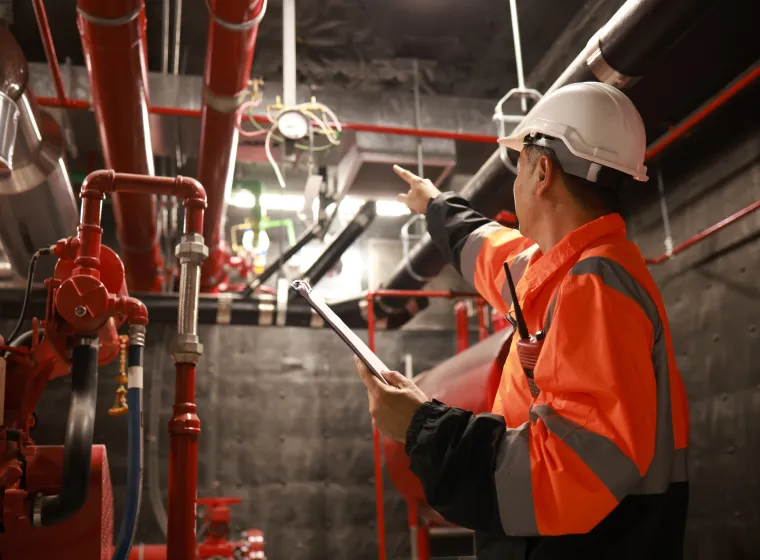
Fire Protection Engineering
Extensive fire suppression, detection, and alarm system testing to support achieving code and regulatory requirements.
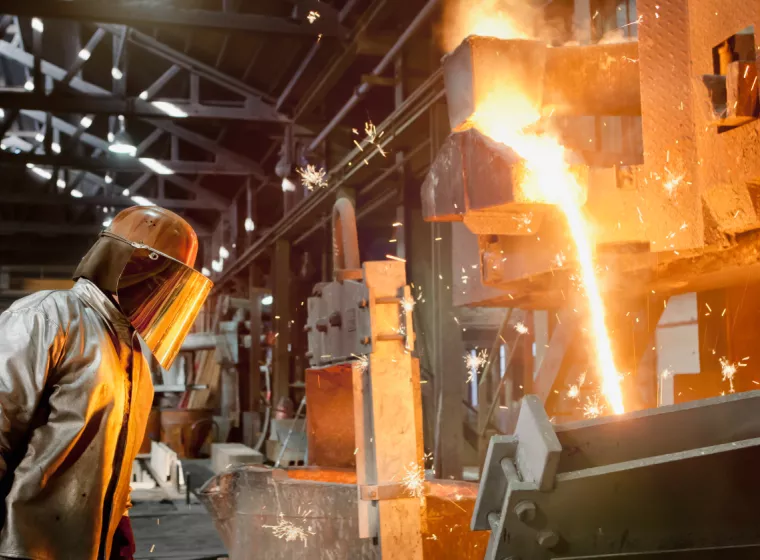
Fire & Flammability Testing
Thorough fire and flammability testing for sprinklers, smoke, and heat detectors, vehicle fire testing, and more.
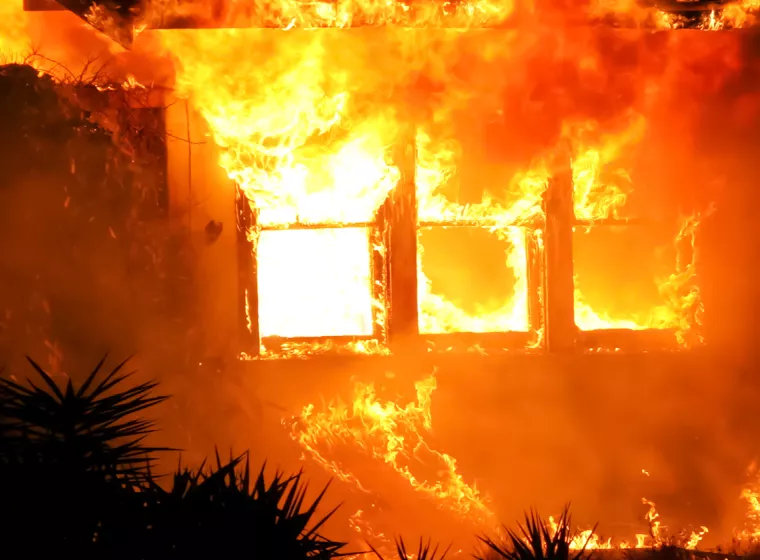
Fire & Explosion Investigations
In-depth field examinations and high-tech modeling and testing to determine the origin and cause of fires, gas explosions, dust explosions, and other explosions...
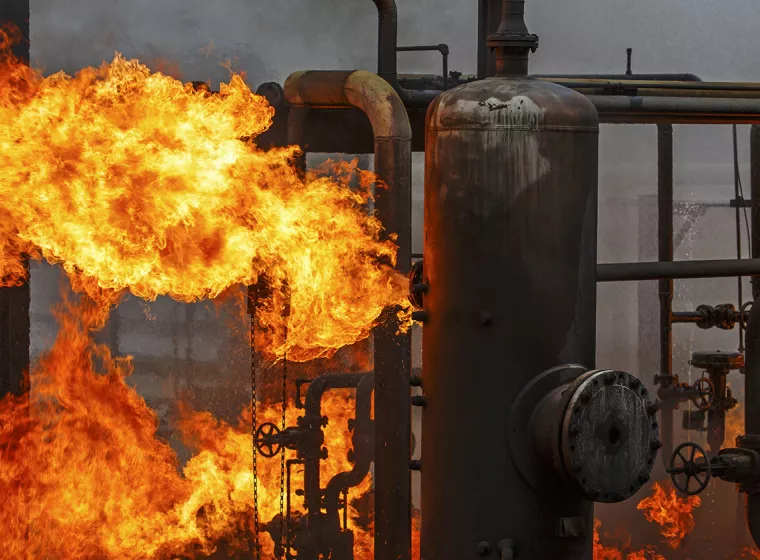
Thermal Fluid & Combustion Systems
Support for HVAC, boilers, commercial refrigeration systems, and more.
Thermal Sciences Expertise for Disputes
Evidence-based scientific insights and expert witness support for industrial fires and explosions, oil and chemical spills, and equipment failures.
Insights