September 2, 2026
Authors




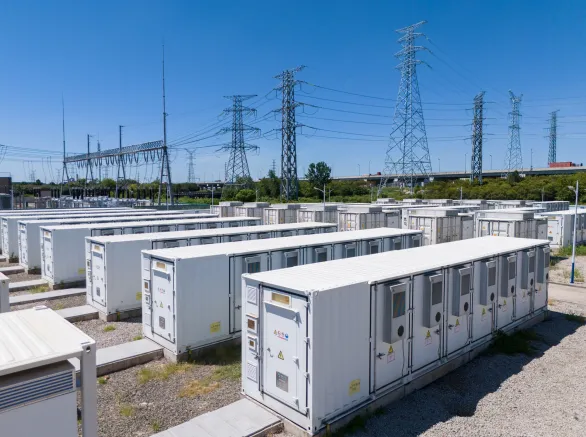
As grid-scale battery energy storage systems (BESS) continue to expand, utilities, developers, and independent power producers face a critical question: How can they deploy storage at scale while managing safety, reliability, and long-term performance?
In a new article in a special Energy Storage section of CEP Magazine, Exponent's Keith Beers, Ryan Spray, Sergio Mendoza, and Michael Barry offer a multidisciplinary look at the future of BESS, examining the technologies, design considerations, safety systems, and risk frameworks shaping stationary energy storage today. It covers the basics of BESS anatomy, explaining how batteries, battery management systems, power conversion equipment, thermal controls, fire protection systems, and energy management systems work together to store and deliver power. It also explores the evolving chemistry landscape, including established lithium-ion technologies such as nickel-manganese-cobalt (NMC) and lithium-iron-phosphate (LFP), as well as emerging alternatives like sodium-ion and aqueous zinc batteries.
The authors explore the tradeoffs among chemistry, performance, safety, codes, standards, and site-specific risks for each BESS type. Additionally, they review key standards and testing frameworks, including UL 9540, UL 9540A, and NFPA 855, and show how hazard mitigation analyses, fire testing, explosion prevention, emergency ventilation, and failure-propagation assessments inform deployment decisions.
For utilities, project developers, regulators, insurers, and technology providers, this article is a guide to the technical and safety considerations that will shape the next phase of battery energy storage deployment.
From the publication: "According to a report released by the Solar Energy Industries Association in February 2026, 57.6 GWh of battery storage was added to the U.S. grid in 2025, bringing the total installed BESS capacity to 163 GWh."