June 30, 2026
Authors




New document reviews various state battery collection and recycling laws
In April, the U.S. Environmental Protection Agency published a detailed review of state battery collection and recycling policies and programs. Prepared for Congress to fulfill the mandate in Section 70401(b) of the 2021 Infrastructure Investment and Jobs Act, the report, Battery Collection Best Practices, presents recommended best practices for state, Tribal, and local governments. The accompanying Battery Collection Best Practices Toolkit website provides a repository of materials and information, including case studies, educational materials, how-to guides, infographics, reports, standards, tip sheets, webinars, and webpages relating to battery collection and recycling. Both are meant to help state, Tribal, and local governments develop or improve battery collection programs to increase battery recycling rates, make battery collection and recycling safer, and increase U.S. critical mineral recovery and reuse.
Battery collection challenges
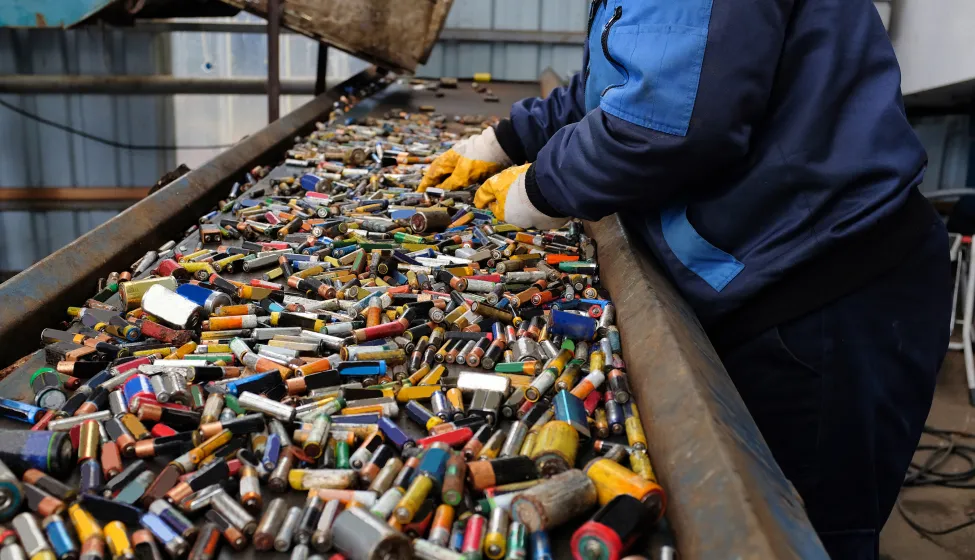
Batteries present significant challenges for waste disposal and recycling facilities. Lithium-ion batteries, in particular, can retain substantial electrical energy and may create shock, short-circuit, arcing, and fire hazards if damaged, improperly handled, or mixed with other waste. Mechanical crushing, puncture, or deformation can damage internal cell components and initiate internal short circuits or thermal runaway. Damaged batteries may also release flammable electrolyte, corrosive materials, and toxic decomposition products. In addition, improper disposal can result in soil or water contamination and may allow fires to spread through waste-processing equipment, storage areas, and surrounding materials. In the report, EPA states that respondents from 39 states report that batteries are the most difficult material for waste facilities to manage out of a list of 21 waste materials, citing a 2024 survey from the Association of State and Territorial Solid Waste Management Officials. In the survey, waste facility managers reported risk of fires, high operational costs, lack of collection and transportation infrastructure, and limited battery recycling facilities as the main barriers to battery recycling.
Because of these challenges, most battery recycling rates in the U.S. remain low. According to the report, alkaline batteries have an estimated recycling rate of just 4% nationally, and there is no reliable measure of Li-ion battery recycling rates. Lead-acid battery rates, however, have a reported 99.3% recycling rate mostly due to federal and state waste disposal regulations.
Battery collection best practices
The report features several best practices for the collection of several types of batteries, including Li-ion batteries, and mercury-containing batteries. Best practices include but are not limited to the following:
- Small and mid-format Li-ion batteries found in electronics and e-mobility devices: These batteries pose the greatest fire risk as they are more likely to be missed in waste management streams. EPA recommends collecting batteries safely in certified containers, developing protocols to deal with damaged batteries, and establishing fire detection and suppression measures in waste facilities.
- Large Li-ion EV batteries: EPA recommends following guidelines developed by the Suppliers Partnership for the Environment, a partnership between vehicle makers and battery suppliers. These include performing regular battery inspections, disconnecting and deactivating power supplies before handling batteries, using rigid packaging with adequate spacing to prevent fire spread, storing batteries below 80°F, and training employees to recognize early stages of battery thermal runaway.
- Mercury-containing batteries: Battery producers phased out mercury-containing batteries after the Rechargeable Battery Management Act in 1996, but some button batteries used in hearing aids and other small electronics may still appear in waste streams. These batteries should be kept separate from all other batteries and should be properly taped.
The EPA recommendations complement a broader and rapidly developing body of guidance addressing battery safety, storage, transportation, and recycling. SAE International documents cover automotive battery recycling, battery chemistry identification, lithium-ion battery storage, transportation, and lifecycle traceability. Relevant examples include SAE J2974 for automotive battery recycling, SAE J2984 for identification of transportation-battery chemistries, and SAE J3235 for risk mitigation during lithium-ion battery storage. National Fire Protection Agency (NFPA) 855 provides related requirements for stationary energy storage systems, including provisions concerning operation, maintenance, storage, hazard mitigation, and decommissioning. Although it is not a general battery disposal standard, it can inform the management of stationary battery systems before dismantling, removal, or final disposition. Federal hazardous materials transportation requirements also apply when used, end-of-life, or damaged lithium batteries are transported to recycling or waste-management facilities.
These documents show that battery collection cannot be addressed in isolation. Effective programs must account for electrical isolation, chemistry identification, packaging, temporary storage, employee training, emergency response, transportation, recycling, and final disposition. This remains an important and evolving area of safety practice, requiring governments and waste-management organizations to monitor emerging technologies, regulations, and consensus standards as battery applications and recycling processes continue to develop.
What this means for governments
The publication, along with the accompanying toolkit, provides detailed information to help state, Tribal, and local governments develop or refine battery collection and recycling programs. These programs can help prevent costly fires like a recent conflagration at a Des Moines, IO landfill, create local jobs, and help increase the capture and reuse of critical minerals in the U.S.
Creating these programs, however, can require localized surveys, research, and reporting. States and cities may need to partner with private waste collection and recycling facilities to develop these programs, which will require oversight to support compliance with current and future standards.
What Can We Help You Solve?
Exponent's battery recycling experts can help state, tribal, and local governments develop or refine battery collection and recycling programs. They can also assess procedures, help design fire detection and prevention systems, and establish battery detection processes at waste collection facilities.

Batteries & Energy Storage
Supercharge performance, reliability, and safety across all stages of the battery and energy storage product lifecycle.

Materials Failure Investigations
Rigorous analysis, direct and root cause investigations of materials failures.

Government Sector
We help government agencies push the envelope on innovation and maintain the safety of their operations, workers, and communities.
Battery Failure Analysis & Investigation
Comprehensive battery failure analysis to determine the root causes of failures and identify opportunities for mitigation.

Environmental & Regulatory Compliance
Rigorous analyses to help clients overcome complex environmental and regulatory hurdles and meet auditing obligations.
Plastic Recycling Consulting Services
Exponent provides world-class evaluations and scientific insights to help plastic recycling stakeholders improve recycling performance and safety, assess and mi...