August 14, 2026
Authors







Executive Summary
As liquid cooling becomes essential to support growing AI workloads, data center operators face growing risk from polymer degradation, coolant chemistry changes, and performance uncertainty in cooling systems.
Proactive assessment of materials, coolant chemistry, contamination pathways, and long‑term performance provides a way to manage these risks. By combining custom testing, accelerated aging, and system‑specific analysis, data center designers and owners can set informed operating limits and reduce uncertainty.
How advanced performance assessments and polymer and coolant chemistry evaluations can help manage risk and avoid costly shutdowns
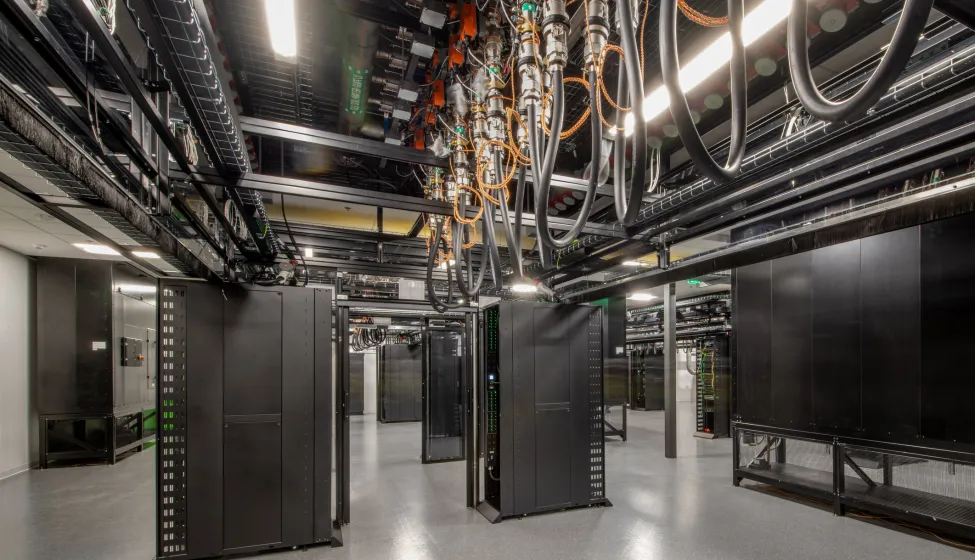
As data centers proliferate at unprecedented speed and scale, the massive power demands of AI workloads, hyperscaling, and cloud computing have made traditional computer room air conditioning (CRAC) less favorable in some installations. Liquid cooling has become more important due to the fundamental thermodynamic differences between liquids and gases. However, as extreme workloads push liquid cooling infrastructure to its thermal and operational limits, they introduce a new class of reliability challenges.
Modern data center cooling architectures rely on rapidly evolving designs, new materials, and diverse supplier ecosystems. When these high-performance systems are scaled, variables such as coolant chemistry, thermal interface material design, and formulation specifics for polymeric components can contribute to widespread systemic risk, threatening uptime.
The challenge is not simply identifying failures after they occur. As clusters run hotter and longer, operators must understand the factors affecting the lifetime of materials in their system to predict how components degrade. For example, in systems that support AI inference, healthcare, or financial infrastructure, a sudden loss of cooling capability can carry consequences far beyond a local equipment shutdown. Addressing that challenge requires moving from reactive investigation toward proactive, system-specific risk assessment.
What role do coolant chemistry assessments play in long-term material performance?
Liquid cooling systems rely heavily on glycol-based coolants and proprietary inhibitor packages to manage corrosion, microbial activity, and thermal performance. These fluids must remain compatible with a wide range of materials, including hoses, seals, valves, cold plates, and heat exchangers comprised of various polymers and metals.
Chemical compatibility is often inferred from supplier specifications. Those specification sheets are typically designed to relay information needed for use in standard configurations rather than considering the nuances of any specific system. They cannot account for all possible end-use conditions.
Proactive compatibility assessments can be a foundational component of risk management, establishing not just that materials and fluids can coexist, but that they can do so reliably over the intended service life of the system. Through these assessments, operators can identify incompatibilities and degradation pathways before they translate into field failures.
Laboratory techniques such as Fourier-transform infrared spectroscopy (FTIR), gas chromatography-mass spectrometry (GC-MS), liquid chromatography mass spectrometry (LC-MS), gel permeation chromatography (GPC), and thermomechanical analysis (DSC, TGA, rheology, etc.) coupled with accelerated aging protocols enable evaluation of additive depletion, extractables, and leachables from polymeric components in the flow path and early signs of chemical interaction that could prove problematic for system operation.
Where does contamination risk originate inside cooling systems?
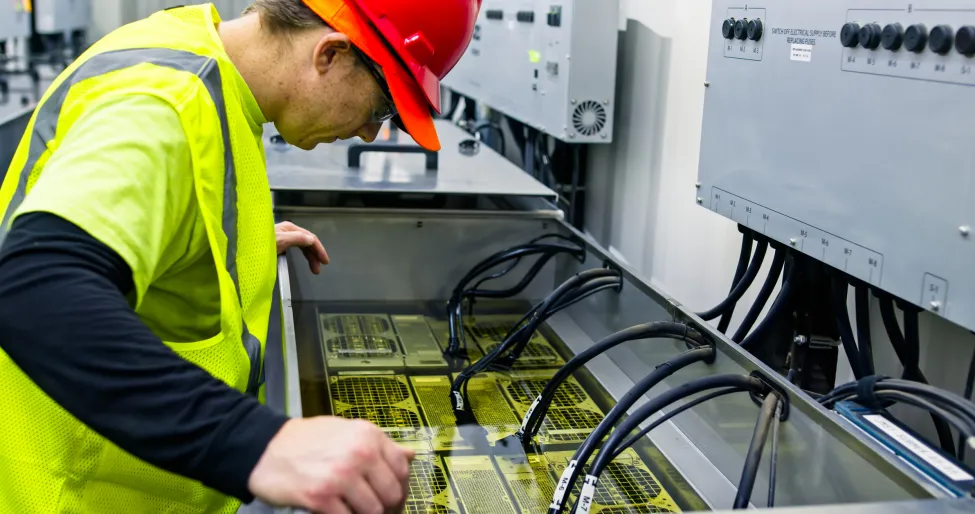
Complex cooling systems can be prone to contamination that results in turbidity, residue formation, solid phase accumulation, and clogs. Contamination can arise from multiple sources: leaching from polymeric components, microbial growth, interaction between mixed materials in the loop, or inadvertent introduction of foreign material during any phase of construction, operation, or maintenance. The consequences of missing these contamination signals can be particularly severe in data center environments, where fluid property changes can trigger shutdown protocols across large installations.
A proactive risk assessment strategy can help identify and understand the likelihood of contamination pathways before they produce observable symptoms. Leveraging chemical analysis, microscopy, microbial culturing, and particulate matter characterization to evaluate reliability concerns can provide the context necessary for informed operating decisions.
When contamination does occur, the same analytical methods that support risk assessment also guide failure analysis to establish what is present and where it originated. Those findings can inform materials selection and operating limit adjustments to minimize the potential for problems to propagate across the system.
Why does material selection matter for reliability in cooling-loop components?
Cooling loops introduce numerous mechanical interfaces where material reliability is critical. Gaskets, O-rings, hoses, and seals must maintain integrity under sustained temperature, pressure, and chemical exposure, often for years of continuous operation.
Component specifications, material grade, and formulation variability all influence long-term performance. Components may meet initial requirements but degrade prematurely due to thermal aging or chemical interaction. Organic constituents may leach into the coolant, contributing to downstream contamination or change in mechanical properties that compromise performance.
Evaluating these materials proactively by leveraging accelerated aging studies and mechanical stress testing can build confidence in long-term performance. This data-driven approach can help predict when materials and coolant degradation may begin, allowing teams to confidently model how candidate materials will endure years of continuous operation.
What lifetime and cooling performance assessments enable in practice
- Contextualizing alarm thresholds by characterizing how coolant composition, inhibitor efficacy, and fluid properties change over time in a specific system, rather than relying solely on initial specifications.
- Evaluating replacement and maintenance intervals by comparing aged coolants and materials to specified values, helping operators understand whether observed changes reflect meaningful degradation or expected evolution under operating conditions.
- Interpreting performance signals, distinguishing conditions that materially affect heat transfer, flow stability, or reliability from those that remain within acceptable operating envelopes.
- Supporting informed operational decisions by pairing physical testing with service-life modeling, translating laboratory data into guidance that reflects how systems behave over time.
Designing material evaluation programs around actual system temperatures, materials, and coolant formulations translates laboratory data into actionable operating guidance. By grounding limits in measured system behavior, data center operators can maintain cooling stability for the applications these facilities support.
What Can We Help You Solve?
With state-of-the-art laboratories and multidisciplinary teams, Exponent helps data center developers and owners assess coolant compatibility, contamination risk, material reliability, and long‑term cooling performance, delivering bespoke analysis and system-specific insights to reduce uncertainty, avert shutdowns, and support confident scaling of critical infrastructure.

Polymer Science Consulting Services
Scientific insights for products containing polymers, fiberglass, resins, plastics, or other composite materials.
Data Center Consulting & Engineering
Unmatched technical expertise for data center construction, performance, reliability, and sustainability to meet mission-critical demands.
![Quality analysis [PSMC]](/sites/default/files/styles/cards_home_card/public/media/images/GettyImages-1221176906.jpg.webp?itok=iXimIDYr)
Quality Analysis of Polymers
Understand complex polymers and material manufacturing challenges throughout the product and process lifecycle.
![Quality analysis [PSMC]](/sites/default/files/styles/cards_home_card/public/media/images/GettyImages-1219931493.jpg.webp?itok=j2a1GH9t)
Failure Analysis of Plastics, Rubbers & Composite Materials
Methods and techniques to assist with the root cause of failure in polymer, plastics, or composite materials.

Polymers & Materials Used for Consumer Electronics
Select, optimize, and test polymers and materials used in consumer electronics.
Electrical & Thermal Performance
Identify weak points in device design by characterizing the thermal and electrical properties of functioning electronics.
