May 28, 2026
Authors



New final guidance provides manufacturers with recommendations for patient-matched guide premarket submissions
On May 7, the U.S. Food and Drug Administration (FDA) issued final guidance on "Patient-Matched Guides for Orthopedic Implants," finalizing the draft guidance released in June 2023 after seeking comments from the public. Reflecting FDA's current approach, the document is intended to support more consistent, efficient review of premarket submissions. It specifically clarifies what the agency expects from manufacturers developing patient-matched guides for orthopedic procedures.
For manufacturers already developing patient-matched systems, the guidance may influence how design inputs, verification activities, and biological safety evaluations are documented in future submissions. This resource can be especially useful early in design controls, validation planning, and submission preparation, and may help reduce iteration during FDA review and support more efficient development programs.
What the final guidance covers
Patient-matched guides are surgical instruments that match, either in whole or in part, a patient's unique anatomy using identifiable landmarks from preoperative imaging. Manufacturers and the patient's healthcare professional develop a preoperative plan and design the guide to align with the intended use of a legally marketed orthopedic implant system. The guide is then placed on the patient's anatomy during the specific surgical procedure to direct implant placement, therefore reducing variability in placement and surgical time.
The final FDA guidance outlines the expectations for premarket submissions:
- Indications for use — describe the surgical approach and procedure supported, the implant system the guide is intended to support, the imaging modality necessary for design, and anatomical landmarks necessary for preoperative planning.
- Device description and design-process documentation — include all guide components and accessories, example engineering drawings of guides, listing of specific implants that can be implanted using the guides, materials of construction, listing of all software used in the pre-surgical planning, image segmentation, and guide design.
- Software documentation and manufacturing considerations — full descriptions of software/firmware supporting pre-operative planning and guide design, whether they be changes to already-marketed systems that have been revalidated and reverified, or off-the-shelf systems. As appropriate, cybersecurity aspects of the device should also be included.
- Biocompatibility of all patient-contacting materials — determine all patient-contacting materials in the device and assess their biocompatibility through comparison to guides with a history of successful use and per ISO 10993-1.
- Sterility — For guides labeled as sterile, provide a description of the sterilization process. For guides provided for non-sterile single use, describe the proper cleaning and sterilization process.
- Shelf life and packaging — recommend a shelf-life between acquisition of the guide and use of the guide, propose testing to confirm the package and device integrity follow the proposed shelf-life.
- Non-clinical performance testing and validation considerations — Intra- and inter-design variability testing to observe anticipated variability among designers, post-processing mechanical integrity to ensure guides can withstand forces associated with worst-case transit and cleaning/sterilization, simulated use testing under worse-case contact conditions to identify the amount, size, and shape of debris generated per ASTM F1877, implant alignment accuracy and guide usability cadaveric testing including bone and soft tissue to test the worse-case guide configurations with varied experience.
- Clinical performance testing — clinical testing is not typically required, except in situations where the bench testing does not address all areas of concern.
- Labeling — must include necessary information for the user of the device. It is also recommended to include other information relevant to cutting guides such as the implant system the guide has been developed for, guidance on proper alignment of the guide, irrigation instructions, and illustrations of key steps.
Key evaluation considerations for manufacturers
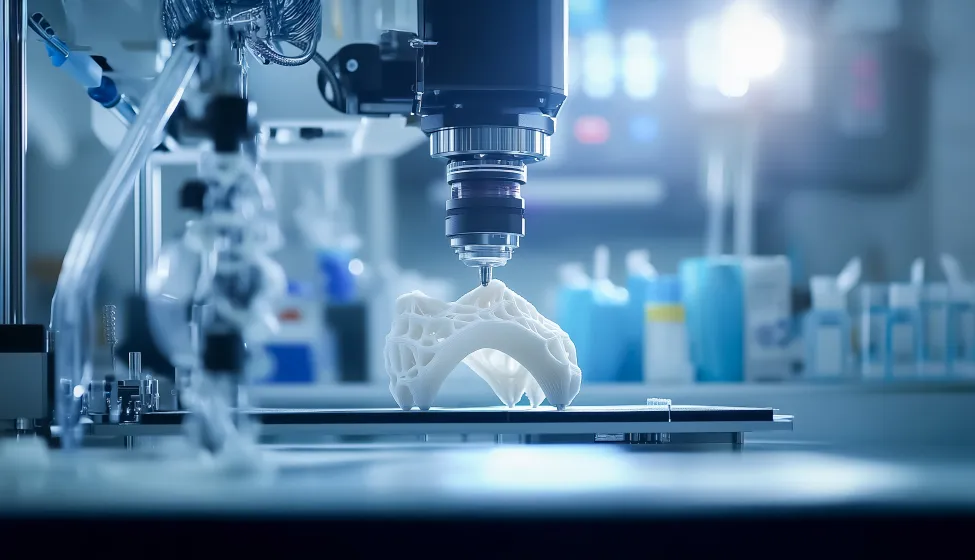
Because these guides are tailored to individual patients, FDA emphasizes the need for strong, consistent design controls and well-defined validation processes. Patient-matched guides often utilize additive manufacturing techniques. Although guides are considered external-communicating devices that are only in contact with tissue/bone/blood for a limited duration, it is important to consider the impact of the additive manufacturing process on patient-contacting materials. Additively manufactured devices often raise additional questions around material characterization, biocompatibility, sterility, and overall performance. Evaluating biological safety, particulate generation, sterilization approach, and device performance early can help identify potential gaps before formal FDA review.
Debris generation and biological safety considerations
For devices involving surgical instrumentation and patient-contacting materials, manufacturers should evaluate debris generation and particulate characterization during simulated use testing, including studies guided by ASTM F1877. Additively manufactured devices, specifically, may generate debris during the printing process (unwanted fragments and excess raw materials), post-processing (removal of support structures, overhangs, excess material), and material handling (cleaning/sterilization).
Biocompatibility and biological risk assessments are also important for devices and materials intended for limited tissue, bone, or blood contact. The biocompatibility evaluation should specifically address cytotoxicity, sensitization, irritation or intracutaneous reactivity, acute systemic toxicity, and material-mediated pyrogenicity. Additional considerations for the impact of additively manufactured medical devices on material biocompatibility are outlined in another FDA Guidance "Technical Considerations for Additive Manufactured Medical Devices."
What does this mean for orthopedics manufacturers?
For teams developing patient-matched orthopedic systems, the final guidance provides a clearer view of FDA's current expectations. Using it as a reference early — in design controls, testing strategy, and submission preparation — can help reduce iteration during review and keep development aligned with regulatory requirements.
As FDA review practices continue to evolve alongside patient-specific technologies, proactive alignment with this framework can help manufacturers document decisions, anticipate questions, and support more efficient submissions.
What Can We Help You Solve?
Exponent's multidisciplinary teams support manufacturers across development and regulatory submission for orthopedic implants and patient-matched guides, from materials characterization, simulated use testing, and particle analysis (including ASTM F1877), to additive manufacturing evaluations, sterility and packaging assessments, and biocompatibility assessments.
Wear & Biotribology
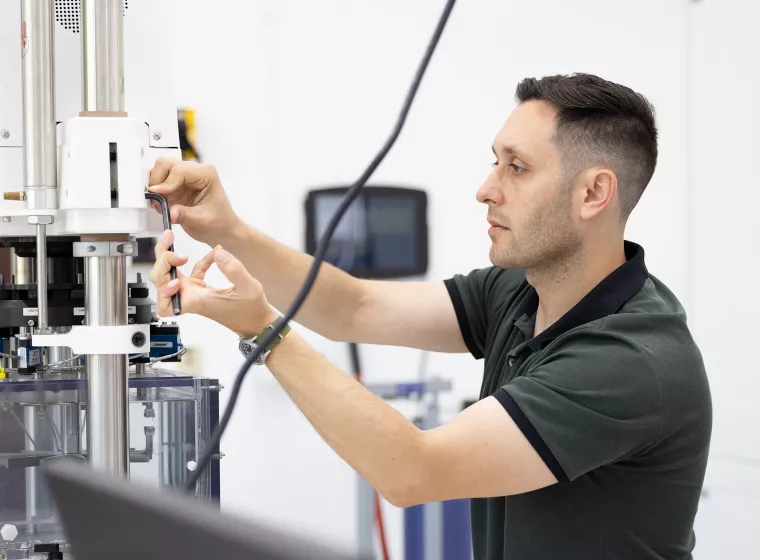
Conducting medical device wear testing, establishing wear test programs, and providing insights for regulatory requirements.
Biocompatibility & Biological Risk Assessment
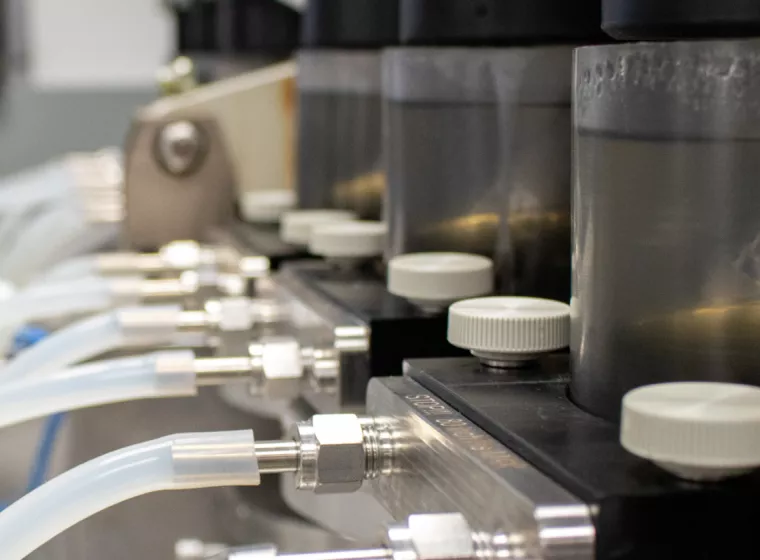
Address biocompatibility challenges throughout the medical-device product lifecycle.

Life Sciences & Healthcare
Whether you're developing a novel drug, a sturdier stent, or a faster flu test, you need clear answers to complex questions, quickly. Exponent delivers.
Medical Device Evaluations
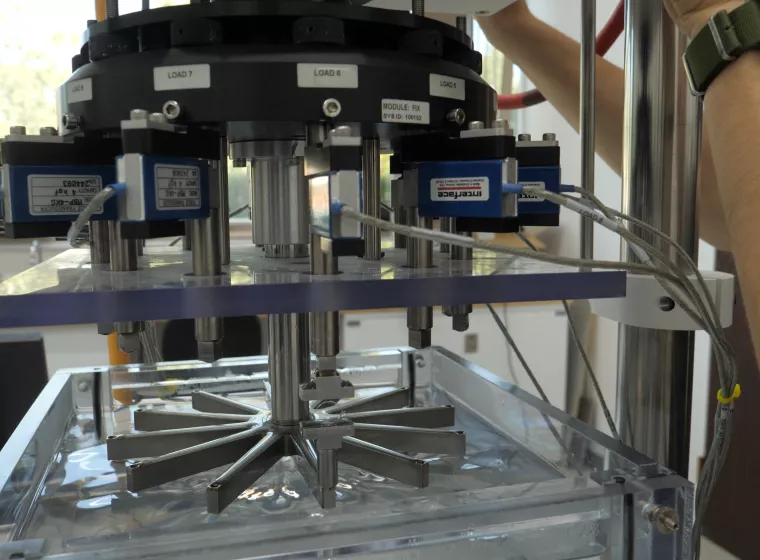
Sophisticated medical device evaluations for a vast array of applications.
Medical Device Design & Development Support
Crucial medical device design and development analyses to empower your decision-making.

Regulatory Compliance for Medical Products
Experienced regulatory support for medical devices, pharmaceuticals, and combination products.
