
THE CHALLENGE
As voice-based conversational AI agents begin to redefine in-vehicle interactions, Google engaged Exponent to evaluate how its Gemini Live AI technology affects driver behavior. Exponent conducted a driver distraction assessment using eye-tracking and cognitive load measures, enabling Google to gauge the distraction potential of its innovation.
EXPONENT'S SOLUTION
Exponent's human factors scientists designed and conducted a driver distraction experiment involving a diverse group of participants driving while interacting with a version of Gemini designed to encourage extended voice-based conversations.
Our study employed objective metrics, including the detection response task (DRT; ISO 17488:2016), to assess cognitive load. Researchers used eye-tracking technology to quantify visual demand, which they evaluated against established glance criteria from the National Highway Traffic Safety Administration (NHTSA) and guidelines from the Alliance For Automotive Innovation (formerly the Alliance of Automobile Manufacturers). This approach enabled rigorous comparison of driver focus during conversational interactions with Gemini, visual turn-by-turn guidance, and hands-free phone conversations across a range of topics.

Exponent's Impact
Exponent helped Google evaluate its Gemini conversational AI agent for conformance to established federal distraction guidelines. Mean glance durations for all tasks — including Gemini Live — were below NHTSA's recommended two-second safety threshold, indicating visual distraction at levels acceptable per federal guidelines. Both single-turn and multi-turn interactions with Gemini Live produced cognitive load levels similar to hands-free phone calls and lower than high-demand tasks. Importantly, extended multi-turn conversations with Gemini Live did not result in cumulative increases in cognitive load over time, suggesting that sustained interactions do not become more distracting as they continue.
These findings demonstrate that advanced LLM conversational agents implemented via voice interfaces impose demands on attention comparable to established, low-risk hands-free benchmarks. Exponent's experimental data and research has been posted to a pre-print repository in preparation for submission to a peer-reviewed scientific journal, helping establish a foundation for human factors research around voice-based conversational AI technology in vehicles.
What Can We Help You Solve?
Exponent's user experience (UX) and data science teams support clients in identifying and mitigating risks for next generation automotive vehicles, e-mobility devices, consumer electronics, digital health devices, and other technologies, offering rigorous human factors evaluations and actionable insights.

Research & Development
Understand emerging technologies in transportation and address existing and future regulatory requirements.
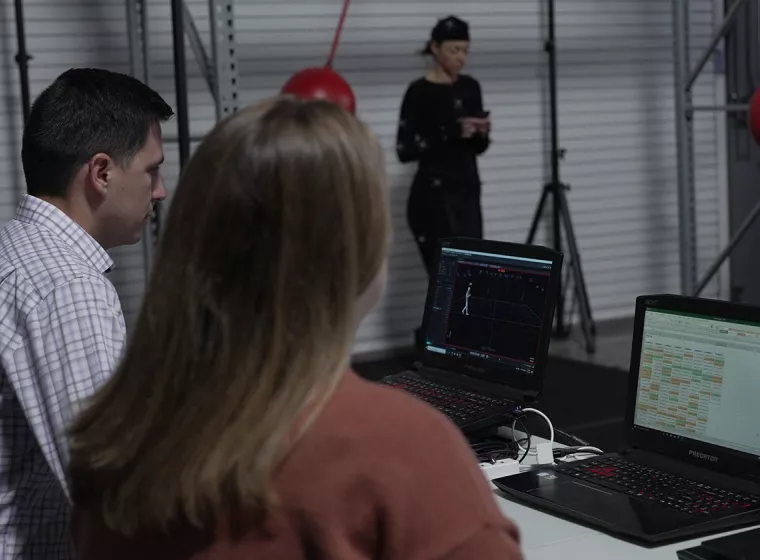
Improve User Research & Testing
Human factors investigations for data-driven product and process design decisions.

Data Analysis
Strategic guidance leveraging state-of-the-art analytical tools, including statistical modeling, machine learning, artificial intelligence, and more.
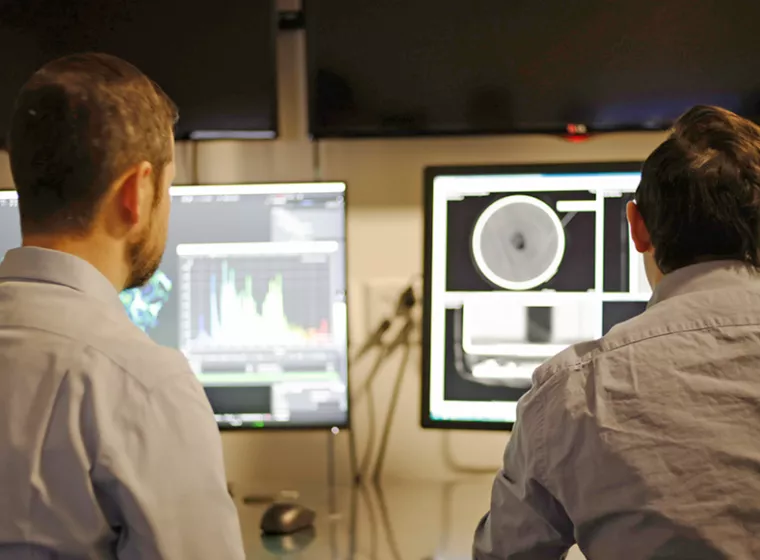
Software & Computer Systems Support
Insights and solutions for the design, development, and analysis of software prototypes, products, and platforms.