HOW WE HELP CLIENTS
Objective Science Behind Every Technical Position
In patent, copyright, trade secret, and licensing disputes, outcomes often rest on technical questions only thorough scientific and engineering analysis can resolve. Exponent enables you to understand the underlying science and engineering before testimony begins, uncovering and evaluating the technical facts that shape high-stakes IP matters. Our scientists and engineers analyze complex technologies, assess competing technical claims, and deliver rigorous, objective evidence and analysis that endures intense challenges from opposing experts, giving judges, juries, arbitrators, and other finders of fact the technical clarity they need to make informed decisions.
Collaborative Teams. Multidisciplinary Expertise.
Complex IP disputes rarely stay within a single discipline. A matter can require source code review, semiconductor analysis, mechanical engineering, and materials science simultaneously. Exponent offers a unique, one-stop shop, with consultants spanning software, electrical engineering, semiconductors, mechanical engineering, materials science, batteries, chemistry, biopharmaceuticals, biomechanics, vehicle engineering, human factors, health sciences, and data sciences. Whether evaluating source code, reverse engineering consumer products and medical devices, analyzing technical documents, or assessing prior art, our teams seamlessly bring this specialized expertise together to resolve your most critical technical questions.
Investigations Built to Match the Scale of What's at Stake
High-stakes IP disputes can involve millions of lines of code, thousands of documents, complex computer-aided design files, or entire product lines requiring teardowns and testing — volume that overwhelms single-expert approaches. Exponent combines specialized laboratories, cutting-edge analytical instrumentation — including advanced X-ray computed tomography (CT), mass spectrometry, scanning electron microscopy (SEM), focused ion beam (FIB) techniques, and optical microscopy — with multidisciplinary teams to investigate issues at scale. From early case assessment through expert reports, depositions, and trial testimony, we help you develop clear, defensible conclusions rooted in scientific rigor for matters before federal and state courts, arbitration panels, and the U.S. International Trade Commission.
Capabilities
Generate evidence that stands up to scrutiny
Advanced testing, imaging, reverse engineering, and software analysis capabilities help establish technical facts for intellectual property matters.
IP INVESTIGATION LAB SERVICES
CT Scanning & Analysis
Non-Destructive Imaging
Reverse Engineering
Product Teardowns
Semiconductor Analysis
Source Code Review
Mechanical Evaluations
Electrical Evaluations
Battery Investigations
Materials Characterization & Testing
Our Capabilities Are Unparalleled
With deep expertise across software, electronics, semiconductors, materials, chemistry, batteries, automotive, and life sciences, Exponent helps you navigate complex IP challenges — from patent and trade secret litigation to licensing disputes and ITC investigations — delivering bespoke testing and investigations and defensible scientific evidence.
![Intellectual Property [ME]](/sites/default/files/styles/cards_home_card/public/media/images/GettyImages-1054513236.jpg.webp?itok=APgba3eK)
Mechanical Engineering Intellectual Property Consulting
Mechanical engineering expertise for cases of intellectual property disputes.
![Intellectual Property: Patents, Trademarks, Copyrights & Trade Secrets [MCE]](/sites/default/files/styles/cards_home_card/public/media/images/GettyImages-638061090.jpg.webp?itok=E2SINOAe)
Intellectual Property & Materials
Rigorous technical support for high-stakes decisions on intellectual property claims related to materials.

Polymers & Chemistry IP Consulting
Exponent offers expert, bespoke intellectual property consulting services and support for polymers and materials chemistry.
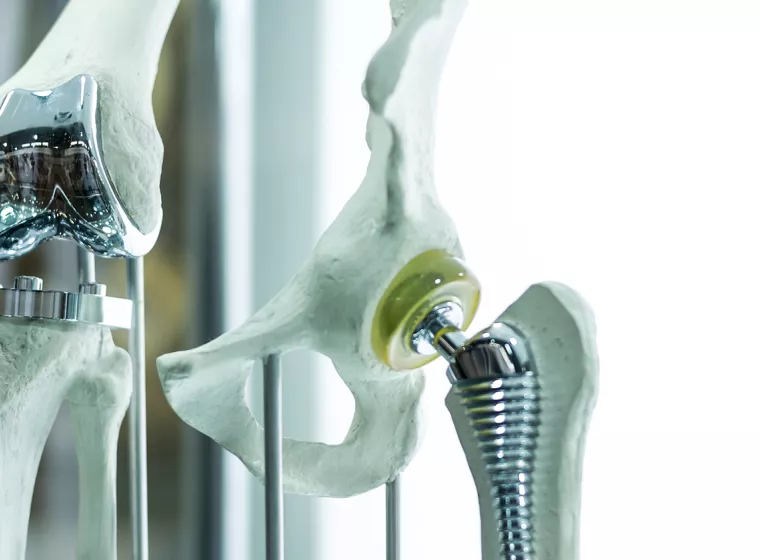
Medical Device IP Consulting
Specializing in intellectual property consulting for medical device manufacturing companies.

Electrical Engineering & Computer Science Expertise for Intellectual Property
Leverage best-in-class electrical engineering and computer science consulting for IP challenges
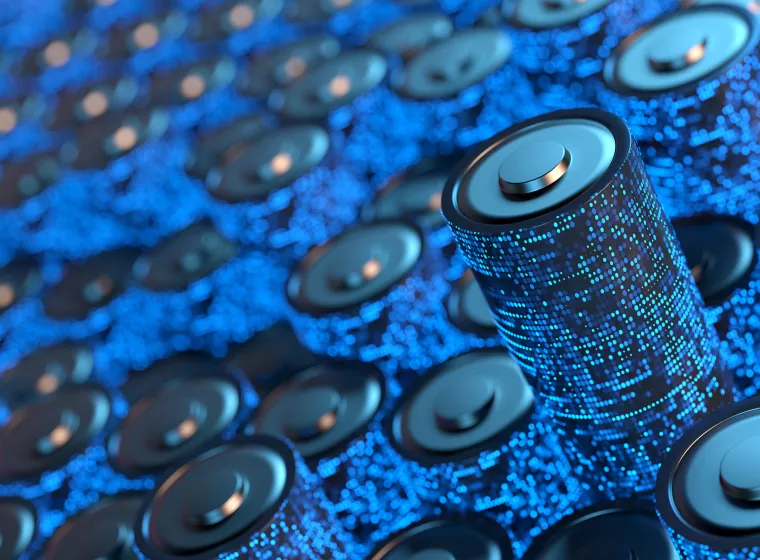
Battery Intellectual Property & Trade Secrets
Exponent advises clients on issues of intellectual property and trade secrets.

Clear Answers for Complex Global Disputes
Exponent's international dispute resolution experts provide clients with everything necessary to navigate tough, intricate technical disputes in legal forums around the world. Our engineering insights are coupled with a unique ability to convey information clearly for lay audiences — and nowhere else will you find the depth and breadth of multidisciplinary expertise required to seamlessly answer questions involving complex machinery, systems, and construction projects across multiple industries.

Rigorous Analysis for IP Disputes
Our multidisciplinary experts deconstruct complex hardware and software to provide the objective technical evidence required in high-stakes intellectual property disputes. Combining advanced circuit tracing, materials analysis, X-ray and CT scanning, and software disassembly, we uncover product and component design and functionality to bring scientific clarity to IP challenges.

Non-Destructive Clarity for IP Disputes
Our teams leverage advanced computed tomography (CT) to evaluate complex assemblies and internal features without altering critical physical evidence. Combining high-resolution 3D imaging, precise CAD-to-part comparisons, and state-of-the-art visualization software, we uncover hidden design elements and create compelling visual demonstratives to communicate complex intellectual property findings to judges and juries.







RELEVANT RIGHT NOW
How do software disputes distinguish protectable architecture from non-protectable elements?
Determining software copyright infringement requires isolating protectable expression from functional constraints, standard industry conventions, and third-party code. Computer scientists conduct deep, systematic source code comparisons, structural teardowns, and static analysis.
By evaluating abstraction, filtration, and comparison factors, technical experts determine actual code similarity versus independent development. Translating complex code structures into clear, objective evidence helps demonstrate precisely which software elements are legally protectable expression.
How do technical evaluations prove trade secret theft involving proprietary AI models and architectures?
AI trade secret disputes can involve technical aspects of software that have not been made publicly available such as model weights, proprietary data pipeline and processing techniques used for training models, proprietary datasets, specialized knowledge and logic models embedded within AI systems, and specialized input/output systems including computer vision and motor control hardware and software. Machine learning and artificial intelligence experts conduct model parameter comparisons, source code and software comparisons, model testing, and technical documentation review to uncover potential trade secrets theft.
How do IP disputes establish whether AI-generated code violates third-party copyrights or licenses?
The adoption of AI coding assistants can introduce risks of unintended code reproduction and potential copyright infringement. Analysis of potential copying proceeds as usual for source code, where literal or non-literal copying can occur. Our computer scientists can compare known code patterns and idioms, perform automated line-by-line analysis, syntax matching, string matching, and evaluation of higher-level structures in code to help determine source code origins.
Experts
Our global and comprehensive expertise across industries gives us a deep understanding of current challenges, best industry practices, and the implications of emerging technologies.

Group Vice President and Principal Engineer
Group Vice President and Principal Engineer

Group Vice President and Principal Engineer
Group Vice President, Practice Director and Principal

Corporate Vice President and Director of US Offices and Laboratories


Practice Director and Principal Engineer





Insights