September 1, 2026
Authors






Executive Summary
Modern agriculture is undergoing a technological revolution on multiple fronts, from drones and AI-driven crop monitoring to vertical farms and novel biomolecules such as RNA and peptides in plant protection products. However, Agri-Tech is advancing faster than regulatory processes, keeping potentially valuable solutions from entering the market and gaining practical use. Demonstrating safety and creating the robust reassurance needed for commercialization will require sound science and credible regulatory strategies. To establish "first-of-kind" blueprints that others can follow, companies focused on innovation require combined knowledge of regulatory requirements in toxicology, exposure assessments, and effectiveness evaluations, as well as engineering, electronics, data science, and computational biology.
How can multidisciplinary expertise bridge innovation and regulation, accelerating approvals and advancements in agricultural technology?
Emerging technologies are transforming modern agriculture. While detailed planning, automation, and hybridization have driven farming for decades, today's advancements in data collection and processing, AI, robotics, and biomolecules are producing Agri-Tech innovations in crop management, irrigation, and pest control faster than regulations and risk assessment models can validate them. Evolving technologies will require higher-tier studies and expert evaluation not just to meet regulatory requirements but to help define them.
By adapting lessons from adjacent industries and grounding innovation in sound regulatory strategy and scientific rigor, Agri-Tech developers can help promising technologies reach the field.
What's on the horizon in Agri-Tech?
Smart farming and precision agriculture are driving the transition toward integrated farming systems that leverage automation to monitor crop performance; technology solutions to analyze data and decision making; and additional advanced systems for informing management actions, such as crop protection, irrigation, and harvesting. Over the next decade, significant technological developments are expected to create more efficient, robust, and productive agricultural systems — while also posing new regulatory and safety challenges.
Crop Monitoring and Automated Management
Remote Sensing Solutions
These technologies are now actively being developed to monitor crop health. At the largest scale, satellite imaging or overhead sensors can generate crop canopy maps that indicate when crops are stressed due to temperature, drought, or disease. At the field level, crop surveillance systems are quickly evolving. AI tools that recognize pests can be deployed by robotic crop scouts or squadrons of drones are also progressing alongside advanced optical sensors and tools that can both capture and analyze high-resolution images.
Automated crop protection and harvesting systems are becoming increasingly viable options for growers, facilitating precision spraying and harvesting with minimal human supervision. However, each step in the development and deployment of such products present technical challenges. For example, sufficiently large and representative datasets must be established, AI-enabled pest detection systems must be trained and validated to ensure that pest identification remains accurate across different crops, growth stages, environmental conditions, and geographic regions.
This must then extend into the integration of sensors, imaging technologies, and real-time analytics into durable systems and vehicles capable of operating reliably under variable field conditions. Failure analysis, particularly of AI-driven systems, is also becoming increasingly important, as is validation that data are fit for purpose in AI frameworks.
Precision Pesticide Application
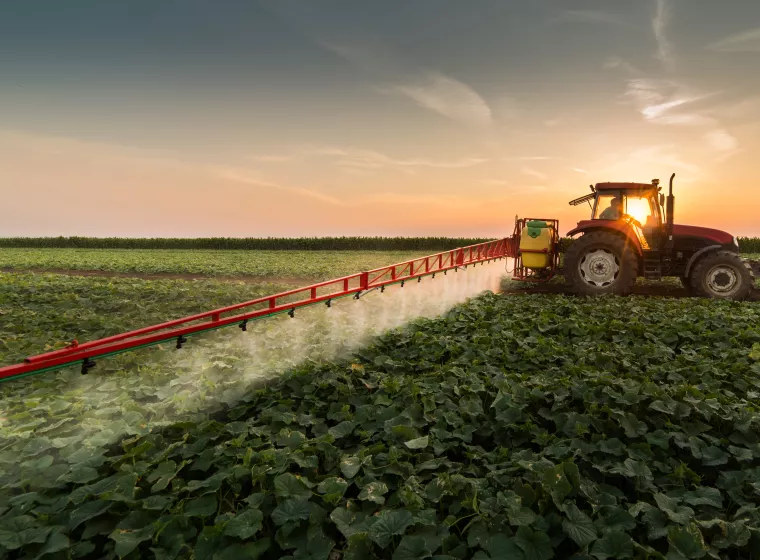
This is another area of innovation with the potential to reduce pesticide application rates. Developments in advanced spraying systems focus on computer vision spot-spraying technologies that detect pests, classify plants, and selectively activate individual spray nozzles. The systems integrate pulse-width modulation and variable-rate spraying technologies. Collectively, these technologies allow continuous adjustment of flow rate and pressure while maintaining a uniform droplet size, resulting in more effective and targeted pesticide application.
Drone Application Methods
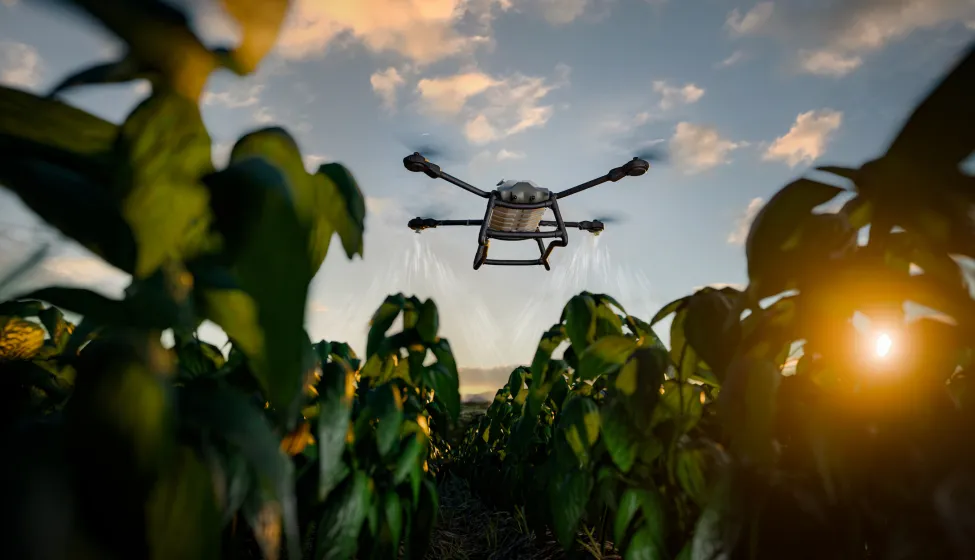
Drone-based pesticide application can enable rapid deployment, targeted treatment and access to difficult-to-reach areas where conventional machinery may be impractical. Regulatory challenges for these technologies vary across global jurisdictions. For example, while increased automation can reduce operator and worker exposure, existing regulatory models lack data supporting the potential risk mitigations associated with drones and precision pesticide applications.
These options are also not always available when submitting risk assessments to regulators. Expert judgement is needed to understand the impact these technologies could have on regulatory risk assessments and the types of higher-tier studies that are needed for them to be considered for approval.
Indoor "Vertical" Farming
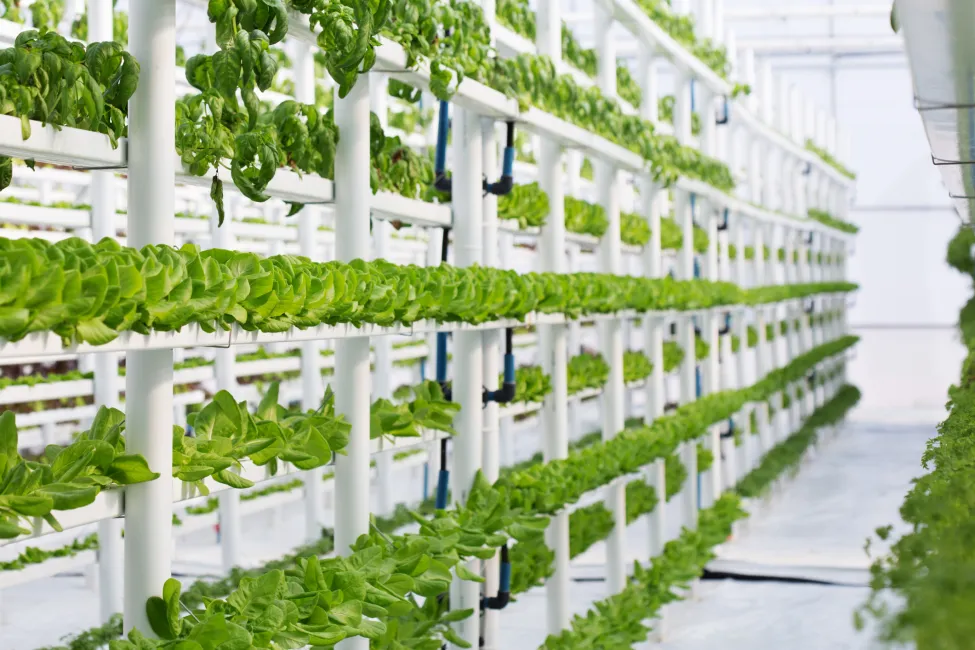
It is now possible to grow an increasing range of crops in closed system indoor farms. This enables year-round crop production in urban areas or inhospitable climates for crop production. Crops are grown under efficient light-emitting diode (LED) systems, the systems are scalable, and growing chambers are stacked for maximum plant productivity, hence the term "vertical farming."
Although such vertical systems are more efficient, climatic control requires unique HVAC designs with their own regulatory challenges, and shorter crop cycles and increased density of cropping affect the efficacy of pesticide products as well as the safety of workers. Vertical systems also face environmental considerations for wastewater treatment. All these aspects need to be carefully assessed from a regulatory perspective.
Novel Pesticide Technologies
A range of new technologies with novel modes of action that can offer highly targeted, pest-specific control are now moving toward commercialization. Such technologies include the use of RNA molecules to block cellular processes (e.g., RNA interference; RNAi), use of bacteriophages (bacterial viruses that make highly effective bactericides), and antibody- and peptide-based systems that can be engineered against defined targets.
In theory, many of these novel biomolecules could be classed as "low risk" substances, given their increased specificity and mode of action. However, these technologies often present novel regulatory paradigms that require regulatory authorities to update or adapt existing risk assessment frameworks for evaluating their bespoke modes of action and consequent risk to the environment and human health. For example, risk assessments for RNAi products typically involve in silico (bioinformatics) analysis to help predict potential off-target effects in non-target organisms, yet there are currently no specific guidelines for how to perform these assessments.
These approaches are expected to continue evolving for some time. As the technologies progress, expert judgement is essential to understanding what methods to employ and what data to generate to satisfy regulatory requirements.
How can multidisciplinary technical expertise bridge the gap between innovation and regulation?
To bring innovative technologies to market, cross-disciplinary expertise that combines regulatory scientists, engineers, toxicologists, ecologists, and data scientists can help break through research silos, generating the right evidence in the appropriate form for regulators.
For novel pesticides, this process demands creativity, beginning with analyzing data gaps and identifying challenges, i.e., mapping what data exist, versus what's required by regulatory compliance frameworks. It may be necessary to obtain novel data, for example, defining degradation rates, investigating toxicology concerns, or characterizing operator exposure. Novel study design, informed by bespoke judgement from toxicologists, environmental scientists, and efficacy experts, may be needed to achieve the necessary regulatory reassurance when standard guidelines (e.g., OECD) don't yet exist for a new technology.
Technology developers can also draw on domain expertise from other industries. Much of what is taking place in Agri-Tech is analogous to other sectors. For example, aerospace and automotive modeling offer clear parallels to spray behavior in terms of airflow or drift modeling. Similarly, automated vehicles and sensor validation from the transportation industry can inform precision agriculture. By adapting lessons from adjacent industries and grounding innovation in sound regulatory strategy and scientific rigor, Agri-Tech developers can help promising technologies reach the field faster without compromising safety.

What Can We Help You Solve?
Exponent's multidisciplinary scientists and engineers are uniquely positioned to support every stage of the Agri-Tech and FoodTech lifecycle. Our expertise spans regulatory compliance for pesticides, fertilisers, biostimulants, and novel foods alongside engineering disciplines including failure analysis, electronics, battery technology, drones, robotics, vehicle engineering, data science, and artificial intelligence.
![Biocides [CRFS]](/sites/default/files/styles/cards_home_card/public/media/images/GettyImages-1278640196.jpg.webp?itok=g5xMzJHv)
Agrochemicals in Europe
Support across the overall product and process lifecycle related to placing plant protection products and fertilizers on the EU market.
Human Health Risk Assessments for Plant Protection Products, Biocides & Chemicals Under REACH Regulations
Regulatory assessment and modeling for plant protection products, biocides, and chemicals under REACH.

Toxicology & Human Health Risk Consulting
Exponent's toxicologists evaluate exposure and adverse health to support safety, regulatory, and product decisions.

Biocides in Europe
Full product lifecycle strategy support, specializing in active substances.
Plant Protection Products
Meet EU regulatory requirements for plant products while protecting the environment, as well as human and animal life.

Batteries & Energy Storage
Supercharge performance, reliability, and safety across all stages of the battery and energy storage product lifecycle.
Materials Science & Electrochemistry
Breakthrough insights for materials science and electrochemistry product development across industries.
