July 7, 2026
Authors




Executive Summary
Geopolitical conflicts and natural disasters can have far-reaching consequences for critical infrastructure, including energy, industrial operations, and supply chains. Restoring operations after a catastrophe requires more than rebuilding damaged assets. Stakeholders often must determine what remains operational, what to repair, and what risks may exist beyond the point of impact. Drawing on principles used to investigate failures, fires, natural disasters, and other complex loss events, a rigorous engineering assessment can help answer these questions by identifying damage mechanisms, evaluating repairability, and supporting technical, commercial, and legal decisions.
How can early intervention support recovery and reconstruction for critical, complex industrial operations?
According to reports, the ongoing war in the Middle East is likely to incur tens of billions of dollars in repairs to critical energy infrastructure, with some reports indicating the lion's share may go toward engineering and construction costs. As the region looks to rebuild and restore operations, stakeholders face a complex road ahead.
Although every conflict or disaster presents unique circumstances, many of the engineering questions that arise during recovery can draw on large-scale post-catastrophe infrastructure damage assessments. Experience analyzing failures, accidents, fires, explosions, natural disasters, and other catastrophic events provides a technical foundation for evaluating affected assets and identifying hidden vulnerabilities, understanding systemwide effects and interactions, determining repairability, and establishing which assets, resources, and repair activities are most critical to restoring operations.
Those same engineering principles can help inform post-catastrophe recovery, particularly when stakeholders need to distinguish visible damage from broader operational, safety, and reliability concerns. Rigorous, thorough engineering assessments can help identify potential damage, prioritize repairs, and guide short- and long-term recovery strategies.
Why does an assessment strategy matter?
Some of the most important recovery decisions are more complex than whether to rebuild or replace. Impacts to modern energy and industrial facilities are rarely confined to individual assets. Process systems, utilities, safety systems, controls, and production equipment are often interconnected, making the full extent of damage difficult to understand immediately after an event. As stakeholders evaluate options, they may also face constraints related to equipment lead times, contractor availability, material shortages, and competing demands that can significantly influence reconstruction schedules, making early identification of critical assets and recovery pathways essential.
Recovery challenges can be particularly acute for energy and industrial facilities, where damage to one part of an interconnected process system can affect much more than the point of impact. Fires, explosions, thermal loading, pressure changes, abnormal vibrations, power disruptions, and process shutdowns can all put surrounding systems at risk, even when the damage is not immediately visible.
The goal is not simply to identify damaged equipment but to determine how damage to one asset, system, or process may affect the facility as a whole.
As recovery efforts get underway, multiple complex questions arise. Can portions of a facility safely return to service? Which assets are limiting recovery? What damage may exist beyond the immediate impact area? Which repairs should take priority when equipment, contractors, and materials are in limited supply?
Different stakeholders can approach those questions from different perspectives, potentially requiring different assessment strategies. Owners seek to restore operations while preserving valuable assets. Contractors need a practical repair sequence with a reasonably defined work scope. Insurers, lenders, and legal teams require reliable information about damage, operational impacts, and recovery scope.
What's different about complex infrastructure damage?
Understanding interconnected effects is often one of the most important objectives of an engineering assessment. The goal is not simply to identify damaged equipment but to determine how damage to one asset, system, or process may affect the facility as a whole.
Post incident, the combined effects of impact, overpressure, vibration, and heat often make the full extent of damage difficult to define immediately.
The area outside the immediate vicinity of impact or damage origin often raises the most difficult questions. Damage there may be less obvious, yet heat, ejected debris, overpressure, vibration, or ground movement can still compromise performance and reliability. That zone adjacent to damage often warrants the closest evaluation because operational risks can remain elevated despite limited visible damage.
Thermal exposure illustrates this challenge. Heat from fires or explosions can cause deformation, warping, and changes in material properties that affect long-term performance and reliability even when equipment remains operable. Ejected debris may cause localized impact damage during its travel that may be far from where the debris was found after the event. Additionally, sudden thermal expansion can leave bolted connections more susceptible to loosening during subsequent operation. As a result, equipment that appears largely unaffected may still experience reduced service life, reliability, or maintenance intervals.
Where can post-catastrophe engineering assessments begin?
For owners and operators, one of the earliest priorities is determining what can safely return to service — even at derated operation — to help preserve production while broader recovery efforts continue. Facilities with parallel systems or redundant equipment may be able to restart portions of an operation while repairs move forward elsewhere, allowing recovery efforts to focus on the assets most critical to restoring production. For contractors, these assessments can also define repair scope, sequencing, and resource requirements before reconstruction begins.
Some of the most consequential decisions involve identifying the equipment that can limit the pace of recovery. Specialized compressors, turbines, pressure vessels, electrical systems, and other critical assets often come with lead times measured in months or years. Early assessment of those long-lead assets can guide procurement strategy, reconstruction sequencing, and the broader recovery timeline.
Recovery decisions are not always limited to major equipment. Components such as gaskets may be exposed to heat or overpressure across large portions of a facility. Assessments can help determine whether inspecting and replacing thousands of individual seals is practical or whether broader replacement strategies would accelerate recovery.

Looking beyond visible damage
Observable damage frequently tells only part of the story. In industrial facilities, interconnected process systems, piping and vessels, electronics, rotating equipment, and controls can be compromised in ways that are not visually evident yet may create serious operational and safety risks. Mechanical integrity, material condition, alignment, control functionality, and process reliability may all be affected even when equipment appears intact.
Pressurized systems, including piping, pressure vessels, and storage tanks, often warrant particular attention because they serve as critical barriers between process materials and the surrounding environment. Assessing their condition is essential for determining whether they can safely return to service or require repair or replacement.
Rotating equipment is especially susceptible to displacement issues. After blast loading or vibration, pumps, compressors, and other rotating machinery may shift slightly out of alignment or tolerance. The equipment can look unaffected, yet internal components may begin to wear excessively once operations resume. This can lead to premature degradation, internal damage, process contamination, or more significant failures.
Conversely, significant external damage might not always mean an asset is lost. Equipment housings may be badly damaged while precision-manufactured internal components remain recoverable. Salvaging those internals and installing them in replacement housings can shorten lead times and accelerate recovery.
How damage analysis supports claims and cost decisions
For insurers, lenders, and legal teams, assessment findings can clarify repair scope, replacement needs, operational limits, schedule effects, and reconstruction costs. They can also provide a technical basis for evaluating causation, including whether damage to a particular asset contributed to operational disruptions, production losses, or other claimed impacts.
Assessment can also help distinguish between replacement in kind and upgrades introduced during reconstruction. In some cases, compromised equipment elsewhere in a process can drive modifications or upgraded replacement components. That distinction can matter in claims, insurance evaluations, and disputes, particularly when questions arise about whether a change reflects recovery needs or broader system improvements.
Those issues can remain important long after reconstruction begins. Repair decisions, replacement strategies, operational constraints, and reconstruction costs may later become central in insurance claims, commercial disputes, and arbitration. Objective engineering analysis can provide a shared factual foundation for technical, commercial, and legal decision-making.
What Clients are Talking About
What Can We Help You Solve?
Whether evaluating what can still operate, what can be repaired, or what may warrant replacement, Exponent applies objective engineering assessment, failure analysis, and risk evaluation experience across related disciplines to support recovery planning, operational readiness, insurance claims, and dispute resolution after complex infrastructure damage.
Mechanical Failure Analysis
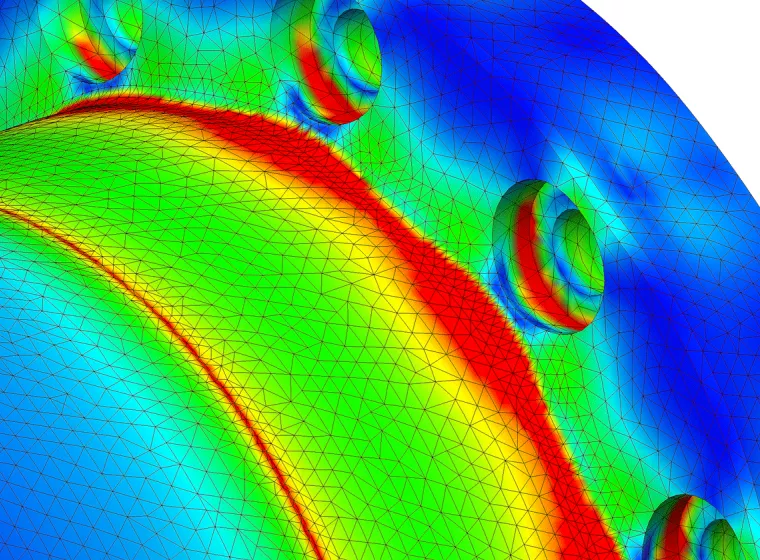
Discover the root cause of mechanical failure using visual modeling simulation, data analysis, on-site investigations, and laboratory testing.
Risk & Safety Analysis for Mechanical Engineering
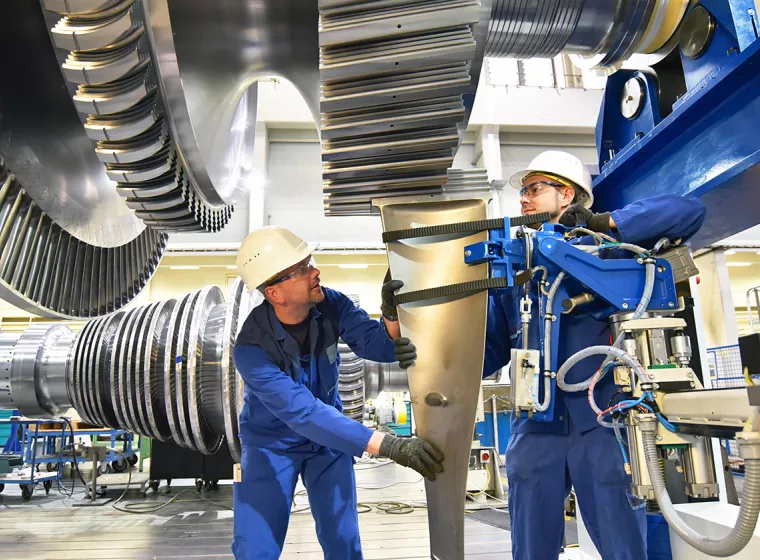
Multidisciplinary risk assessments, equipment safety evaluations, and occupational safety analysis.
Oil & Gas Consulting
Address engineering, compliance, and safety challenges across upstream, midstream, and downstream operations.

Thermal Sciences Expertise for Utilities
Overcome any utility operations challenge — from safety to asset management, and more.

Thermal Sciences
Uncover root causes of fires, explosions, thermal, and flow-related accidents across industries.

Mechanical Engineering Support for Dispute Resolution
Mechanical engineering support and testimony for litigation, international arbitration, mediation, and insurance.
Insights
