November 3, 2026
Authors



What do the workplace safety administration's most-cited safety standards mean for employers?
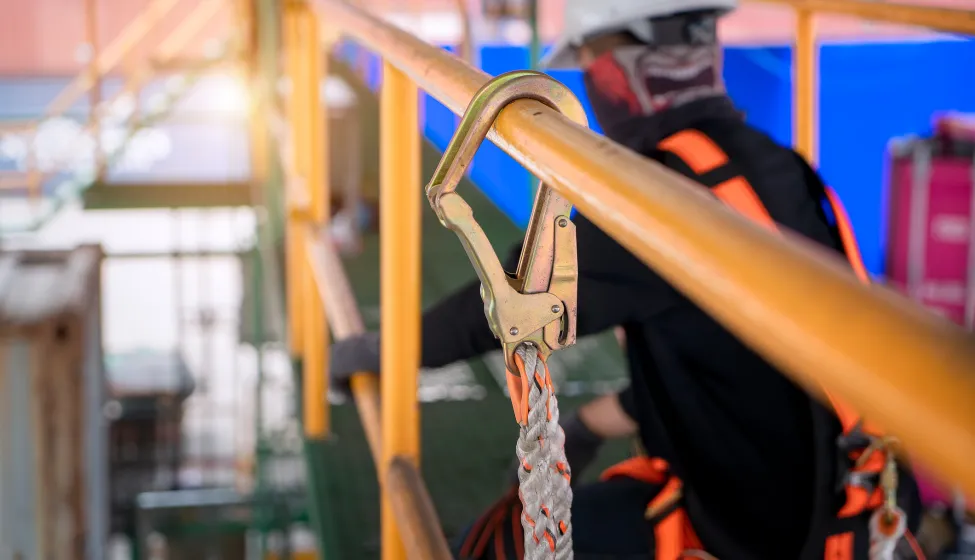
Fall protection requirements remain the most cited workplace safety regulations in 2026, according to a newly released list from the Occupational Safety and Health Administration (OSHA). The agency recently released its list of the Top 10 most frequently cited workplace safety regulations for fiscal year 2026, highlighting recurring workplace hazards across construction and general industry.
The rankings are based on OSHA workplace inspections conducted from Oct. 1, 2025, through Aug. 31, 2026. OSHA publishes the annual list to help employers identify commonly cited regulations and take steps to identify and correct recognized workplace hazards before they result in injuries or enforcement action.
For the 16th consecutive year, the construction industry Fall Protection — General Requirements (29 CFR 1926.501) ranked first. Hazard Communication and Control of Hazardous Energy (i.e., lockout/tagout) rounded out the top three. Although every category in the Top 10 received fewer citations than the prior year, OSHA's rankings continue to identify many of the same workplace safety issues year after year.
What OSHA's 2026 rankings mean for employers
The list spans both construction and general industry, but several themes emerge.
Falls and work at elevation remain prominent concerns. Fall protection general requirements again occupy the top position, while scaffolding, ladders, and fall protection training also appear among the Top 10. Together, the cited regulations reinforce the continuing importance of protecting employees who work at elevation.
Hazardous energy and machinery remain an important area of regulatory attention. Lockout/tagout rose to the third-most frequently cited regulation, while machine guarding remained among the Top 10. These requirements relate to controlling worker exposure to machinery and hazardous energy during operation, servicing, and maintenance.
Powered industrial trucks also remain a recurring workplace safety issue. OSHA's Powered Industrial Trucks regulation, 29 CFR 1910.178, ranked seventh. Powered industrial trucks, including forklifts, operate in environments where equipment, pedestrians, loads, and workplace conditions must be considered. OSHA requires that all powered industrial truck operators be trained, evaluated, and certified by their employer before initial operation and that they be re-evaluated at least once every three years.
Read our ASME publication on powered industrial truck incidents discussing the importance of examining the interaction among people, equipment, and the operating environment when evaluating forklift collision hazards:
Moving beyond compliance
OSHA states that its Top 10 list is intended to alert employers to commonly cited regulations so that they can identify and correct recognized hazards before an OSHA inspection.
Beyond addressing specific regulatory requirements, the recurring nature of these violations provides employers with an opportunity to take a broader look at how their workplace hazards are identified and addressed. Compliance with the applicable regulations is an important baseline, but effective risk reduction may also involve examining equipment design, workplace configuration, maintenance practices, engineering controls, and employee activities in the actual operating environment.
Employers may benefit from considering not only whether required fall protection systems, machine guards, energy-control procedures, powered industrial truck practices, PPE, and employee training are in place, but also whether those measures effectively address the hazards raised during routine and non-routine work. Such evaluations can help identify opportunities for risk reduction that extend beyond satisfying individual regulatory provisions. The appropriate measures will depend on the specific hazards and workplace conditions.
What Can We Help You Solve?
Exponent's multidisciplinary occupational safety professionals help clients evaluate workplace safety in construction and general industry. Our teams assist employers with identifying workplace hazards, reviewing applicable OSHA regulations and industry standards, and developing recommendations to mitigate risk of injury.

Premises & Workplace Injuries
Evaluate workplace premises injury claims with robust multidisciplinary expertise.

Industrial Operations & Technology
We help clients push the boundaries of technology and data to execute on ever more complex industrial operations.

Occupational & Process Safety
Expert consulting support for mitigating human behavior-related work and process safety risks.
Occupational Health & Industrial Hygiene Consulting
Exponent teams help you keep workers safe and manage emerging liabilities.
Hazardous Locations
Investigate and address various types of hazards and analyze locations where potential hazards may occur.
Insights