OUR PEOPLE
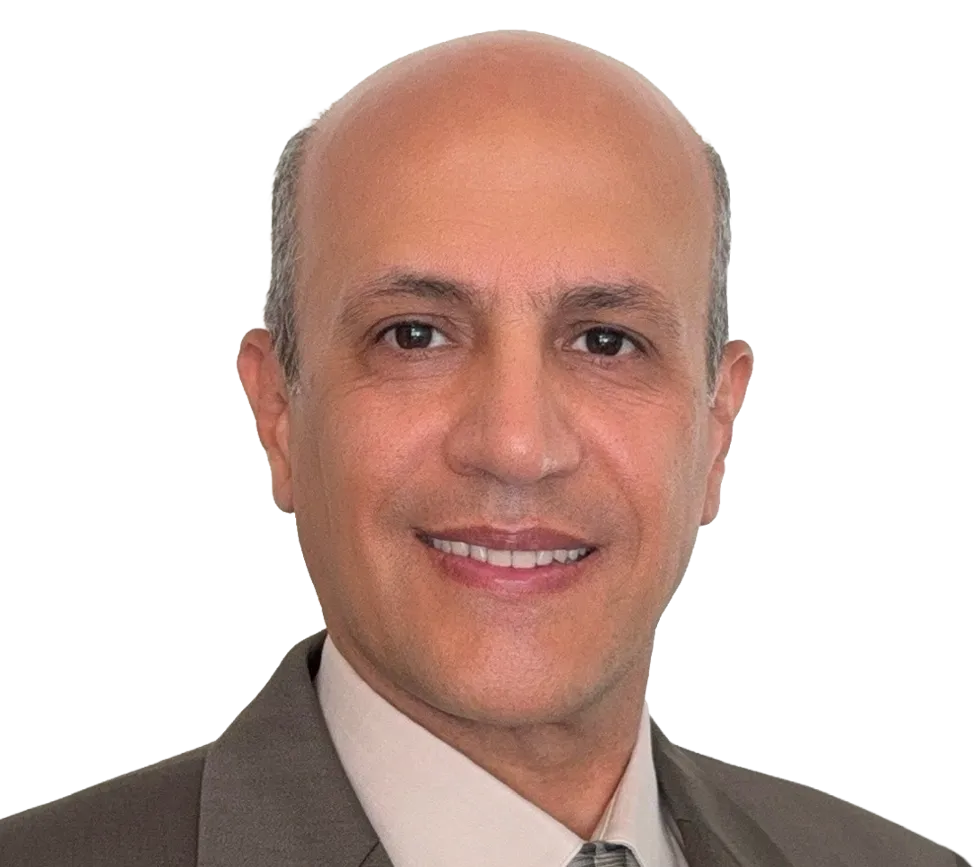
Amir Jokar, Ph.D., P.E., CFEI, ASHRAE Fellow, is a principal engineer in Exponent's Thermal Sciences practice with more than 22 years of work experience in both industry and academia. His specialties include heating, ventilation, air conditioning, and refrigeration (HVAC&R); wildland and structure fire particulate (ash, char, soot) damage assessment; fire origin-and-cause investigation; low-GWP (global warming potential) flammable refrigerants testing; thermal-fluid systems failure analysis and forensic engineering; and computational thermal-fluid dynamics modeling.
Dr. Jokar provides consulting services for clients such as manufacturers, utilities, governments, insurance companies, and law firms. He has testifying experience as an expert witness in trials, arbitrations, mediations, appraisals, hearings, and class actions.
HVAC & Refrigeration Systems
Dr. Jokar helps clients diagnose and resolve failures across the full spectrum of HVAC&R systems. His consulting work spans residential and commercial air conditioning, data center cooling and ventilation, industrial refrigeration, supermarket and food-facility coolers and freezers, heat pumps, geothermal HVAC systems, ammonia refrigeration systems, and refrigerators and vending machines. He has evaluated compressor failures, heat exchanger performance, valve design, and household washers and dryers. He is an ASHRAE Fellow, and he has served on various technical committees, including past TAC Section 1 Head and chair of both TC 1.3 (Heat Transfer and Fluid Flow) and TC 8.5 (Liquid-to-Refrigerant Heat Exchangers).
Wildland & Structure Fire Damage Assessment
Dr. Jokar is among Exponent's leading experts in wildland and structure fire damage assessment, advising his clients on the distribution, deposition, and impact of fire particulate — including ash, char, and soot — on building materials, HVAC and mechanical systems, and interior contents. He has investigated smoke and thermal damage from both wildland fires and structure fires, assessing contamination of HVAC systems, ducting, insulation, interior finishes, and personal properties. His published research on wildfire particulate distribution in residential areas and its effects on building materials and attic insulation thermal performance provides a rigorous scientific foundation for damage quantification and remediation scoping. Dr. Jokar has served as an expert witness in wildfire/fire-related litigation and environmental proceedings.
Fire Origin & Cause Investigation
As a Certified Fire and Explosion Investigator (CFEI), Dr. Jokar applies thermodynamic and combustion principles to determine the origin and cause of fires and explosions across residential, commercial, and industrial settings. His investigations have addressed HVAC and thermal system failures, battery fires in buildings, carbon monoxide poisoning, kitchen appliance fires, boiler and furnace failures, natural gas and solar power generation plant incidents, and industrial refrigerant releases. He has collaborated on multidisciplinary matters involving product liability, premises liability, and environmental litigation, bringing thermal science expertise to complex questions of ignition and fire/smoke-spread. Dr. Jokar has testified in California state court and other jurisdictions on fire and explosion matters.
Low-GWP Flammable Refrigerants
As a recognized authority on low-GWP flammable refrigerants, including A2L and A3 refrigerant classes, Dr. Jokar advises manufacturers, companies, and legal teams on refrigerant safety, system performance, and compliance with ASHRAE and NFPA standards. He has conducted extensive research and managed real-world projects on topics related to refrigerants, including carbon dioxide condensation in plate heat exchangers. He has been an active member of ASHRAE TC 3.1 (Refrigerants and Secondary Coolants) and has collaborated with other companies and agencies, such as the American Society of Automotive Engineers (SAE), to establish innovative methodologies for flammability testing of newly developed refrigerants.
Thermal-Fluid Sciences Consulting
Dr. Jokar provides thermal-fluid sciences consulting across a broad range of industries, integrating thermodynamics, fluid mechanics, and heat transfer analysis to support engineering evaluations, failure investigations, and litigation support. His work encompasses heat transfer analysis of geothermal cooling/heating systems thermal management of electronics and power cables, oil refinery design and contamination, hot water heater failures, household washer and dryer failures, thermal performance of building envelope systems, and mold/odor issues in automotive and residential cooling systems. He draws on both laboratory experimentation and advanced simulation to deliver rigorous, defensible conclusions for clients in manufacturing, energy, insurance, and legal sectors.
CFD Thermal-Fluid Modeling
Dr. Jokar applies computational fluid dynamics (CFD) and thermal-fluid simulation to solve complex engineering problems that cannot be resolved with testing alone. His CFD work includes modeling smoke and particulate transport in buildings following wildfire events and structure fire incidents, analyzing refrigerant flow and phase-change behavior in heat exchangers, simulating electronics cooling for high-power semiconductor applications, and evaluating fluid and thermal behavior in microchannel and compact heat exchanger geometries. He has used CFD to support both product development and litigation, providing visualizations and quantitative results that help clients and legal teams understand failure mechanisms, contamination pathways, and thermal hazards. Dr. Jokar's CFD expertise is grounded in peer-reviewed research and validated against experimental data, supporting scientifically defensible results.
