OUR PEOPLE
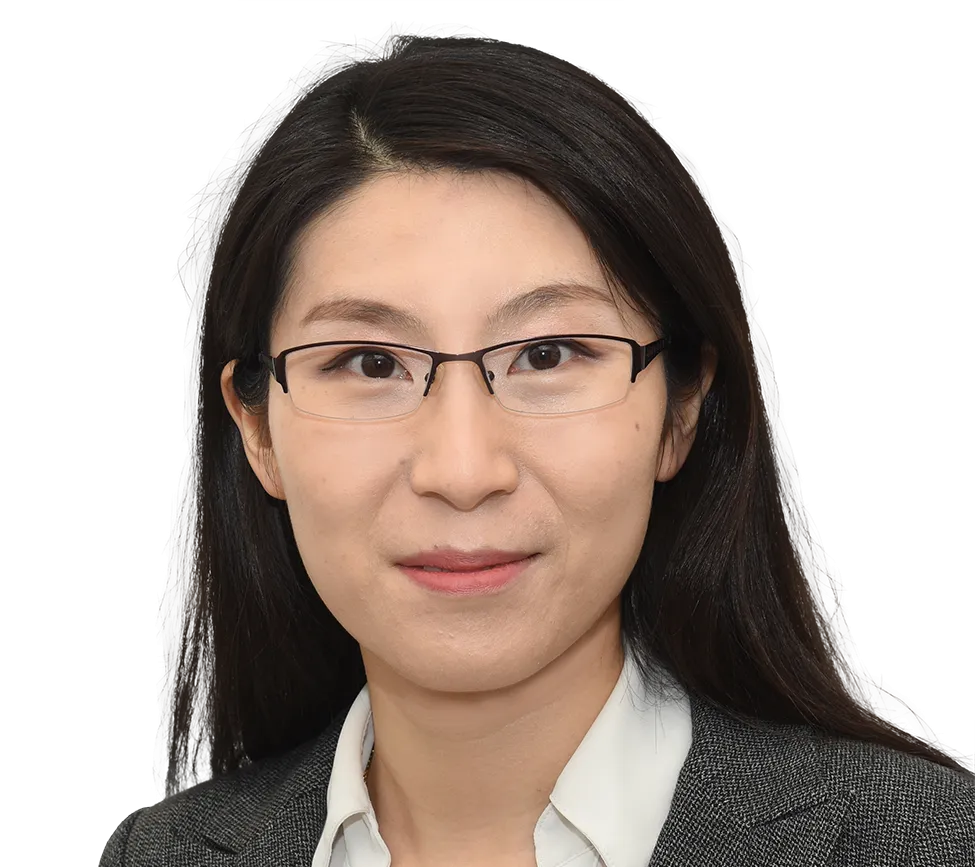
Dr. Yang specializes in mechanical engineering analysis, solid mechanics, fluid and thermal engineering. She possesses extensive expertise in system design, custom laboratory-based testing, and failure analysis. Dr. Yang applies her skills to support clients across diverse industries, including consumer electronics, battery-powered micromobility, household appliances, home products, medical devices, clean energy, automotive components, cycling products, shipping containers, machine tools, heavy machinery, mechanical components such as fasteners, bearings and gears, and general manufacturing. Her work focuses on design and safety assessment, risk mitigation, and failure prevention. In addition to industrial consulting, Dr. Yang provides technical consulting services for litigation, arbitration, and insurance investigations involving intellectual property, product liability, trade secret disputes, and failures to meet contractual technical specifications.
Dr. Yang has studied the mechanical behavior of metals, ceramics, polymers, composites, and liquids. She is well-versed in a wide range of standardized mechanical testing methods and has developed numerous customized methodologies to evaluate products under foreseeable operational misuse. These customized approaches enable structural and material analysis at both micro and macro scales. Dr. Yang also integrates customized experimental testing into failure analysis to help clients thoroughly understand failure modes and enhance product design.
Dr. Yang has extensive cleanroom experience with photolithography, soft lithography, thin-film deposition, and etching, as well as a wide range of material and structural characterization techniques. Her expertise includes scanning electron microscopy with energy-dispersive spectroscopy (SEM/EDS), transmission electron microscopy (TEM), focused ion beam (FIB), dynamic mechanical analysis (DMA), thermomechanical analysis (TMA), atomic force microscopy (AFM), optical and coordinate metrology (OMM/CMM), nano-indentation, hardness and nano-scratch testing, magnetostriction analysis, thermal conductivity measurement, gas and liquid permeability testing, water vapor transmission rate (WVTR) measurement, mercury intrusion porosimetry (MIP) measurement, dynamic vapor sorption (DVS), and sedimentation analysis.
Prior to joining Exponent, Dr. Yang was a research assistant in the Micro/Nanoscale Thermal-Fluids Laboratory at Vanderbilt University, where she designed a collection of bioMEMS and microfluidic platforms to investigate cell mechanotransduction and electrophysiology, as well as organism behaviors. She developed a cutting-edge optoelectronic graphene transistor-based bioMEMS for probing neuronal electrical activities with ultrahigh spatiotemporal resolution using scanning photocurrent microscopy. Dr. Yang also studied biomechanics of cells through a novel automatic setup and mathematic modeling. In her master's program, she designed and built a high-pressure flash evaporator that allows operators to experimentally study a complex phase-change phenomenon, flash evaporation; Dr. Yang was granted a patent for the flash evaporator in 2012. She also gained extensive experience in finite element analysis (FEA) and computational fluid dynamics (CFD) with ANSYS, Fluent and COMSOL Multiphysics software during her graduate studies.
