June 24, 2026
Authors


Executive Summary
As technology has become more deeply woven into everyday life, growing increasingly capable and complex, so have the risks of disruption. Cybersecurity protects digital technologies so they can function as intended, and as the field has evolved, it has become more complex, expansive, and specialized. IT, product, and OT security share common foundations but differ in priorities, constraints, and consequences. Understanding each branch, and where they intersect and diverge, is essential for attorneys, insurers, regulators, and organizations across industries. While misalignment can cascade across systems, clarity about each branch enables informed decision making, enhanced governance, and more effective incident prevention.
A practical guide to understanding IT, product, and OT cybersecurity
Over the last few decades, technology, software in particular, has become embedded in nearly every part of modern life. It is increasingly difficult to find "dumb" versions of consumer electronics, appliances, cars, medical devices, industrial equipment, or almost anything else that can house a computer chip. Cybersecurity is the practice of ensuring that the capabilities that make these systems "smart" remain under the control of their creators, operators, and users, and operate only within the boundaries they intend. As technology has broadened in capability and proliferated, cyberattacks can now impede physical processes, endanger lives, and trigger regulatory, legal, and insurance consequences. For stakeholders navigating this landscape, the challenge is not simply defending technological systems, but understanding which cybersecurity principles apply to which systems and why.
Cybersecurity is often thought of either as one undifferentiated discipline or a sprawling collection of narrow specialties. Neither framing serves decision makers well. A more useful approach recognizes three distinct branches of cybersecurity that are particularly prominent: information technology (IT), product, and operational technology (OT) cybersecurity. Each shares common foundations but differ meaningfully in priorities, constraints, and consequences.
These branches are not rigid categories. A connected medical device, for example, may be a product, part of a hospital's IT environment, and connected to operational or clinical workflows simultaneously. Securing it requires understanding where IT, product, and operational concerns intersect and diverge in the real world. By deepening understanding of these branches, product executives building a new cybersecurity team, regulators tailoring guidance to a specific cybersecurity audience, and insurers assessing risk can focus on what matters most, optimize where branches intersect, and avoid pitfalls where they diverge. When conflicts arise, the same understanding can help attorneys litigating cybersecurity cases evaluate practices across domains and applications and develop arguments about causation, responsibility, and potential negligence.
Information technology cybersecurity
IT cybersecurity is the branch of cybersecurity most familiar to business audiences. It focuses on protecting the digital systems and data that keep an organization operating efficiently: email, employee laptops and workstations, corporate networks, cloud services, business applications, identity systems, and collaboration tools. Common activities include managing user access, securing endpoints, monitoring networks, patching systems, protecting email, backing up data, and responding to incidents.
IT cybersecurity professionals generally perform work to protect system and data confidentiality (keeping information private), integrity (detecting or preventing improper changes), and availability (ensuring usability and accessibility when needed), often referred to as "CIA." These professionals typically come from diverse educational backgrounds and focus on securing the deployment and integration of off-the-shelf technologies created by others. IT breaches most often result in data theft or service outages, with consequences ranging from financial losses to operational disruption and reputational harm.
Product cybersecurity
Product cybersecurity rose to prominence as software became embedded in more products and those products became increasingly connected to networks, cloud services, and mobile applications. It is an engineering discipline focused on building products that are securely designed, developed, released, and maintained. This is usually achieved using a Security Development Lifecycle (SDL) such as A Versatile Cybersecurity Development Lifecycle. These lifecycles define practical activities for achieving security by design, ensuring protections are engineered into the product from the outset and threats are identified and addressed throughout development to reach an acceptable level of risk. Product cybersecurity also encompasses vulnerability disclosure programs, secure update mechanisms, software supply chain management, and long-term support obligations after a product ships.
Like its IT counterpart, product cybersecurity addresses confidentiality, integrity, and availability, but the weighting depends on the particular product and how and where it will be used. Safety-critical automotive systems, for example, must often prioritize integrity and availability to support safety. However, confidentiality may be scoped more narrowly, handled differently, or skipped entirely to avoid introducing latency or failure modes that are incompatible with safe operation. By contrast, a non-emergency, home medical diagnostic device might prioritize confidentiality and integrity for patient privacy and diagnostic accuracy, while treating availability as secondary, since a failed test can simply be repeated. Product cybersecurity often extends the CIA to cover matters such as authorization, authenticity, accountability, etc. that are otherwise implicitly addressed.
Product cybersecurity professionals typically come from computer, electrical, or software engineering and computer science backgrounds. The work demands a strong engineering foundation because designing, building, releasing, and maintaining secure systems from the ground up is fundamentally different from deploying and maintaining systems built by others.
The consequences of product breaches vary as widely as the products themselves. For software-only products that are not safety critical, the impact may resemble a typical IT breach, but for physical, safety-critical products, the stakes are higher: breaches can cause equipment damage, environmental harm, or threaten human life. Given the potential consequences, product cybersecurity is often subject to sector-specific regulation, especially when products affect safety, privacy, or critical infrastructure.

Operational technology cybersecurity
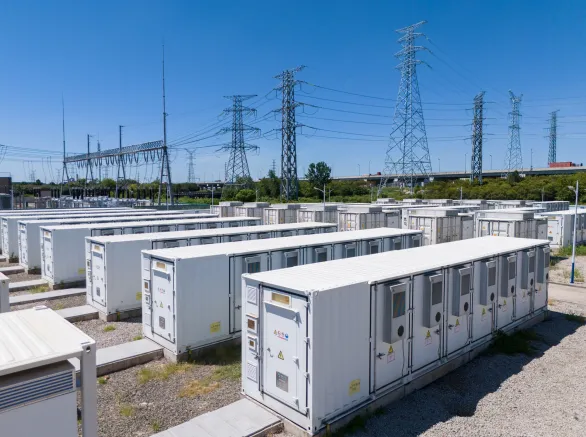
For those outside the field, operational technology cybersecurity is often the least familiar of the three branches, and increasingly the most consequential. OT refers to the hardware and software that monitors and controls physical devices, processes, and infrastructure in industrial settings. OT environments often include industrial control systems, such as programmable logic controllers, supervisory control and data acquisition (SCADA) systems, distributed control systems, sensors, actuators, and human-machine interfaces (HMIs). While IT supports business operations, OT drives physical operations: manufacturing lines, power plants, water systems, transportation networks, and oil and gas pipelines. On the surface, OT looks similar to IT and experiences many of the same types of attacks, such as ransomware — but the differences matter enormously.
In OT, the priorities are safety, reliability, continuity, and operational efficiency. Downtime can cost millions of dollars per hour and carry societal-level consequences. A well-known example from the early 2020s involved an IT ransomware incident affecting a major gas pipeline operator. Although the OT environment itself was not compromised, it was shut down as a precaution. This disrupted fuel supply across much of the eastern U.S., triggering panic buying, and generating estimated economic losses of hundreds of millions of dollars per day.
OT environments are often long-lived. Many industrial systems run on decades-old technologies that were never designed with cybersecurity in mind and are difficult to patch without interrupting operations. A routine IT action like rebooting a server or applying a security patch could, in an OT context, halt a production line or affect a safety-critical process. OT systems are also highly distributed and resource constrained: a long-haul oil and gas pipeline may rely on low-power sensors in remote and physically harsh locations with limited computing capacity and intermittent connectivity.
OT cybersecurity professionals tend to come from engineering backgrounds similar to those in product cybersecurity, but must develop deep familiarity with the systems, standards, and risk models specific to their industries. OT breaches can disrupt physical operations, damage or destroy equipment, threaten public safety, and interrupt critical services.
Integration and overlap
Though IT, product, and OT cybersecurity each have distinct priorities, skill sets, and consequences, they are not independent silos. A vulnerability in a product can become an IT or OT problem the moment that product is deployed in an enterprise network or an industrial control system. Weaknesses in IT infrastructure, such as a compromised update server, can cascade into product and OT environments, particularly when those environments are not properly segmented. Understanding the branches is essential for building a comprehensive cybersecurity strategy. For different decision-makers, this understanding clarifies where to focus effort:
- Attorneys can distinguish how IT, product, and OT cybersecurity issues contributed to an incident or dispute, helping sharpen arguments about responsibility, causation, and reasonable cybersecurity practices.
- Executives at companies making safety-critical products can confirm the right cybersecurity capabilities are staffed and resourced according to the organization's risk appetite and regulatory obligations.
- Insurers can tailor questionnaires, underwriting criteria, and policy language to the branch of cybersecurity most relevant to the insured risk.
- Regulators can develop guidance that is best matched to the systems, risks, constraints, and evidence relevant to each cybersecurity branch.

What Can We Help You Solve?
Exponent helps organizations navigate cybersecurity challenges across IT, product, and OT environments. Our multidisciplinary teams support security governance, secure development, connected product safety, and OT risk assessment. When incidents occur, we help determine what happened, identify improvements, and clearly communicate findings to regulators, attorneys, judges, and juries.

Cybersecurity Consulting
Learn how Exponent's computer scientists, data scientists, and security experts can help make systems safer and more secure.

AI Consulting
AI offers immense opportunity — but also introduces risk, particularly in high-consequence sectors where safety, trust, and security are non-negotiable. Achievi...
Software & Computer Systems Support
Insights and solutions for the design, development, and analysis of software prototypes, products, and platforms.

Systems & Controls
Critical systems and controls support, from missile guidance and ADAS technology to utility power generation and consumer electronics.
Vehicle Engineering
Rigorous research on the safety and performance of all types of transport and cutting-edge technologies.