June 18, 2026
Authors





Executive Summary
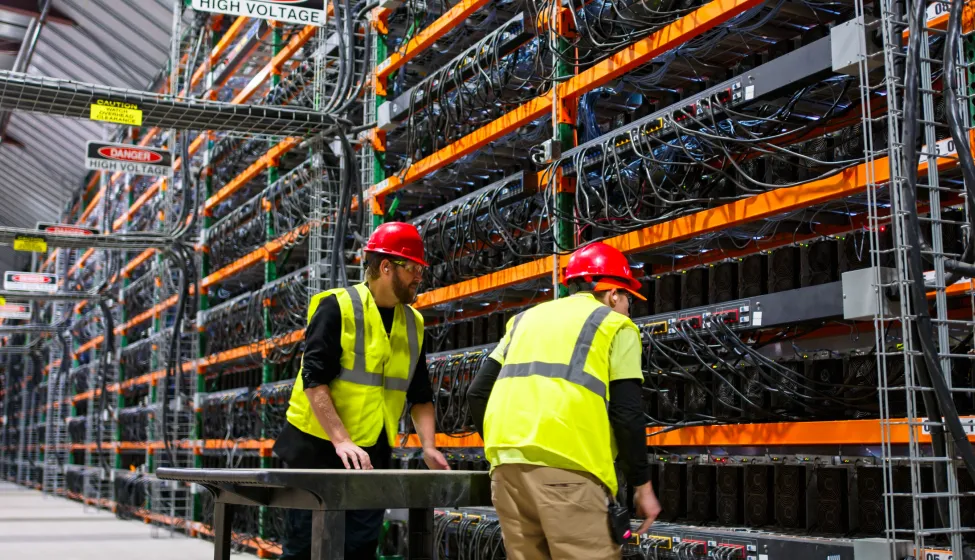
As data center infrastructure scales to meet the demands of AI workloads and cloud computing, the hardware systems powering that growth are becoming more complex, more interconnected, and increasingly vulnerable to failures that propagate rapidly across cooling, electronics, and power components. Standard approaches like destructive analysis and surface-level inspections are often insufficient to accurately investigate and characterize the internal conditions that drive performance degradation and failure.
Computed tomography (CT) provides non-destructive, volumetric visibility into complex assemblies, preserving critical components and evidence while guiding future mitigations. But realizing its value hinges on expert analysis to rigorously interpret complex data, determine root causes, and deliver precise, actionable guidance.
How can non-destructive analysis support root-cause investigations and future improvements?
Global data center capacity is projected to nearly double by 2030, propelled by AI workloads, cloud computing, and the accelerating expansion of hyperscale and edge infrastructure. That growth is not simply a matter of adding more hardware — it means integrating increasingly complex systems across compressed timelines and global supply chains and vendors while preserving the reliability and performance that operators and customers depend on.
As infrastructure expands at this breakneck pace, the sheer complexity and scale of data center operations introduce new, hidden failure modes. Internal degradation, manufacturing defects, and operational damage can develop within fully assembled systems undetected and cascade across installations. Computed tomography (CT) enables teams to non-destructively evaluate specific components and their construction while also guiding subsequent destructive analysis to maximize insight from each investigation.
CT, especially cutting-edge systems with high accelerating voltage and submicron detectability capabilities, provides a way to see inside complex hardware without destroying or impacting critical evidence. However, realizing its value across rapidly scaling data center infrastructure requires the ability to interpret complex data, determine root causes, and provide precise, actionable guidance. When failures occur inside sealed, fully assembled systems, CT provides the non-destructive insight needed to determine what happened and why, turning isolated failures into actionable intelligence that helps harden future systems as they rapidly scale.
What does it take to scale data centers that can be trusted?
Cooling systems
Modern cooling architectures — particularly liquid cooling — are indispensable for supporting higher compute densities, but they introduce risks that are difficult to assess once systems are assembled and deployed. Leaks, internal and external corrosion, erosion, and manufacturing variability in evolving liquid cooling designs may remain hidden until a field failure occurs. In hyperscale environments, where cooling systems operate continuously under high demand, a single undetected defect has the potential to escalate into widespread thermal events across interconnected infrastructure.
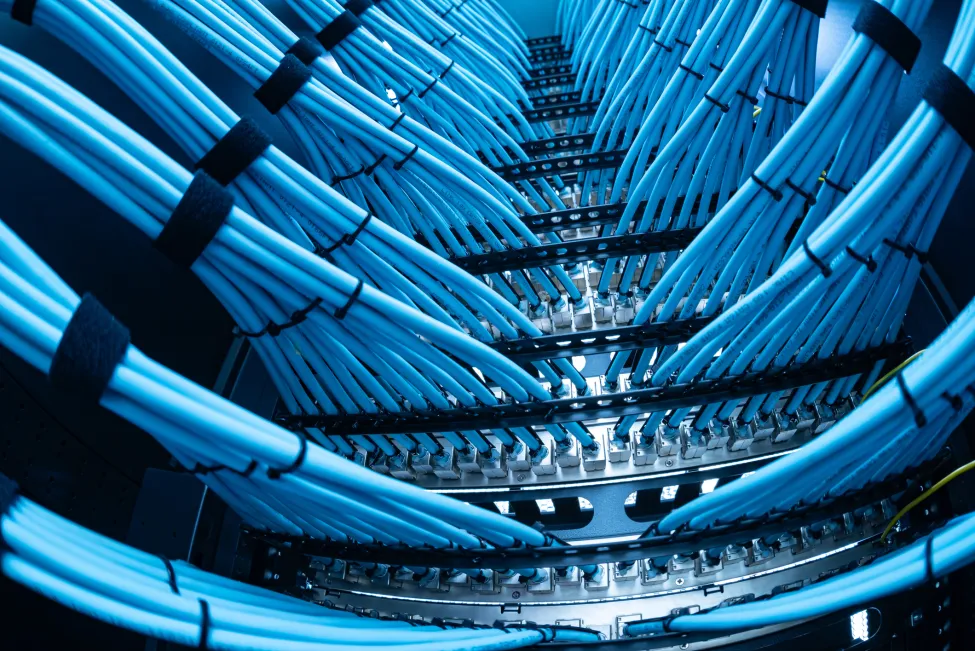
CT enables non-destructive visualization of internal flow paths, fittings, and interfaces, allowing engineers to localize defect pathways or signs of internal degradation without disassembly. This insight helps teams rapidly narrow the scope of a potential investigation while preserving what's needed for follow-up evaluation.
High-resolution imaging, however, is only as effective as the analysis behind it. Apparent voids or material changes may not be causative, requiring the expertise to distinguish meaningful defects from incidental manufacturing features. By integrating CT findings with materials analysis, insights from thermal and materials sciences, and a deep system- and component-level understanding of data center infrastructure, teams can resolve active failures while paying those lessons forward — improving design and operational robustness, evaluating vendors, and hardening cooling systems ahead of future deployment cycles.
Electronics and printed circuit boards
Data center electronics often rely on large, densely populated printed circuit boards with tightly coupled failure modes. Internal cracks, solder joint defects, dendrites, or thermally induced damage can result in electrical faults including open circuits, short circuits, or high-leakage failures. Such failures may be invisible through external inspection or conventional 2D imaging, particularly in multi-layer boards or complex system-in-package designs that high-performance compute platforms demand. System-in-package designs may contain passive and active components that are not visible through external inspection.
Advanced CT imaging provides three-dimensional insight into these assemblies, helping identify internal features and guide electrical fault isolation or targeted destructive analysis. This is particularly valuable for large boards where blind sectioning can risk missing the true failure site — a costly mistake when replacement lead times are measured in weeks. In post-incident scenarios, CT provides the non-destructive insight needed to triage failed hardware, narrowing the problem space before more invasive techniques are applied.
Specialized expertise is critical. Many features exist at the edge of detectability, and not every anomaly is a root cause. Experienced interpretation helps teams avoid chasing secondary damage or benign manufacturing artifacts. Expert, CT-guided analysis accelerates diagnosis while maintaining the technical rigor and defensibility that high-stakes failures — and the disputes that may follow — require.
Batteries and backup power systems
Backup power systems present distinct safety and reliability challenges, especially as battery energy storage systems grow in size and energy density to support increasingly power-hungry data center loads. Internal defects or degradation mechanisms may progress unnoticed until a field incident occurs, with consequences ranging from unexpected downtime to thermal runaway and fires.
CT enables non-destructive assessment of internal battery structures, supporting evaluation of assembly quality. As with electronics, CT serves as a critical non-destructive entry point for failure analysis, particularly in post-incident investigations where maintaining the integrity of the cell or module is essential to understanding root cause. However, navigating the dense materials of large-scale cells and packs requires the highest possible imaging detectability and, crucially, the specialized knowledge to accurately interpret the results. Combining CT findings with electrical and materials analysis provides the comprehensive data required to confirm the failure mode and mitigate future recurrence.
Recurring defect signatures, vendor-specific failure patterns, and construction anomalies identified through failure analysis can inform procurement decisions and flag systemic risks before they propagate across installations
Infrastructure, cabling, and connectors
At data center scale, mechanical and structural integrity is foundational to operational reliability. Weld defects in racks, connector misalignment under sustained load, and deformation caused by heavy cabling — increasingly required by high-density power distribution — may be difficult or impossible to evaluate without compromising hardware. During rapid capacity expansion, small mechanical issues have the potential to quickly multiply across installations.
When a mechanical failure occurs, CT provides the non-destructive entry point needed to localize the problem, preserve critical evidence, and guide subsequent analysis — whether targeted destructive sectioning or materials characterization. This is particularly valuable for connector and weld failures where the causal feature may be buried deep within an assembly, and where blind sectioning risks destroying the very evidence needed to establish root cause.
Recurring defect signatures, vendor-specific failure patterns, and construction anomalies identified through failure analysis can inform procurement decisions and flag systemic risks before they propagate across installations. A weld defect that caused a single rack failure may reflect a manufacturing process issue present across hundreds of units in the field — understanding it fully is what makes that distinction actionable.
Can non-destructive failure analysis drive operational resilience?
Hyperscale and edge facilities are often in remote or constrained environments where rapid intervention is difficult and redundancy is limited. Failures that might be manageable in isolation frequently carry consequences far beyond the data centers themselves.
As AI workloads drive data center infrastructure to scales and densities that would have been unthinkable a decade ago, the systems underpinning them — and the industries, services, and critical functions those systems support — leave increasingly little margin for unresolved failures. In that environment, the failure patterns, defect signatures, and root causes surfaced through rigorous CT-guided analysis don't stay contained to a single incident: they become the intelligence that reduces risk across every installation that follows.
What Clients are Talking About
What Can We Help You Solve?
Equipped with state-of-the-art labs and cutting-edge CT systems, Exponent's multidisciplinary teams help data center owners and operators conduct rigorous non-destructive testing for complex failure investigations, delivering the expert analysis needed to support confident decisions as critical infrastructure scales.
Data Center Consulting & Engineering
Unmatched technical expertise for data center construction, performance, reliability, and sustainability to meet mission-critical demands.
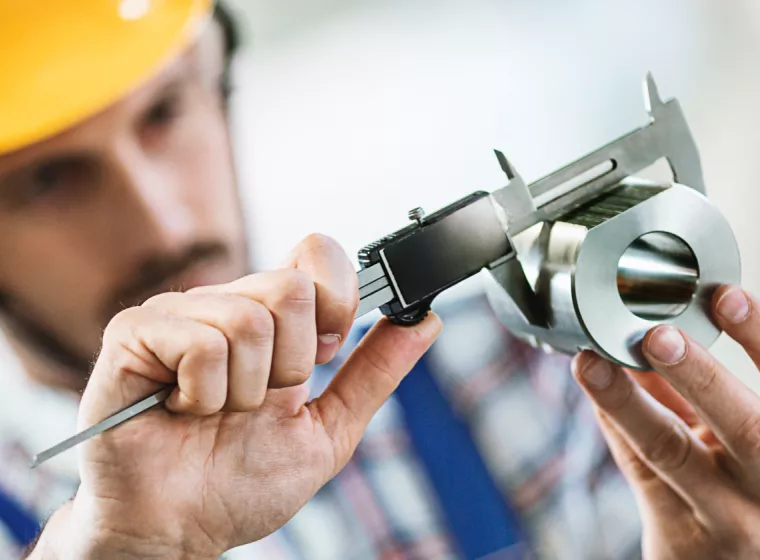
Materials Failure Investigations
Rigorous analysis, direct and root cause investigations of materials failures.
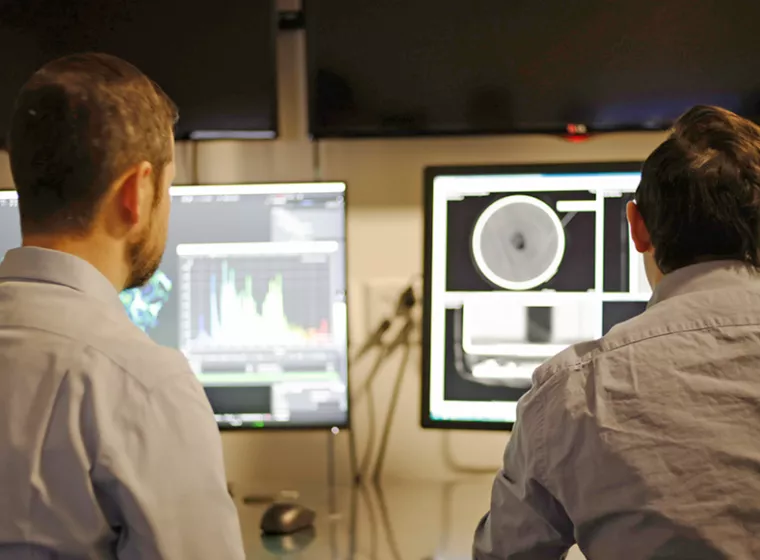
Computed Tomography Services
Expert CT testing and analysis to mitigate risks and investigate material failures across industries.
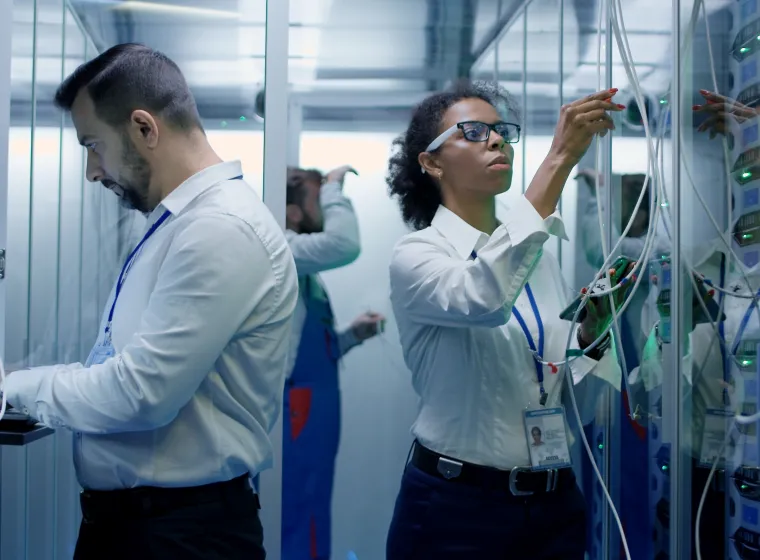
Electrical Engineering Services for Data Centers
By supporting the balanced functionality of mechanical and electrical equipment and infrastructure, Exponent primes your facility environment for installation a...
Risk Assessment & Mitigation
Experienced in the science of quantifying and managing myriad potential scenarios.

AI Consulting for the Tech Industry
Exponent's AI approach combines our legacy of failure analysis with extensive engineering, human factors, biomechanics, and data sciences expertise, enabli...
