OUR PEOPLE
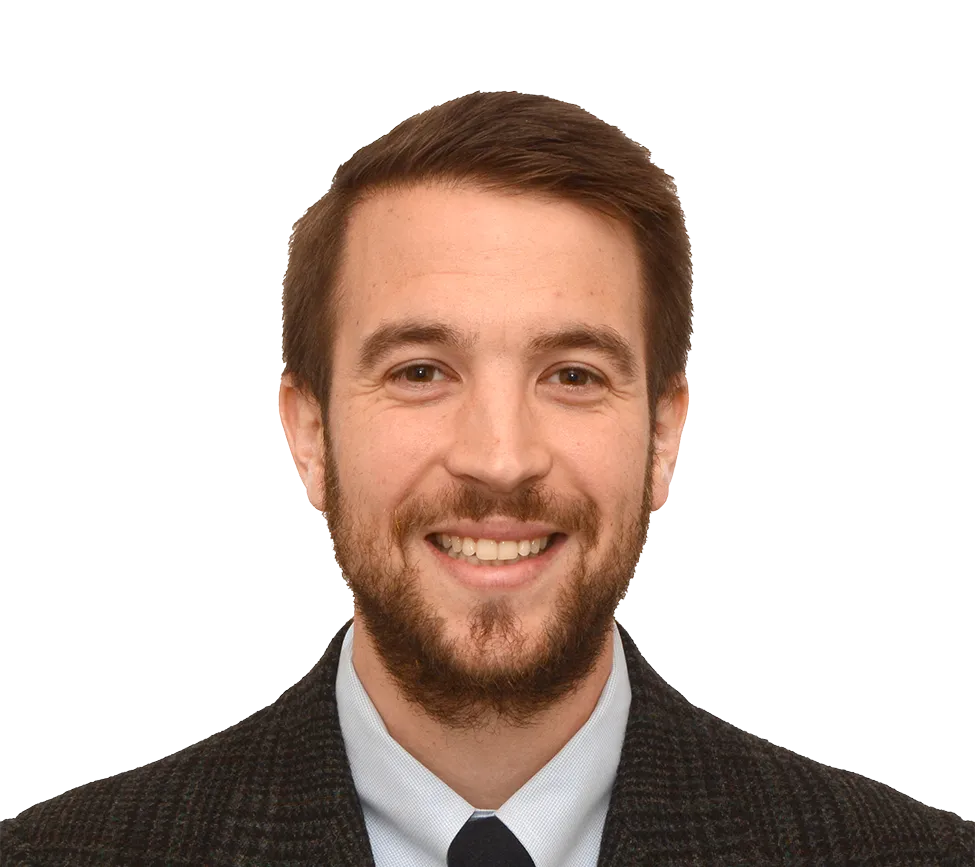
Cliff Bishop
Ph.D., S.E., P.E.
Principal Engineer
Cliff D. Bishop, Ph.D., P.E., S.E., is a principal engineer in the Civil and Structural Engineering practice at Exponent with over 15 years of experience in structural failure analysis, natural hazard damage assessment, construction defect investigations, and premises liability incidents. He specializes in structural evaluations and building envelope failures for dispute resolution support across the commercial, residential, and infrastructure sectors.
While at Exponent, he has led investigations of concrete, steel, wood, and masonry structural/architectural systems and building envelopes damaged as a result of design/construction deficiencies, construction means and methods, degradation by decay or corrosion, and natural hazards, such as wind, floods, hurricanes, fires, and earthquakes. His engineering expertise and experience provide the basis necessary for owners, insurers, builders, arbitrators, and other stakeholders to make informed decisions.
Dr. Bishop received his Bachelor of Science, Master of Science, and Doctor of Philosophy degrees in civil engineering with an emphasis in structural engineering from the Georgia Institute of Technology. Dr. Bishop's academic background includes the incorporation of probability and risk into the design process for steel and concrete structures. This includes experience in structural reliability, dynamics and adaptive smart-structures, and computer simulations of structural behavior using robust nonlinear finite element analysis (FEA). Dr. Bishop's research at Georgia Tech focused on bracing for stability of metal building systems where he developed novel FEA software to assess the stability of highly nonlinear steel structures.
Structural Failure Analysis
Dr. Bishop's investigations of structural and non-structural damage and collapses often take him to the site to capture the critical, sometimes ephemeral, evidence needed to determine the cause of a failure as well as the nature and extent of damage that may require repair. He employs his knowledge of the performance of structures and common failure modes to determine the most likely causes of collapse. These investigations typically utilize sophisticated engineering analyses, including applications of nonlinear finite element modeling and laboratory testing.
Natural Hazard Damage Assessments
Dr. Bishop has led numerous investigations after natural hazards have damaged communities, including thunderstorms, hailstorms, high winds, hurricanes, floods, and earthquakes. These projects often require site visits on short notice to capture structural conditions shortly after the incidents. Dr. Bishop has led teams of investigators in such assessments to speed up review and ultimately provide conceptual recommendations for restoring the community as quickly as possible.
Defective Construction Evaluation
Dr. Bishop's investigations include assessing the potential impact of various types of potential defects, including those related to design or construction means and methods. His investigations typically focus on structural concerns, such as cracking, sagging, and leaning of slabs, balconies, beams, columns, and shear walls and building envelope concerns including those related to windows/doors, cladding systems (e.g., brick, stucco, EIFS), roofing systems (e.g., TPO, EPDM, asphalt-composition shingles), moisture intrusion, and building physics such as vapor drive. He has also evaluated how deficiencies in structural components and/or the building envelope resulted in damage to internal components and finishes (e.g., drywall, ceilings, flooring). Dr. Bishop interprets and applies relevant building codes and industry standards in support of his investigations.
Premises Liability Code Compliance Expert
Dr. Bishop has utilized his experience in interpreting and applying building codes and industry standards on several personal injury cases that occurred in and around buildings and commercial spaces including slip, trip, and fall incidents and pedestrian-vehicle accidents. These investigations often include site visits to document conditions, 3D scanning for digital preservation of the scene, analysis of local codes and ordinances, and robust analyses toward defensible conclusions. Dr. Bishop also works closely with Exponent's consultants in the Human Factors and Biomechanics practices to provide a comprehensive assessment of the specific site conditions and human interactions that may have contributed to the incident.