February 6, 2026
Authors


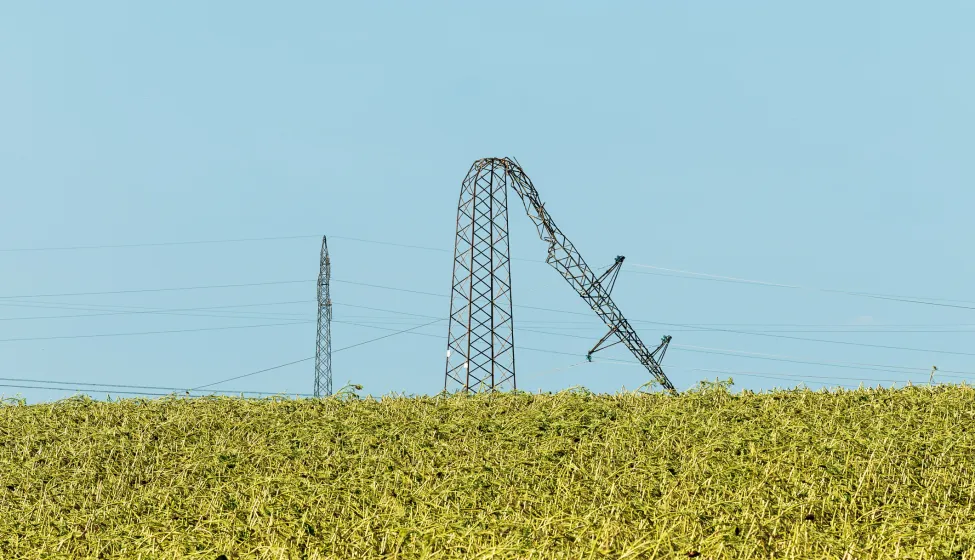
Power utilities are increasingly turning to quantitative risk assessments to inform asset management, operability assessment, and strategic planning. The Electric Power Research Institute (EPRI) recently published "Fragility Curves for Quantifying Physical Climate Risk in the Electric Power Sector" as part of its Climate Resilience and Adaptation initiative (Climate READi). Co-authored by Exponent's Ezra Jampole and Brian McDonald in cooperation with EPRI subject matter experts, this technical report provides the underlying science supporting fragility-based risk assessment for assets vulnerable to extreme environmental effects (e.g., high winds, earthquake ground shaking, ice, flooding, and heat from wildfires). The report points to technical literature to help utilities better understand how a changing climate can affect both hazards and degradation rates and how to quantify changes in the risk profile of various asset types — including wood poles and steel towers — from climate-driven extremes.
EPRI's report identifies ongoing industry needs, particularly expanded fragility curve development for assets and hazards with limited existing data. The report discusses how climate changes can accelerate (or decelerate) asset aging and degradation, such as wood pole decay rates affected by anticipated precipitation and temperature patterns. The study also examines incorporating utility-specific outage and repair data using Bayesian Inference to dynamically refine the underlying probability distributions based on physical evidence and continually improve risk assessment accuracy over time. The researchers conclude that quantitative approaches supported by literature reviews, empirical modeling, and advanced analytics can help utilities plan more effectively for evolving climate risks, ultimately enhancing grid resilience and reliability.
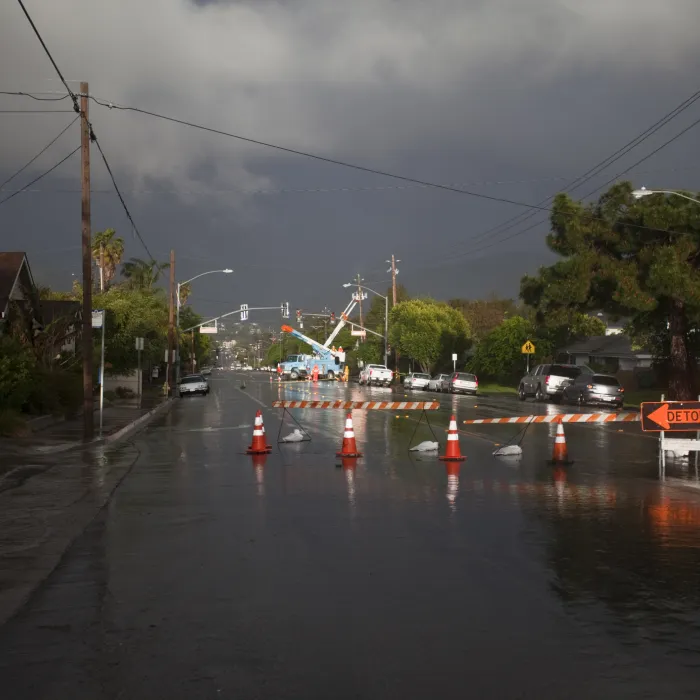
"Fragility Curves for Quantifying Physical Climate Risk in the Electric Power Sector"
Read the full article here
From the publication: "Quantifying the relationship between a climate hazard and its impact on the performance, life span, and/or failure rates of specific assets within the power system, can provide critical inputs to system planning models that, when coupled with climate projections, can be used to characterize potential risk to assets and systems through the end of this century."