
February 27, 2026
Authors



New fire classification highlights evolving responsibilities to address the unique hazards associated with lithium-ion batteries
On Jan. 31, the International Organization for Standardization (ISO) published a revised version of ISO 3941, "Classification of Fires," introducing a new Class L — a dedicated classification for lithium-ion (Li-ion) cell and battery fires where no lithium metal is present. This new Class L reflects the unique electrochemical nature of Li-ion batteries and systems and the distinct thermal hazards they pose.
While ISO's introduction of Class L marks an important step in global fire safety classification, U.S.-based stakeholders should note that the National Fire Protection Association (NFPA) does not currently recognize the ISO Class L designation, and fire protection strategies rated specifically for Class L are currently not accepted by U.S.-adopted codes and standards. For facility operators, manufacturers, EHS groups, insurers, and others operating in the U.S. market, NFPA standards typically remain the authoritative guidance for Li-ion battery fire control and suppression.
Industry-adopted standards such as NFPA 11, NFPA 13, NFPA 16, NFPA 17, and NFPA 855 provide information and requirements relevant to different suppression agents that can be deployed for fires involving Li-ion cells and batteries. Because most state fire and building codes are rooted in NFPA frameworks, these standards remain the most relevant point of reference for U.S. stakeholders.
Unique Li-ion battery fire hazards
Lithium-ion battery fires are fundamentally different from conventional fires. The differences arise from internal electrochemical reactions rather than solely from external combustion, as the batteries contain their own fuel, oxidizer, and ignition sources, resulting in several distinctive hazards:
- Rapid, self-sustaining heat release
- Propensity for thermal runaway propagation, which could result in cell-to-cell failure spread and rapid fire growth
- Venting of toxic and flammable gases with explosion potential if gases are confined or if explosion protection measures are not utilized
- Projectile risk from ejected battery cells and pack materials
- Production of corrosive and toxic non-gaseous materials that could present health risks and fire suppression runoff issues without containment measures
- Stranded electrical energy, leading to potential high-voltage hazards or delayed re-ignition
Li-ion fire hazard assessment and mitigation guidance
The implementation of the new Class L, where applicable globally, challenges manufacturers, facility operators, and risk assessors to identify the presence, type, and quantity of Li-ion batteries within their premises. Steps that could be considered include:
- Conduct detailed hazard assessments to identify suitable areas where Li-ion batteries could be present, and appropriate mitigation measures
- Evaluate existing fire protection systems to determine whether current detection and suppression strategies are adequate
- Review emergency response protocols to address potential toxic gas release, explosion potential, and re-ignition hazards
Consulting with fire safety and Li-ion battery safety experts can help facility operators, manufacturers, insurers, and other stakeholders better understand and address Li-ion battery fire hazards and implement industry best practices or code requirements for fire protection and response. Battery fire safety expertise is valuable across a range of critical areas, including evaluating the hazards Li-ion batteries could present based on their design, assessing the efficacy of fire protection strategies, and conducting hazard assessments for infrastructure, assets, and personnel.
What Can We Help You Solve?
Exponent's fire safety and battery experts help clients evaluate hazards relevant to Li-ion battery fires with customized technical support, hazard assessments, fire protection systems evaluations, and emergency response planning guidance.
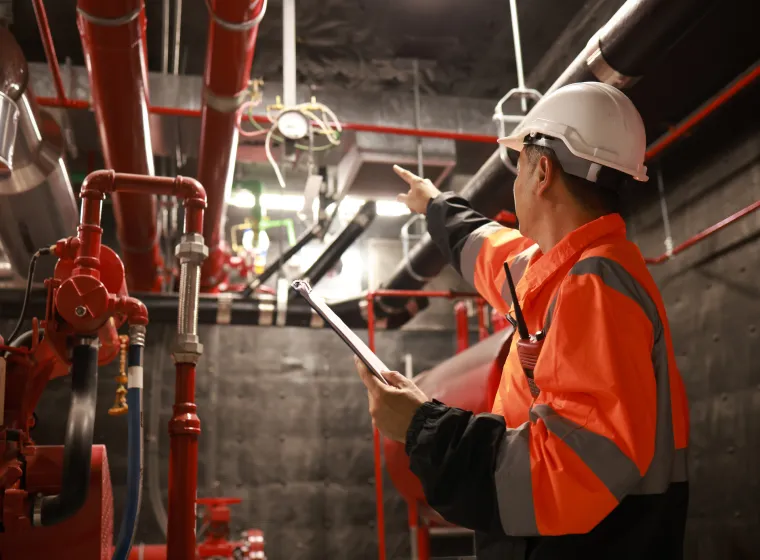
Fire Protection Engineering
Extensive fire suppression, detection, and alarm system testing to support achieving code and regulatory requirements.

Thermal Sciences
Uncover root causes of fires, explosions, thermal, and flow-related accidents across industries.

Battery Risk Assessments & Corrective Action
Li-ion battery risk assessment and corrective action services, including cost-effective tools for long-term monitoring.
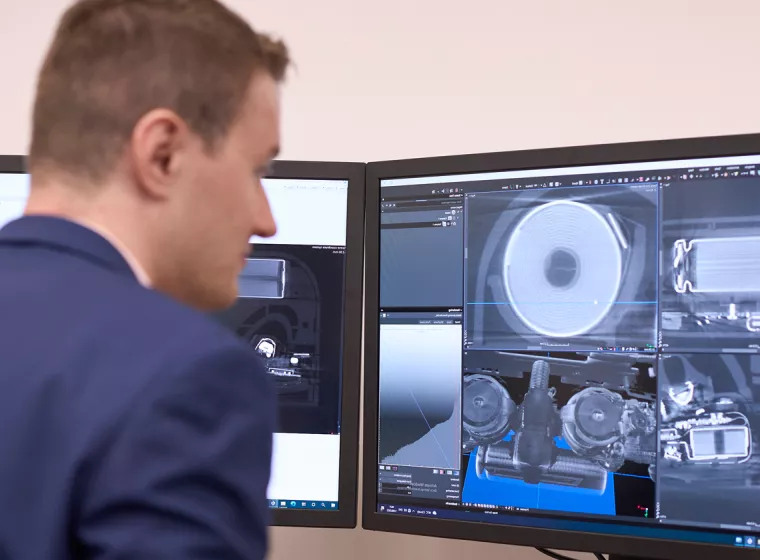
Battery Design Review, Quality & Safety Assessments
State-of-the-art battery design, performance, quality, and safety assessments to support manufacturers' requirements and industry standards.

Batteries & Energy Storage
Supercharge performance, reliability, and safety across all stages of the battery and energy storage product lifecycle.
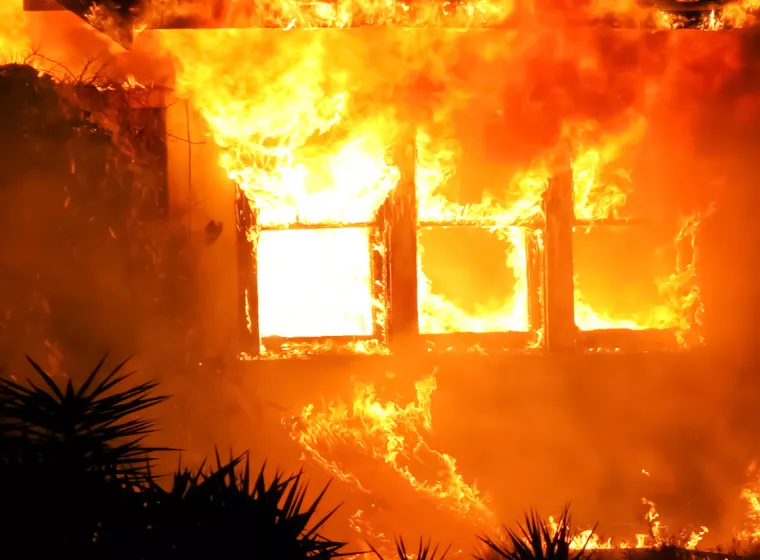
Fire & Explosion Investigations
In-depth field examinations and high-tech modeling and testing to determine the origin and cause of fires, gas explosions, dust explosions, and other explosions...
