April 21, 2026
Authors


Executive Summary
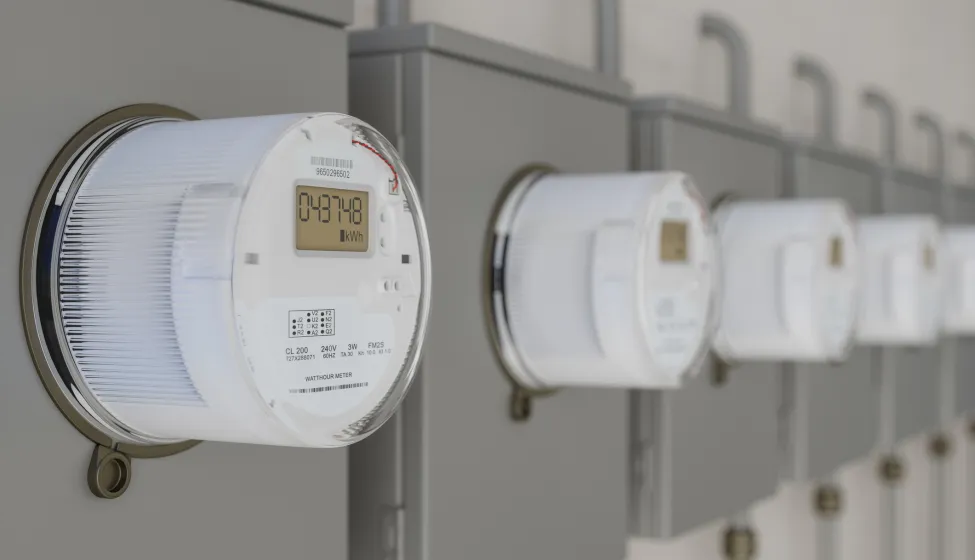
As first-generation AMI 1.0 meters approach the end of their service life (~15 to 20 years), some utilities may face accelerating failure rates and increasing pressure to modernize. With nearly 146 million smart meters deployed nationwide — many installed 10-15 years ago — utilities can start modeling the risk of failure to plan for capital investments, manage regulatory requests, and support rate-case justifications. While failures that cause physical damage beyond the meters are rare, the cost of a system-wide replacement can be significant if utilities are unprepared for end‑of‑life equipment turnover. As AMI 1.0 failure risk becomes harder to forecast as fleets age, utilities can combine failure inspections, accelerated life testing, and survival models to produce defensible replacement forecasts. These results support regulatory filings, capital planning, and a staged transition to AMI 2.0.
How can accelerated life testing and statistical modeling help utilities forecast first-generation meter longevity and plan for grid modernization?
With their first wave of installations in the early 2000s, smart meters revolutionized the energy industry by automating electric meter readings and providing frequent, granular consumption data. By 2012, between 40 and 45 million first-generation smart meters using Advanced Metering Infrastructure (AMI 1.0) technology were installed in the U.S. Today, with many AMI 1.0 meters approaching the end of their service life, many utilities may be planning to deploy AMI 2.0 technology, but with so many smart meters currently in service, the scale of the task before them is enormous.
Utility filings suggest that replacing first-generation AMI meters with AMI 2.0 devices (and upgrading the surrounding communications infrastructure) typically costs a few hundred dollars per endpoint. With nearly 146 million smart meters currently deployed across the U.S., and a 94% penetration of smart meters predicted across North America by 2029, the potential financial impact for widespread replacement is disruptive. For large service areas, that translates into hundreds of millions to billions of dollars. Regulatory approvals, rate case treatment, and premature depreciation of assets can also affect how costs are recovered.
Surveyed utilities generally see AMI 1.0 meter service life as 15 years, with a total range of 10-20 years. Unlike long-lived grid assets (e.g., conductors and transformers), AMI meters are complex electronic devices with integrated metrology, processing, power, display, and RF communications functions; this added electronic complexity places practical limits on service life that are more akin to other communications and computing-enabled equipment. These smart meters have no field-service components. From an electric utility's operational point of view, meter failure is a binary event: When failure happens, it can be abrupt, without warning or even fading of a display. Either a meter works as designed or it must be retired, removed, and replaced.
While failures that cause physical damage beyond the meters are rare, the cost of replacement can be significant if utilities are unprepared for end‑of‑life equipment turnover. Accurate end-of-life estimates for AMI 1.0 smart meters can help utilities more efficiently forecast upcoming replacement needs and achieve the advantages of widespread AMI 2.0 installations. Failure analysis data can also help make the case for much broader modernization schedules in instances when evidence points to shorter-than-expected fleet lifespan.
What are the benefits of AMI 2.0 meters?
AMI 2.0 is a software-defined, grid-edge computing platform — more like the shift from an early‑2000s phone to a smartphone than an incremental meter upgrade. By pairing higher‑resolution sensing with on‑meter processing, AMI 2.0 supports multiple applications at the edge and enables utilities to turn raw electrical signatures into actionable insights. In practice, this can improve voltage visibility, support phase-aware operations, and enable identification of large residential loads (e.g., EV charging) for smarter load balancing and grid resiliency — while reducing dependence on sending all raw data back to centralized systems.
As edge-computing devices, AMI 2.0 meters leverage a distributed software model where much of the processing and data storage happens locally on the meter rather than being transmitted to the cloud. This can reduce cybersecurity risks compared to AMI 1.0's telemetry-based data transfer. In addition, AMI 2.0 can help "future-proof" meters by enabling system updates to be pushed from a utility's operations center directly to each meter as needed.
How can utilities plan for meter replacement effectively?
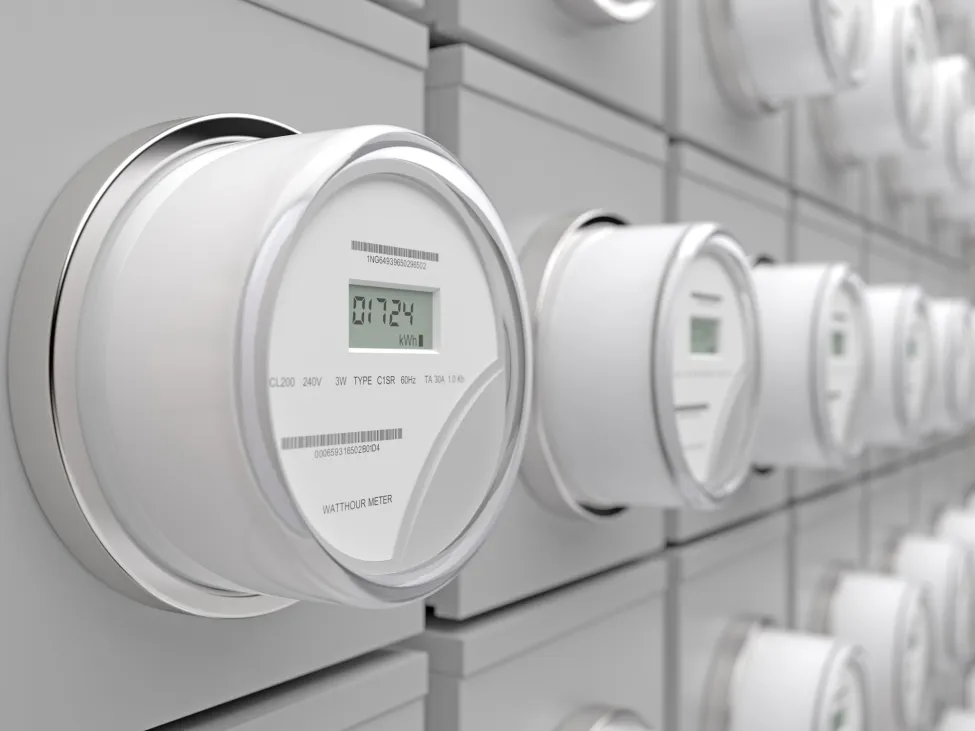
Many utilities plan to phase the replacement of AMI 1.0 meters over the next several years to spread out costs. Some are developing plans that include ongoing annual meter replacement of ~5%, with initial rates up to 10% per year, to address their first big deployment waves. However, the range of service life and operating conditions across millions of meters heightens the risk of sudden and sporadic failures, complicating calculations and budgets.
Utilities can try leveraging historical data to estimate the number of replacements needed per year; however, this approach alone can lead to gaps — as well as overestimates that strain budgets. To support a more precise replacement strategy and budget, investing in a rigorous evaluation that accounts for specific operating environments, meter components, and energy usage patterns can deliver a more reliable fleet-wide calculation that conserves long-term internal resources and capital investments.
Lessons from studying meters and pushing them to failure
Aside from its value in planning fleet replacement roll-out, the chief benefit of conducting thorough evaluation of the operational data and "push-to-failure" studies is being able to present a scientific, defensible analysis to executive leadership, investors, and, most importantly, regulators. Accurate evidence on the predictability of failure can support utilities' requests for funding or approval for replacement from state public utilities commissions, public service commissions, local utility boards and city councils, and cooperative boards. This helps inform a rate case to justify an increase in funding for replacement. These studies are also useful for sharing with regional grid operators who may set operational rules and coordinate grid reliability.
The chief benefit of conducting thorough evaluation and "push-to-failure" studies is being able to present a scientific, defensible analysis to executive leadership, investors, and, most importantly, regulators.
Although failure is binary — a meter either functions or it doesn't — the timing of that failure depends on a complex interaction of component quality, environmental conditions, and service history. Smart meter service life is generally predicted to be as long as 20 years, but there may be less historical data to estimate failure rates accurately in devices installed within the past 10-15 years.
Rather than relying solely on real-world meter replacement data, experts can improve the accuracy of predictions by employing a study that combines various methods to estimate lifetime parameters. These detailed engineering evaluations typically include inspections of failed meters, accelerated life testing, and statistical analysis of historical field and manufacturer data.
Failure Analysis: Inspections of meters that have failed during service in the field provide valuable insights into common failure modes and the susceptibility of various meter components to future incidents. Even minor degradations can cause malfunctions: electrolytic capacitors dry out (allowing electrical noise and voltage fluctuations), crystal oscillators age (causing radio frequencies to drift), surge suppressors wear out (exposing the meter to transient overvoltage spikes), and LCDs fade (making displays unreadable).
Beyond reporting observational data, it's critical to understand why the failures happened. For example, a root-cause analysis of prematurely failed batteries in a vendor's batch of smart meters could include computed tomography (CT) to identify any internal defects that could lead to internal draining.
Even something as minor as cable insulation can shorten the predicted lifespan of a meter. In one Clemson University study, the predicted life for the meter's cable insulation at its design temperature turned out to be approximately 13.8 years. For a utility with hundreds of thousands of installed meters, a 1-2-year shorter-than-expected insulation life can translate into tens of thousands of early replacements and significant unplanned capital expenditure.
Accelerated Life Testing: To compress the effects of years of operation into a months-long, laboratory-controlled simulation, sample meters can be exposed to stress factors such as elevated temperatures, frequent power surges, and power outages. Engineers can also introduce other factors such as sun exposure, moisture, vibration, and unusual loads or operating conditions that may be characteristic of the fleet's location or observed in previous field failures.
Statistical Analysis: Exponent's consultants can also perform statistical analysis of historical data provided by the utility. These data can include electric meter characteristics, installation dates, removal dates, and possible removal reasons.
Data Visualization and Survival Analysis: Using tools including Kaplan-Meier curves and Weibull survival models, engineers can integrate and analyze data from all these sources and estimate future failure rates. This granular and graphical reporting provides clear support for comparing failure rates across different meter vendors and defending a utility's predictions about reliability, intrinsic wear-out phase, lifespan, and estimated meter replacement quantity. At the same time, the results of these analytical models must be evaluated and refined using engineering assessments, considering factors such as operating environment conditions, known component failure modes, laboratory examinations and testing of failed units, and accelerated life testing.
Armed with these analyses, utilities can better understand and more clearly report the real-world performance of the various meters in their fleet, backing replacement strategies with data to make them more accurate and justifiable.
Capital planning and program management
Once a study has been presented to regulators and funding for AMI 2.0 modernization has been approved, the next phase involves the utility planning how to implement the asset replacement program. Establishing a dedicated AMI 2.0 Program Management Office (PMO) with the authority, tools, and resources necessary to oversee a multi-year, multi-vendor transformation reduces risk, value delivery, improves cost recovery, and helps ensure that AMI 2.0 delivers the full value promised to customers and regulators.
An AMI 2.0 PMO can provide strategic guidance, improve project planning and execution, reduce deployment time through coordinated scheduling, optimize vendor performance through management and oversight, track budget and prevent overruns, improves benefits projections and value delivery, improve cost recovery efforts by enabling more accurate and informed regulatory reporting, reduce deployment rework (field errors, integration failures), ensure AMI data enables analytics, time-of-use rates, and distributed energy resources (DER) integration, strengthen cybersecurity controls, and create repeatable processes for future upgrades (AMI 3.0, sensors, IoT). A strong PMO can even help with environmental considerations for repurposing, recycling, or disposing of e-waste.
A special thanks to PG&E for their support and input in developing this article.
What Clients Are Talking About
What Can We Help You Solve?
Exponent provides a diverse set of utility, energy, and engineering services. We offer independent, objective failure analysis, laboratory testing, statistical modeling, and advisory support for presenting cases to regulators. Our methodologies get to the root of the most complex challenges and provide the objective insights you need.

Utilities
Unlock solutions to complex challenges ranging from aging infrastructure to reliability, resilience, and regulatory demands.
Asset Management for Extreme Weather Risks
Infrastructure evaluations and analysis to quantify risk and support informed decisions regarding maintenance and power shutoffs.

Sustainability & Climate Change
Scientific and engineering insights to improve and quantify sustainability practices and secure vital resources and assets.

Power & Energy
Multidisciplinary support for high-power energy systems of all sizes in a variety of applications.
Data Collection
Effective data collection from publicly available data, human participants, bespoke testing, surveys, and more.
