OUR PEOPLE
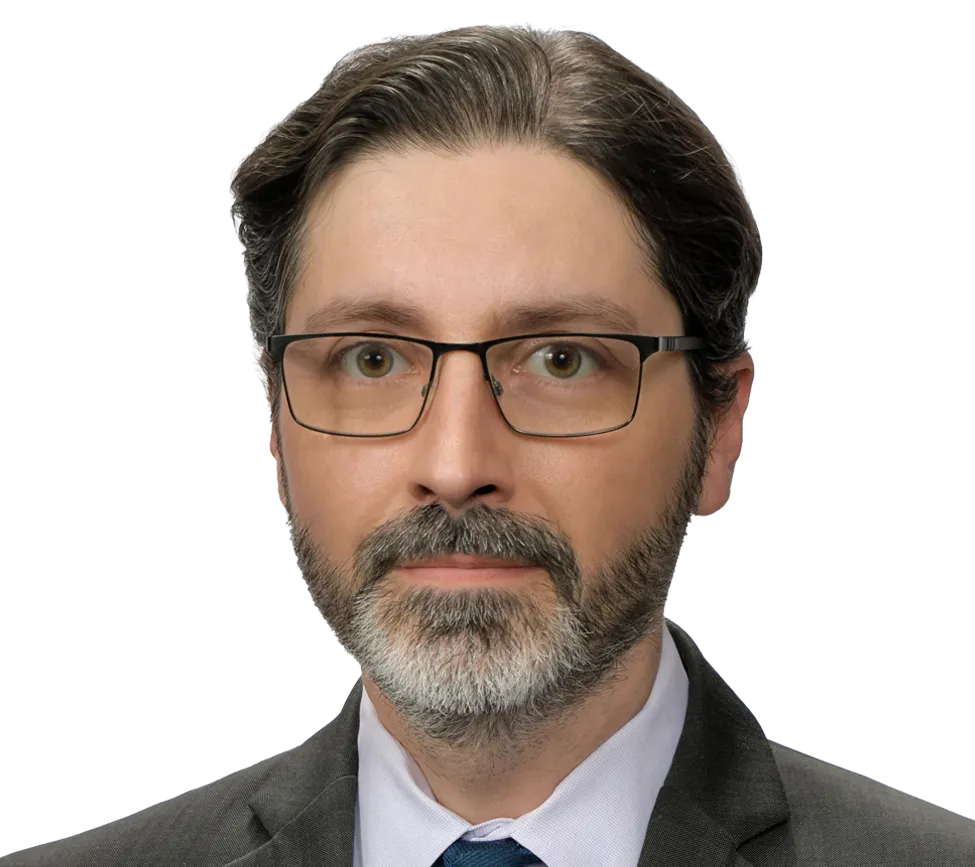
Julian Hallai
Ph.D., MBA, P.E., PMP
He/Him
Senior Managing Engineer
Julian Hallai, Ph.D., MBA, P.E., PMP, is a senior managing engineer in Exponent's Mechanical Engineering practice with over 20 years of experience in pipeline and tubular mechanics, offshore structures, naval architecture, maritime systems, oilfield engineering, and structural integrity. He advises law firms, insurers, energy companies, project owners, and other clients on forensic engineering; failure investigations; design, engineering, EPC/EPCI, and construction matters; personal injury matters; technology development; intellectual property matters; and dispute resolution.
Dr. Hallai's technical experience spans onshore and offshore pipelines, risers, piping, casing and production tubing, ships and floating structures, mooring systems, offshore platforms and renewable-energy infrastructure, drilling and production systems, pressure-containing equipment, storage tanks, and industrial, commercial, residential, and municipal mechanical systems. He has particular depth in maritime and offshore engineering, pipelines and tubular systems, and other mechanical and structural systems.
His technical background spans research, design, technology development, integrity assessment, experimental and computational mechanics, and forensic investigation, providing continuity from fundamental mechanics and experimental work through real-world engineering failure investigations and disputes. He has particular experience supporting cross-border disputes and investigations, including matters involving Latin America, and can perform work in English, Spanish, and Portuguese.
Before joining Exponent, Dr. Hallai led research and technology-development programs at ExxonMobil and worked as a pipelines and risers engineer for Petrobras and Intecsea. He is a licensed professional engineer in California, Hawaii, Louisiana, New York, Rhode Island, and Texas, where he is licensed in mechanical engineering, naval architecture/marine engineering, and petroleum engineering.
Maritime, Naval Architecture & Offshore Engineering
Dr. Hallai provides naval architecture, structural integrity consulting, design review, forensic engineering, and failure investigation services for ships and vessels, floating production systems, mooring systems, offshore platforms, waterfront structures, subsea cables and infrastructure, and other floating and offshore structures. His work encompasses structural analysis under operating and extreme loading conditions — including fracture, fatigue, buckling, and collapse — as well as vessel stability, marine hydrodynamics, mooring response, structural integrity, marine casualty reconstruction, and incident causation. He also advises clients on offshore wind, floating renewable-energy facilities, offshore substations, and HVDC converter platforms, applying the naval architecture, structural mechanics, hydrodynamics, and offshore engineering principles to design review, integrity assessment, construction issues, and failure investigation of emerging energy infrastructure.
His background in mooring systems extends to graduate research on mooring-line dynamics and damping, coupled vessel-riser-mooring analysis, mooring-system design, and planning and execution of offshore model-test programs. His work has included numerical simulation and physical testing of mooring and riser systems under complex environmental and operational loading. His master's research specifically addressed mooring-line damping and dynamics of moored floating structures. His subsequent offshore R&D included mooring design, disconnection analysis, and model testing.
Dr. Hallai's analytical capabilities include nonlinear finite element analysis (FEA), structural mechanics, dynamic mooring analysis, and experimental methods ranging from standard laboratory testing to novel small-scale and full-scale structural testing. His computational work includes model development, calibration, verification and validation, sensitivity and parametric analysis, and comparison of numerical predictions with experimental and field data. He has extensive experience applying codes and standards governing offshore structural design and integrity, including API, ASME, DNV, and ISO standards applicable to offshore structures, floating systems, pipelines, risers, and mechanical integrity.
Pipelines, Risers, Piping, Casing & Tubular Systems
Dr. Hallai has extensive experience in the mechanics, analysis, design, structural integrity, and failure investigation of tubular systems. His experience began as a pipeline and risers engineer with Intecsea and Petrobras, where he worked on pipeline analysis, design, installation, and project engineering before pursuing doctoral research in pipeline mechanics. His Ph.D. research combined laboratory experiments with nonlinear finite element analysis to study the bending, material response, instability, localization, and collapse behavior of steel tubes. His subsequent work has encompassed onshore and offshore pipelines, subsea pipelines and flowlines, marine and drilling risers, midstream pipeline networks, process and facility piping, municipal waterlines, natural-gas distribution and utility lines, casing, production tubing, and other downhole tubular systems.
He performs stress and structural analysis of pipelines, risers, piping, casing, tubing, and related tubular components subjected to internal and external pressure, axial loading, bending, thermal loading, cyclic loading, external loads, soil and support interaction, and combined loading. He evaluates failure modes including fracture, fatigue, buckling, collapse, burst, leakage, connection failure, corrosion and metal loss, pressure-related failure, and loss of structural integrity.
Dr. Hallai's well-tubular experience spans casing, production tubing, and related downhole tubular systems used in oil and gas production, carbon-dioxide injection, and underground natural-gas storage. His work includes evaluation of tubing and casing stresses, burst and collapse resistance, fatigue, connection behavior, thermal and pressure loading, bending, annulus-pressure behavior, and other well-integrity issues.
His pipeline forensic experience spans energy, municipal, and utility infrastructure. He has investigated failures involving onshore and offshore oil and gas pipelines, submerged municipal waterlines, gas lines affected during horizontal directional drilling (HDD) operations, and pressurized waterlines damaged during construction. His work also includes assessment of pipeline networks and evaluation of the effects of design, materials, fabrication, installation, operation, degradation, external loading, construction activity, and third-party damage on pipeline performance. His broader pipeline and riser experience includes high-strain pipeline behavior, reeling and liner installation, residual-stress effects, pipeline walking, geotechnically induced loading, damaged-pipeline rehabilitation and return-to-service, and life-extension assessment of flexible risers.
Dr. Hallai applies analytical, numerical, and experimental methods, including nonlinear FEA, fracture and fatigue mechanics, structural mechanics, thermal-fluid analysis, and laboratory testing, together with applicable API, ASME, DNV, ISO, and other industry codes and standards.
Oilfield Accidents, Pressure-Release Incidents & Personal Injury Investigation
Dr. Hallai supports attorneys, insurers, operators, and other clients in oilfield accidents and personal injury matters involving drilling rigs, drilling and production operations, oilfield equipment, tubulars, wellhead and well-control equipment, well-servicing and tubular-handling equipment, managed-pressure-drilling operations, pressurized equipment and systems, loss-of-containment events and sudden pressure-release incidents, as well as other mechanical and structural systems.
He performs root-cause analysis and accident reconstruction to establish engineering causation — identifying whether a failure originated in mechanical design, material condition, fabrication or manufacturing quality, installation, maintenance, operational practice, overpressure, pressure containment failure, stored-energy release, external loading, or a combination of factors. Dr. Hallai has served as an expert witness in personal injury and oilfield accident litigation, providing technically rigorous, defensible opinions on engineering causation and related technical issues.
His background includes eight years leading R&D programs at ExxonMobil, where he developed and validated engineering solutions for ultra-deepwater drilling and production systems operating under high pressure, high temperature, cyclic loading, and corrosive sour-service conditions. This experience provides practical context for his investigations of drilling, production, well-control, tubular, pressure-containing, and other oilfield equipment incidents.
Engineering, EPC/EPCI & Construction Disputes, International Arbitration
Dr. Hallai serves as a technical expert in EPC (engineering, procurement, and construction), EPCI (engineering, procurement, construction, and installation), and engineering/construction disputes involving offshore, energy, marine, industrial, and other engineered facilities, including litigation and international arbitration proceedings. He evaluates technical disputes involving engineering design, procurement, fabrication, construction, installation, mechanical completion, commissioning, and operations.
His work addresses design-versus-construction issues, alleged design defects, fabrication and construction deficiencies, specification and drawing compliance, application of engineering codes and standards, interface responsibility, project execution, offshore logistics, remediation, delay-related technical issues, equipment failures, and allocation of technical responsibility among design, fabrication, installation, commissioning, and operational activities.
He has been retained in international arbitration matters and advises legal teams on the technical merits of complex offshore and energy project disputes. His work includes evaluating engineering evidence, testing technical allegations, identifying causation, and communicating complex engineering issues clearly and defensibly. These matters have proceeded before the International Chamber of Commerce (ICC), London Court of International Arbitration (LCIA), Singapore International Arbitration Center (SIAC), Asian International Arbitration Center (AIAC), and SCC Arbitration Institute, involving projects in Latin America, the North Sea, the United Kingdom, the Caspian region, and Southeast Asia.
Dr. Hallai conducts his work in English, Spanish, and Portuguese, including ICC proceedings involving Spanish-language submissions. His language capabilities allow him to work directly with clients, counsel, technical personnel, project records, and other source materials in multilingual cross-border disputes. His Latin American experience also includes prior technology-development work in Brazil, where he developed relationships with operators, universities, and suppliers and supported technical collaboration with Petrobras on offshore and riser technologies.
Mechanical Failure Analysis, Forensic Engineering, Structural Integrity & Fitness-for-Service
Dr. Hallai performs forensic engineering, mechanical failure analysis, structural integrity assessment, construction-defect evaluation, and fitness-for-service analysis across industrial, commercial, residential, municipal, and energy applications. His work involves pipes and piping systems, plumbing and fluid systems, flanges, fittings, valves, storage tanks, aboveground storage tanks (ASTs), process tanks, pressure vessels, pressure-containing equipment, pumps, supports, vertical-transportation and elevator equipment, hydraulic systems, building and facility systems, and other mechanical and structural components.
He evaluates whether failures or performance problems arise from design, materials, manufacturing or fabrication, construction and installation, maintenance, operation, external damage, loading, securement, or combinations of these factors. He investigates failures involving fracture, fatigue, corrosion-related damage, buckling, collapse, tank and vessel shell failures, burst, leakage, and pressure-release events, loss of containment, vibration-induced damage, equipment malfunction, and installation deficiencies.
His sour-service experience includes evaluation of sulfide stress cracking (SSC), hydrogen-induced cracking (HIC), and stress-oriented hydrogen-induced cracking (SOHIC), including application of NACE MR0175/ISO 15156 requirements for materials selection and qualification in hydrogen sulfide-containing oil and gas environments. This work also builds on his prior research and patent work involving technologies for protecting pipelines and tubular systems against sour-service degradation and cracking. Earlier in his career, Dr. Hallai led a multi-year sour-service research program integrating high-pressure hydrogen sulfide testing, fracture-toughness assessment, mechanics and hydrogen-diffusion modeling, and full-scale validation to support qualification and integrity assessment of carbon-steel pipelines and tubulars.
His fitness-for-service (FFS) assessments follow API 579 and related standards to evaluate whether damaged or degraded equipment can safely remain in service, including equipment that is cracked, corroded, or otherwise compromised. His experimental and computational capabilities — including FEA-based stress analysis, fatigue and fracture mechanics, material characterization, laboratory testing, and model validation — allow him to reconstruct failure sequences and provide quantitative support for engineering opinions in both consulting and litigation contexts.
Mechanical Engineering, Marine & Energy Intellectual Property, Patent & Trade Secret Disputes
Dr. Hallai advises legal teams in patent litigation, post-grant proceedings, trade secret disputes, licensed-technology matters, and other intellectual-property disputes involving mechanical engineering, naval architecture, marine and offshore systems, engineered products, industrial equipment, structural systems, fluid and pressure systems, ships and floating structures, mooring systems, drilling systems, drilling automation, downhole tools, production equipment, pipelines and tubulars, risers, casing and tubing, subsea systems, offshore technology, wellhead and frac equipment, valves and pressure-containing equipment, electric hydraulic-fracturing systems, distributed-energy systems, thermal-management technologies, and related mechanical, marine, offshore, and energy technologies.
He has been retained as a technical expert in intellectual property matters and brings experience in mechanical engineering, naval architecture, research and development, product and technology development, experimental validation, failure analysis, and engineering analysis. His prior R&D leadership at a major operator and his experience as a named inventor on patents involving drilling risers and floating offshore structures, together with patent work involving pipeline, tubular, and sour-service technologies provide practical context for evaluating the development, operation, functionality, and technical evolution of complex engineered systems.
His work includes technical analysis of infringement and validity, prior art, claim interpretation, written-description and indefiniteness issues, motivation to combine, the knowledge and capabilities of a "person of ordinary skill in the art" (POSITA), trade secret identification and derivation, and reverse engineering. He also applies experimental and computational methods, including full-scale testing, FEA, stress and fluid-flow analysis, and signal analysis, to evaluate claimed functionality and distinguish competing technical explanations.
His membership in the Houston Intellectual Property Law Association (HIPLA) reflects his sustained engagement with the IP legal community and his understanding of how technical expert opinions function in patent and trade secret proceedings.