Bring Us Your Toughest Challenges
Power New Possibilities
Exponent delivers independent, objective analysis to help you tackle your toughest challenges and deliver the confidence that critical energy infrastructure demands.


How do we help you scale safe, reliable hydrogen technologies?
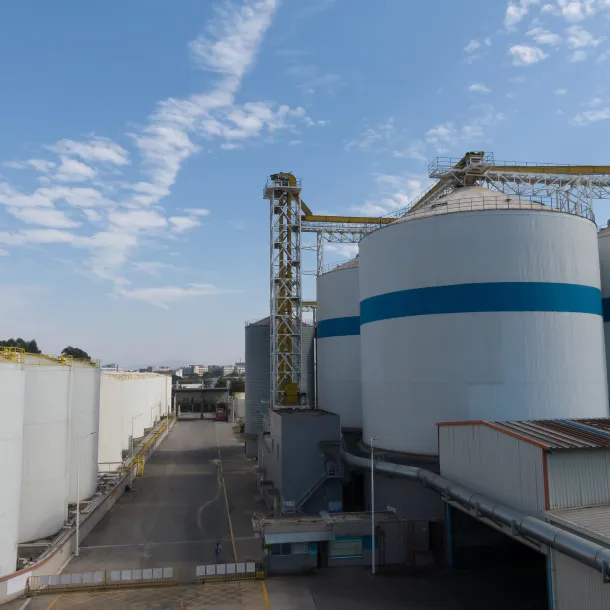
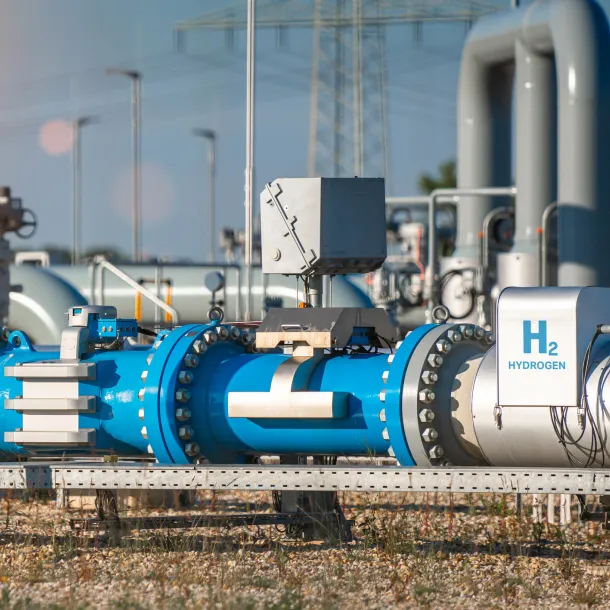
Hydrogen projects can face electrolyzer and fuel cell performance issues, material degradation, ignition hazards, and evolving regulations that delay progress and increase compliance risk. Utilities must manage hydrogen blending, grid reliability, and large‑scale infrastructure investments, while transport and mobility operators struggle with refueling downtime, safety incidents, and more. Exponent helps you identify risks early, reduce failures, and strengthen reliability for safer, more predictable hydrogen deployment.
We bring together multidisciplinary engineers and process safety experts to help clients resolve hydrogen's most persistent technical challenges. Our experience across generation, storage, transport, and fuel cell applications enables us to diagnose issues quickly, validate performance, and strengthen system reliability. With experts active in NFPA, ISO, and CSA/ANSI standards development, we enable you to anticipate risks, respond effectively to incidents, and navigate evolving requirements with confidence.


CAPABILITIES
Our Capabilities Are Unparalleled
With expertise spanning over 90 technical disciplines, our team applies proven methodologies and advanced capabilities to hydrogen energy projects, empowering clients to get to the root of even the most complex engineering challenges.

Power & Energy
Multidisciplinary support for high-power energy systems of all sizes in a variety of applications.

Batteries & Energy Storage
Supercharge performance, reliability, and safety across all stages of the battery and energy storage product lifecycle.

Midstream Oil & Gas Consulting
Pipeline, compressor/pump stations, marine and land terminals, ships, gas processing facilities, storage tanks, and high-pressure vessels.

Thermal Sciences Expertise for Utilities
Overcome any utility operations challenge — from safety to asset management, and more.

Corrosion Science & Technology
Breakthrough insights for all types of corrosion and environment-related degradation challenges.

Gas Pipeline Blowdown Risk Assessment
Manage pipeline blowdown hazards with modeling, risk assessment, and process safety advising.
RELEVANT RIGHT NOW
What role does hydrogen play in decarbonizing heavy industry?
Hydrogen is a promising solution for reducing emissions in heavy industries such as steelmaking, refining, and chemical manufacturing, where electrification is challenging or impractical. By replacing coal or natural gas with hydrogen as a feedstock or fuel, these sectors can significantly cut their greenhouse gas emissions. Pilot projects and early commercial deployments are underway globally, and continued progress depends on scaling up clean hydrogen production, developing suitable infrastructure, and creating supportive regulatory frameworks to encourage industry transition.
How do electric utilities utilize hydrogen for grid-scale energy storage?
Electric utilities are increasingly turning to hydrogen as a means of storing excess renewable electricity generated during periods of low demand. By using electrolyzers to convert surplus power into hydrogen, utilities can store this energy for later use, either by reconverting it to electricity via fuel cells or turbines or by supplying it for industrial and transportation applications. This approach enhances grid flexibility, supports renewable integration, and helps balance supply and demand across the energy network.
What are the main technical hurdles for underground hydrogen storage?
Underground hydrogen storage presents several technical challenges, including the need for specialized materials to prevent leakage and maintain safety, as hydrogen molecules are small and can migrate through conventional containment systems. Geological suitability is also critical, as not all salt caverns or depleted reservoirs are appropriate for hydrogen storage. Additionally, maintaining purity and managing potential reactions with surrounding rocks or materials require careful engineering and monitoring to ensure reliable, long-term storage.
Experts
Our global and comprehensive expertise across industries gives us a deep understanding of current challenges, best industry practices, and the implications of emerging technologies.

Group Vice President and Principal Engineer

Corporate Vice President and Principal Engineer

Office Director and Principal Engineer


Practice Director and Principal Engineer